THE CONCORDANCE
madness
The mind coming loose from its moorings.
Africa & the Middle East · 3
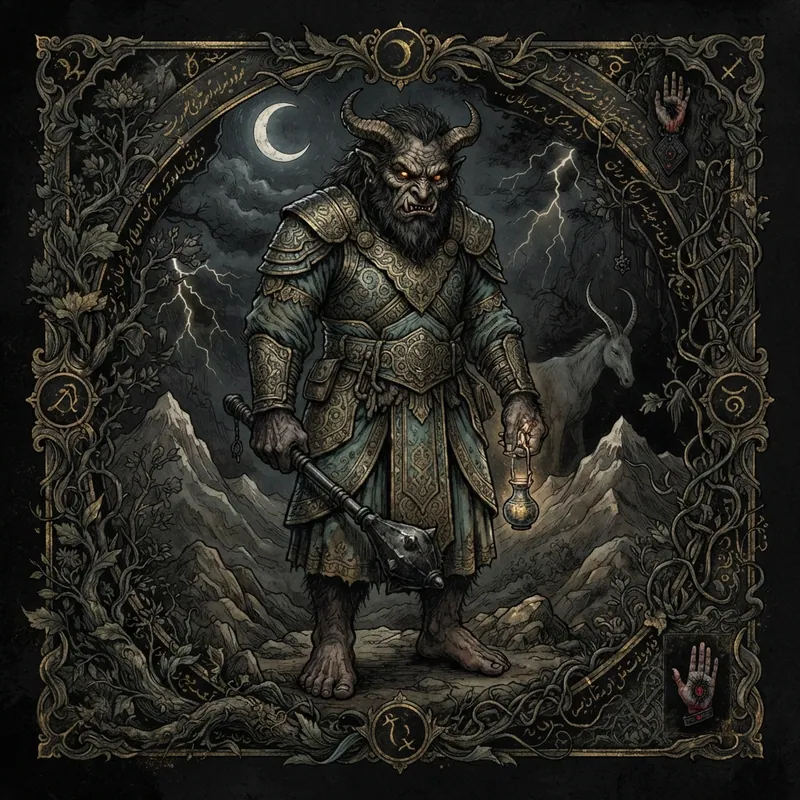
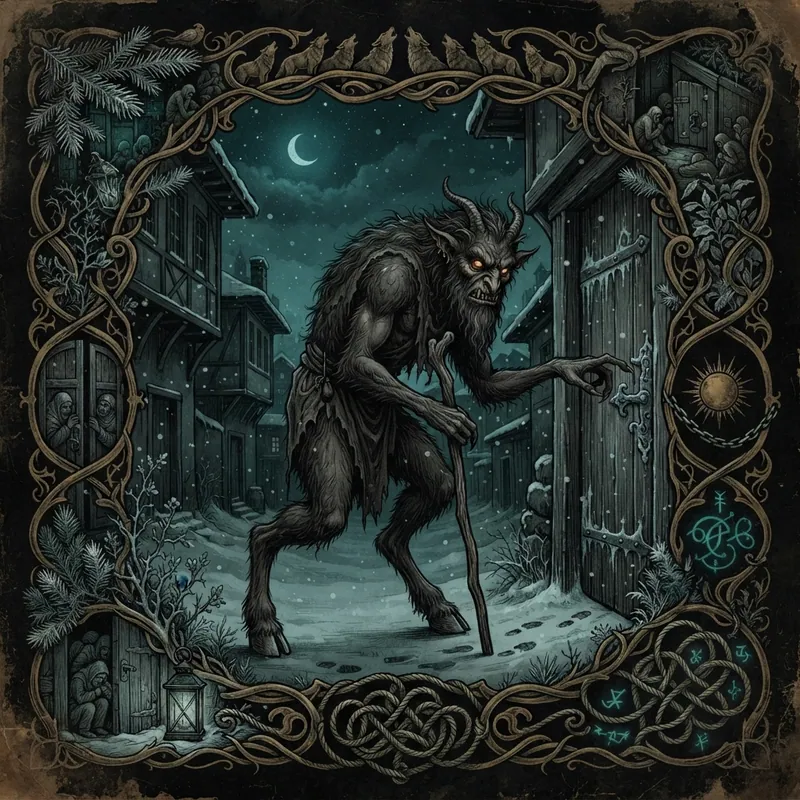
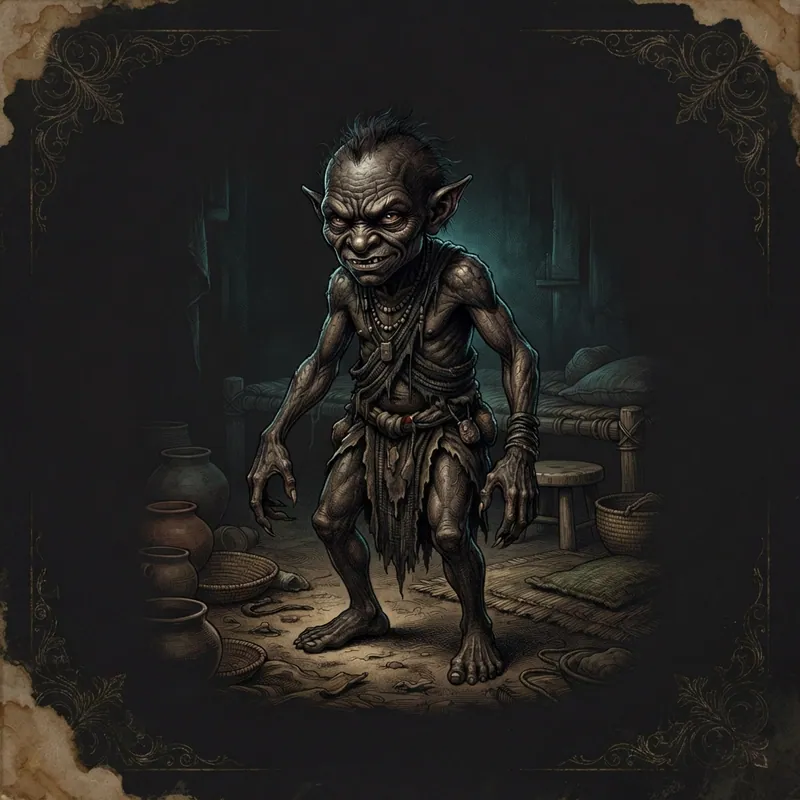
DīvThe Persian dīv (dev, dēw) is the demon, ogre, and fiend of Iranian epic and folktale, descended from Avestan daeva. In the Shahnameh they rule a mythical Mazandaran; in oral tales they sleep in sunlight, hide an external soul, and go mad the language itself—dīvānegī.KarakoncolosKarakoncolos (Turkish kara concolos; Balkan karakondzho, karakondžula; Greek kallikantzaros) names a cluster of hairy winter spirits who walk during the coldest, liminal nights. They harass households, pose impossible questions, and vanish when the sun’s order returns.TokolosheA figure appearing in several Southern African stories and contemporary cultural conversations, with meanings that vary across communities, languages, and tellers.
 ⛧
⛧ ☾
☾ ☾
☾Asia & the Isles · 2
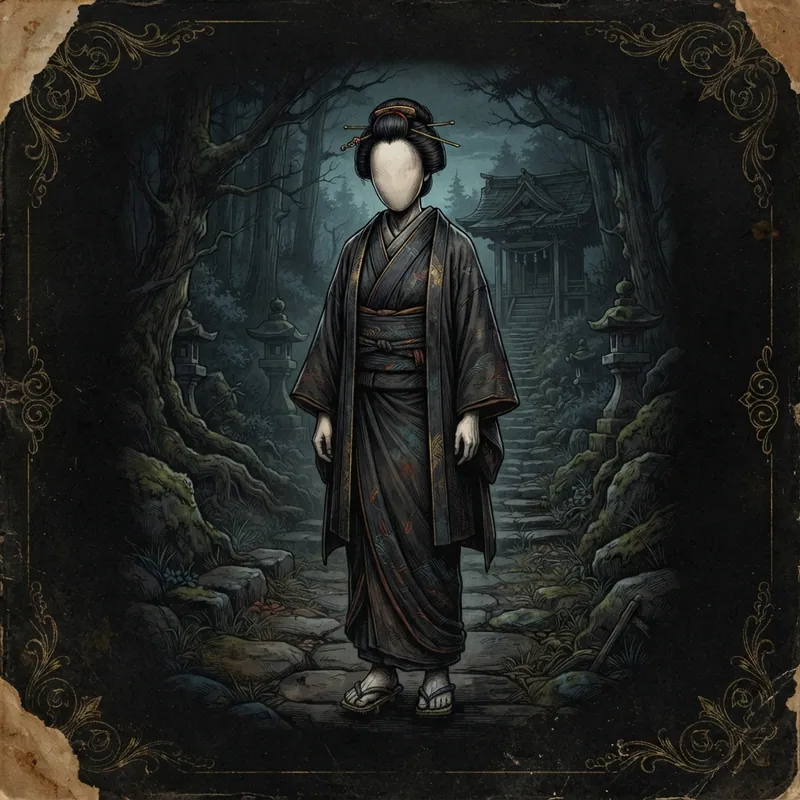
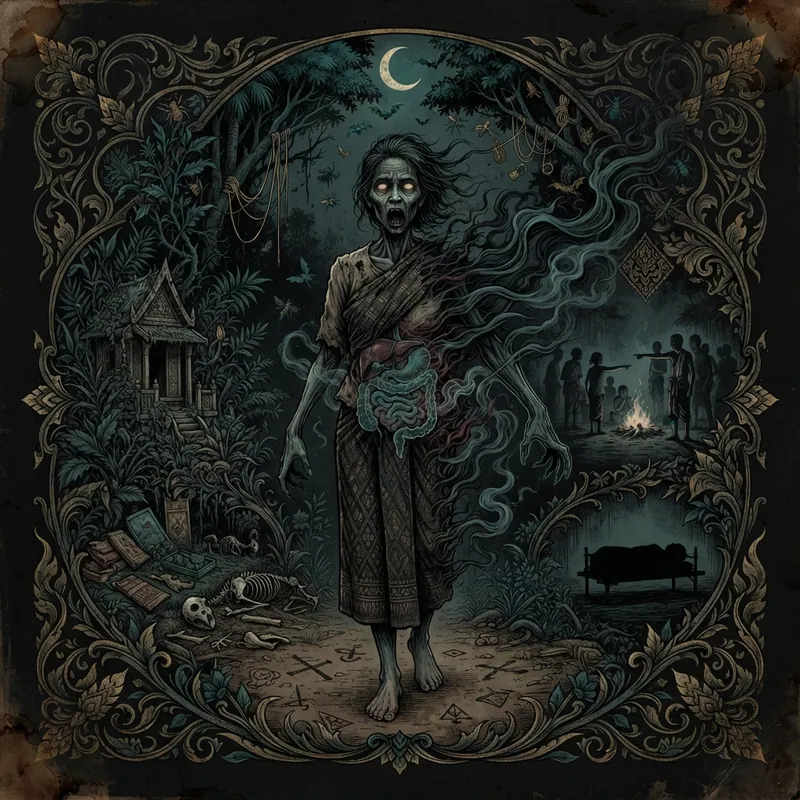
Noppera-bōThe faceless ghost of Japanese urban and roadside lore, often appearing first as an ordinary person before revealing a smooth, featureless face—a jolt more than a long chase.Phi PopA ravenous possessing spirit of ethnic Lao belief in Laos, Isan, and nearby regions. It uses a human host to eat internal organs. Communities may exile the accused; some Lao villages specialise in receiving them.
 ◎
◎ ❖
❖Eastern Europe · 3
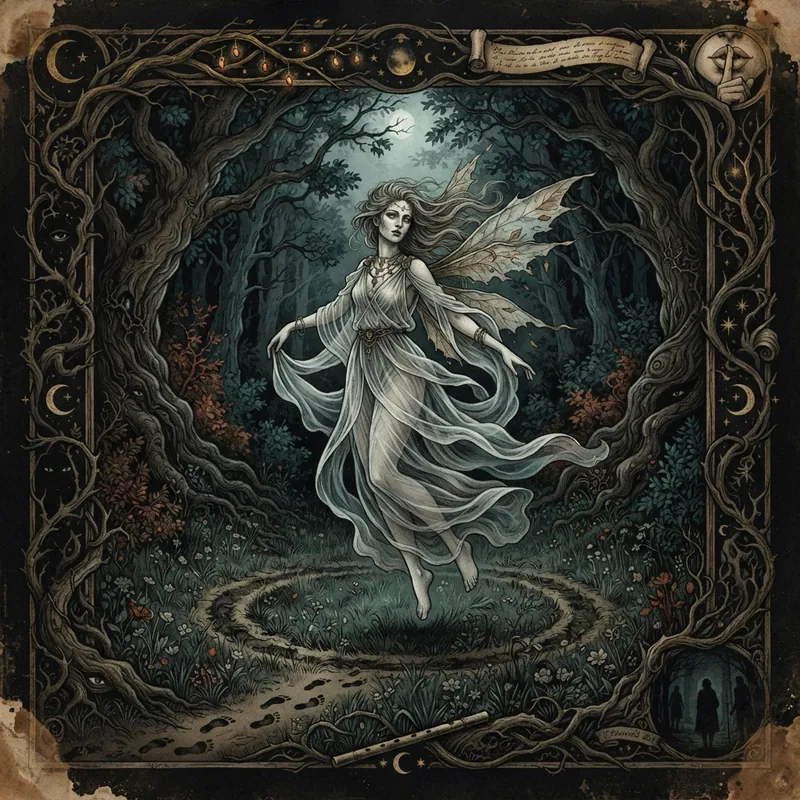
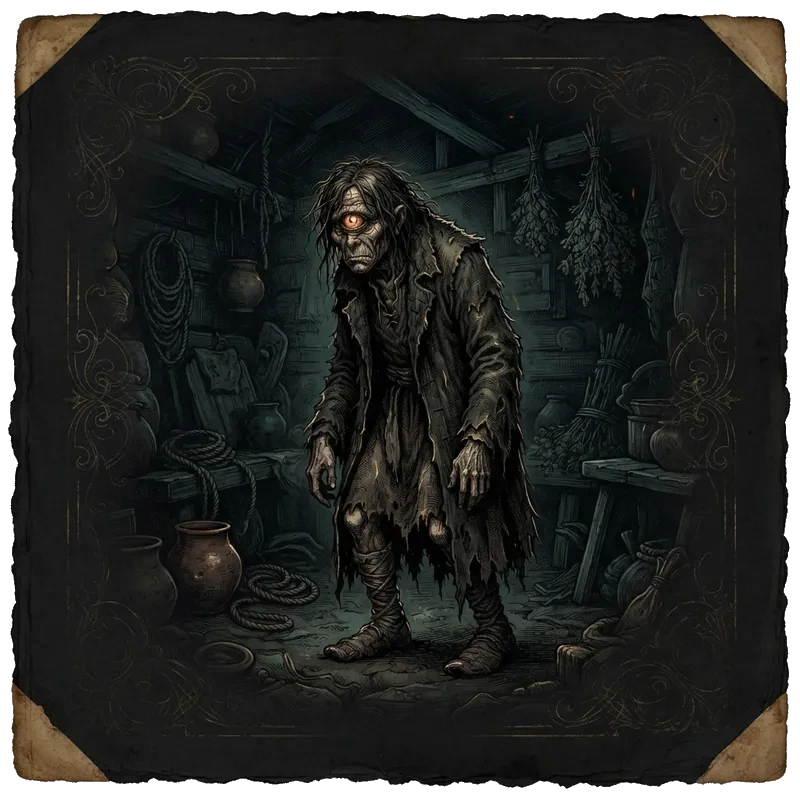
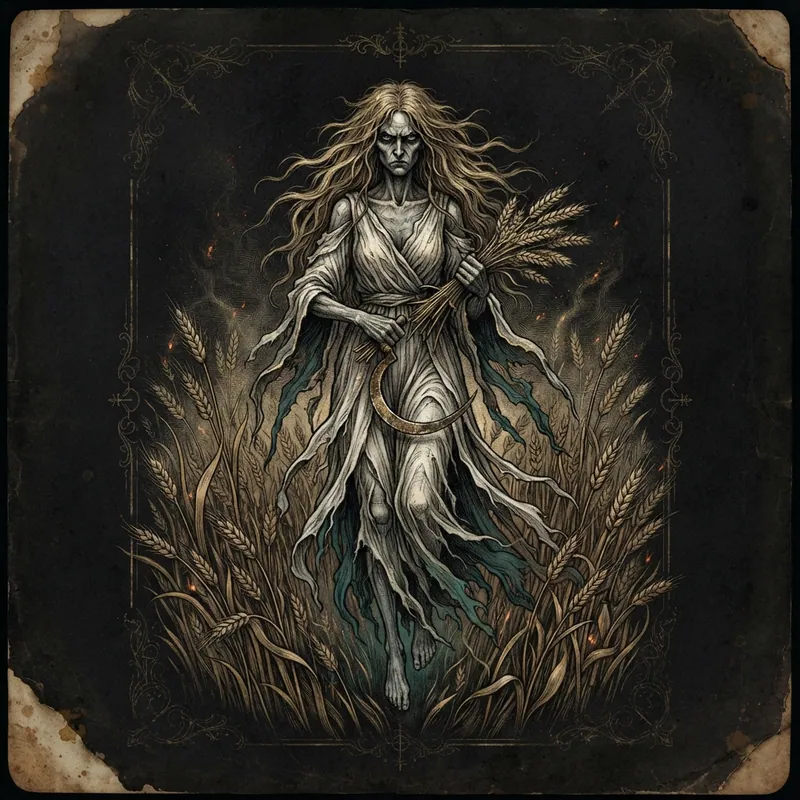
IeleFeminine night dancers of Romanian folklore, known by many polite names, whose hora in woods, meadows, and watersides can bless or ruin those who watch. Related to South Slavic vila, but not the same being.LikhoPersonified misfortune in East Slavic tradition, sometimes imagined as a one-eyed being that attaches itself to a household or traveller. Related to ideas of fate and doom rather than a single fixed monster.PołudnicaThe noon-lady or Lady Midday of Slavic agricultural folklore, said to appear in the fields at the hottest hour and punish or bewilder those who work through the dangerous heat.
 ❋
❋ ✧
✧ ✧
✧Europe & the North · 5
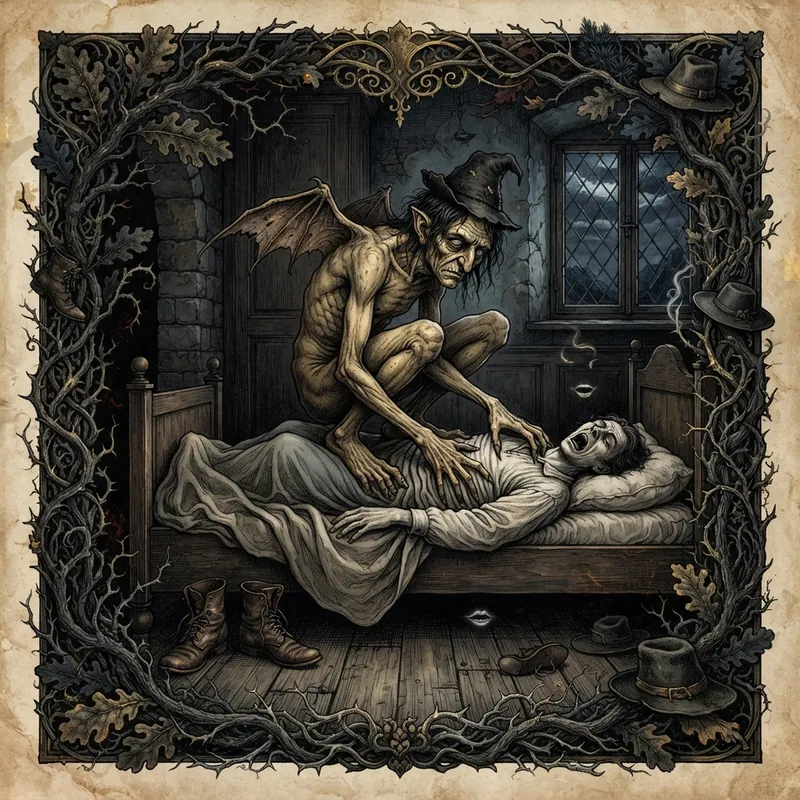
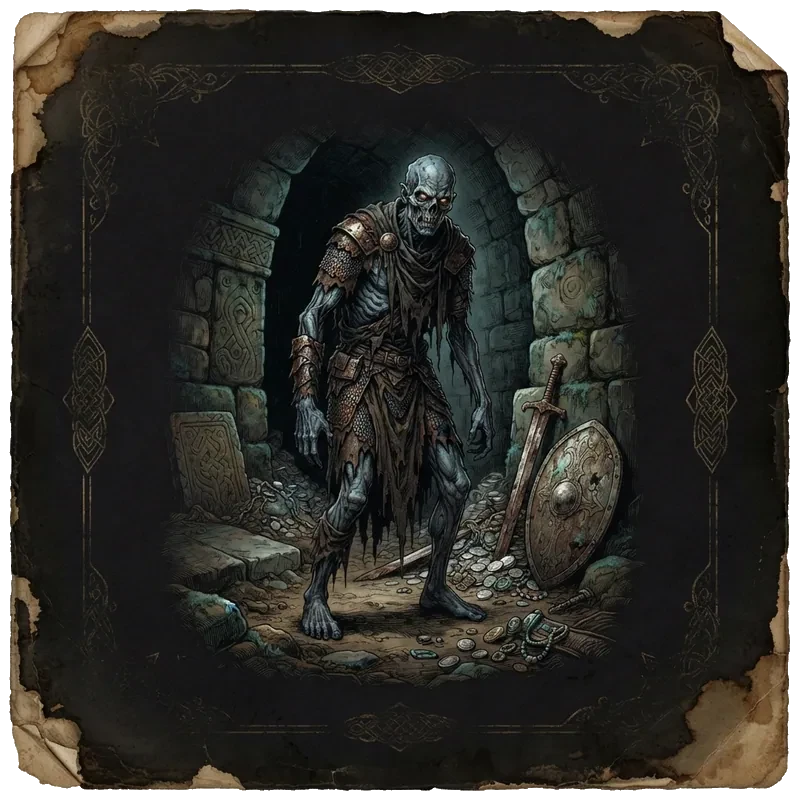
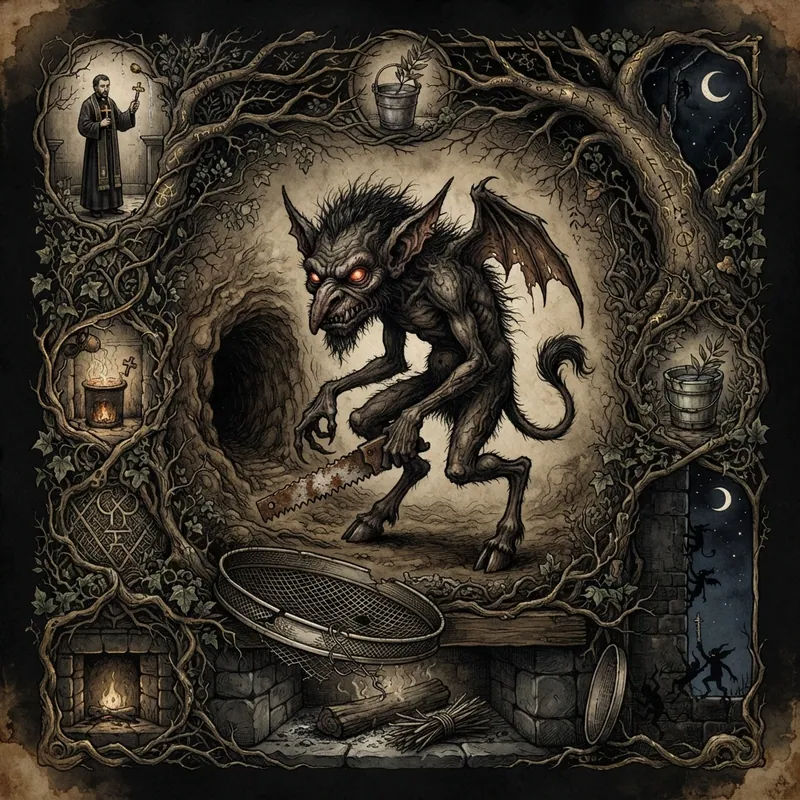
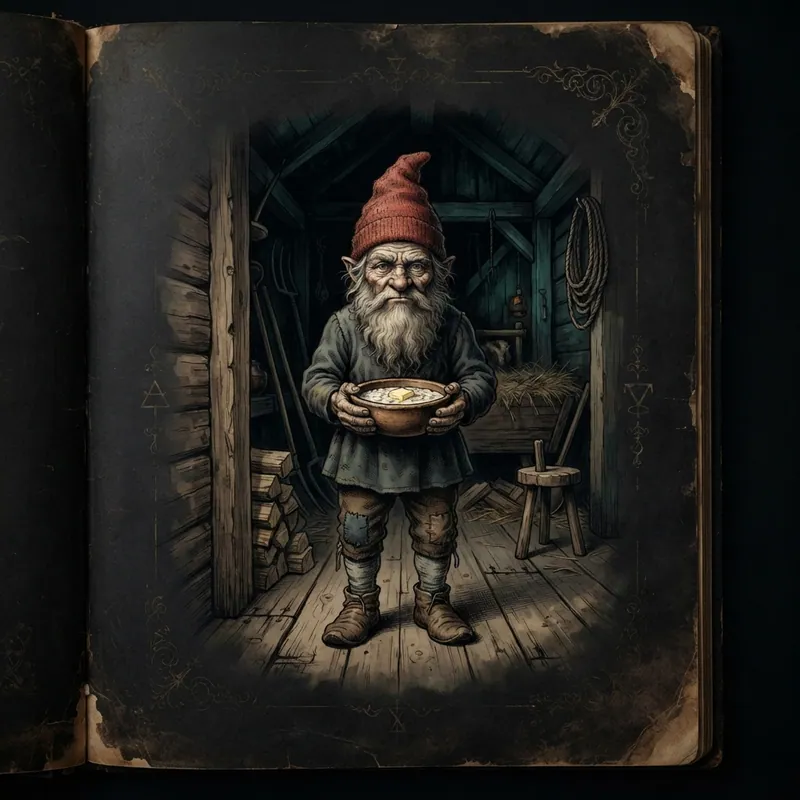
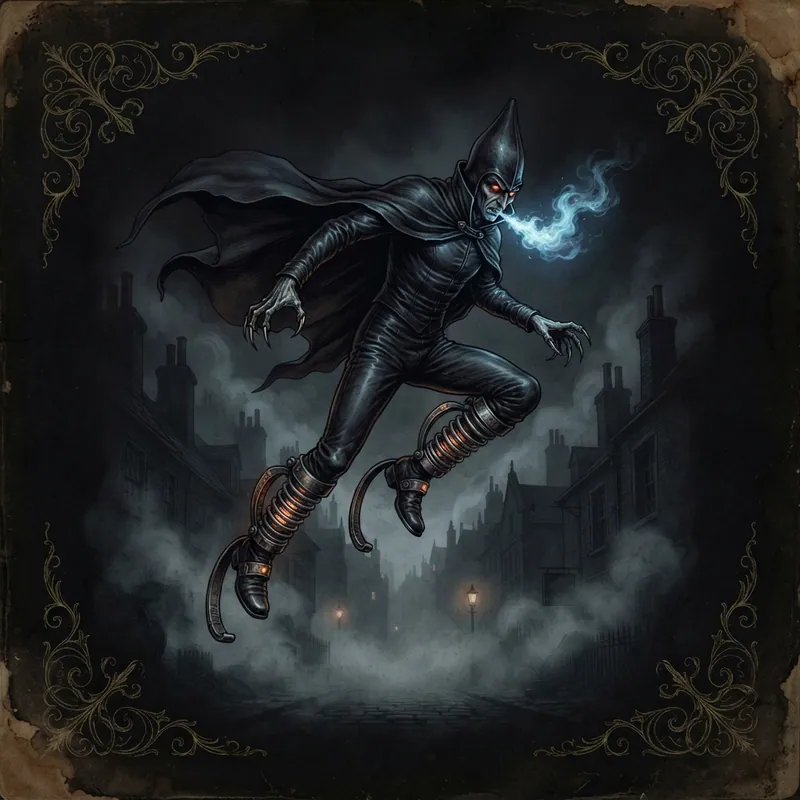
AlpIn German folklore an alp is a typically male night-presser, kin to the elf, that sits on sleepers and sends Alpdruck. Distinct from the mara, though both explain the same crushed waking.DraugrAn animated dead figure of Norse and Icelandic saga tradition, often guarding treasure in a mound and possessing terrible strength. Distinct from later generic zombie imagery.KallikantzarosGreek and Anatolian Christmas goblins who spend the year sawing the world-tree underground and climb out only for the Twelve Days. Epiphany water and a kept fire send them home.NisseA farm guardian spirit (nisse/tomte) of Nordic tradition who protects the homestead if treated with respect—especially a bowl of porridge at Christmas—and sabotages it if insulted.Spring-heeled JackA nineteenth-century English panic figure reported leaping extraordinary heights, clawing, and breathing blue flame in popular press accounts. Folklore, hoax, and urban fear braided together.
 ☾
☾ ✦
✦ ☾
☾ ⌂
⌂ ◒
◒South Asia · 2
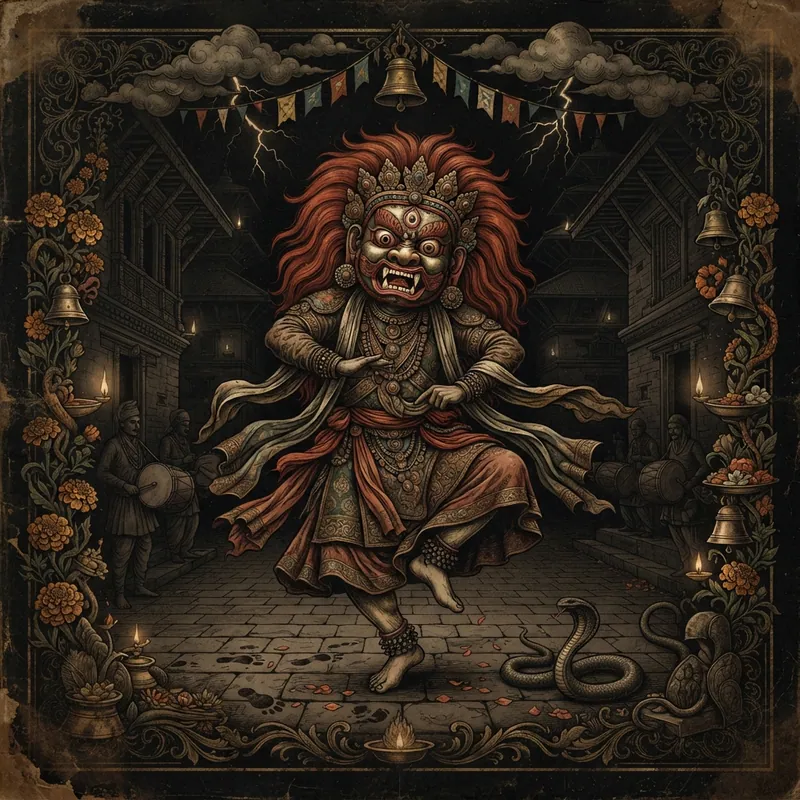
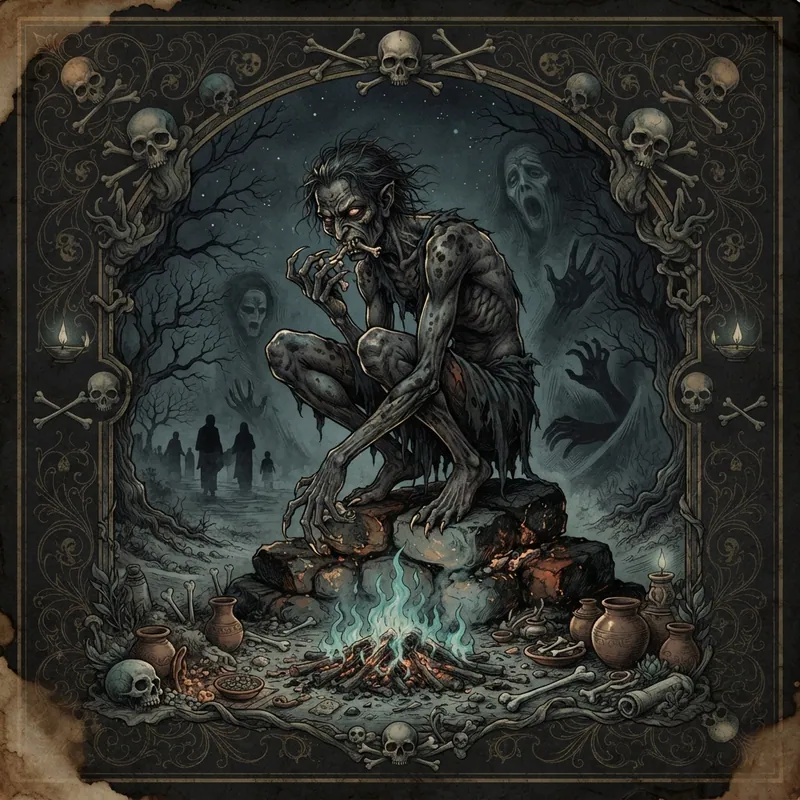
LakheyA ferocious being of Newar folklore in Nepal's Kathmandu Valley, known above all through living masked dance. Majipa Lakhey is worshipped as a protector during Indra Jatra; the mask tradition is not a generic demon dossier.PiśāchaFlesh-eating night beings of Hindu and South Asian religious storytelling, associated with cremation grounds, violent death, shapeshifting, and possession that can unseat the mind.
 ♧
♧ ☾
☾ ☾
☾