THE CONCORDANCE
household
92 records across 68 traditions carry this current.
Africa & the Middle East · 13
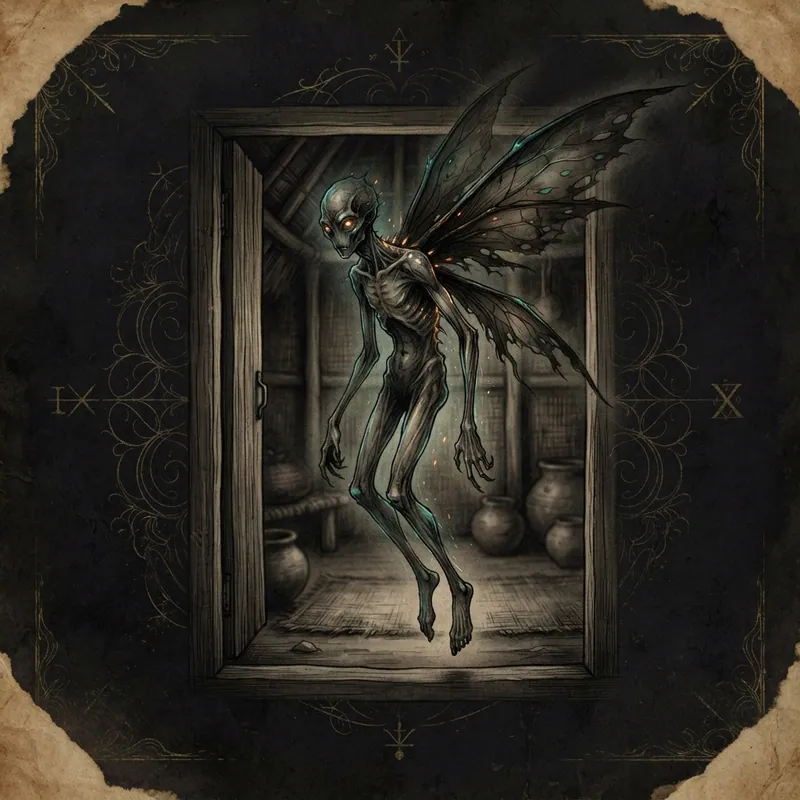
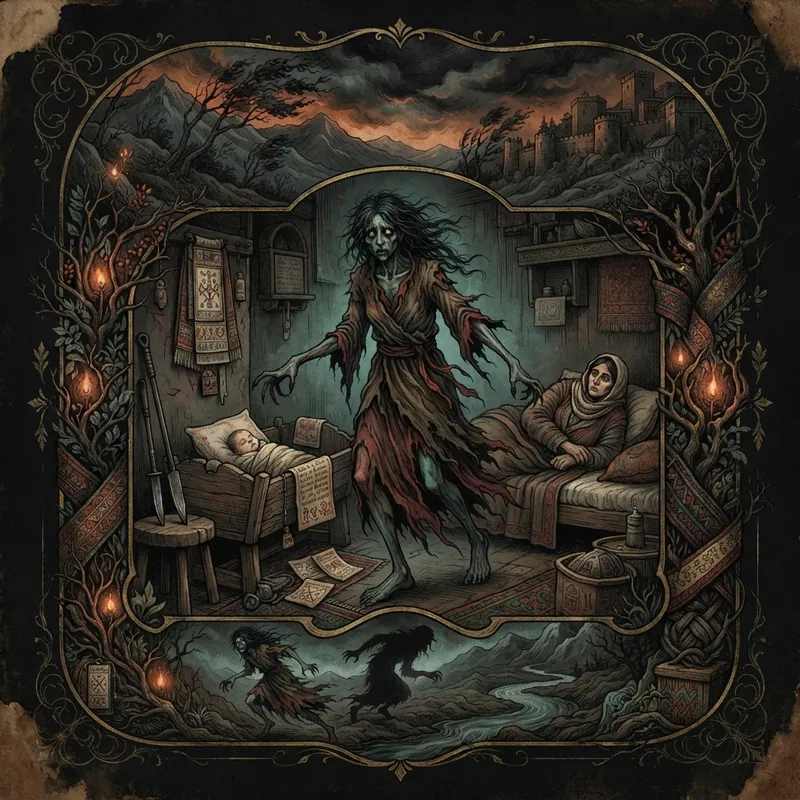
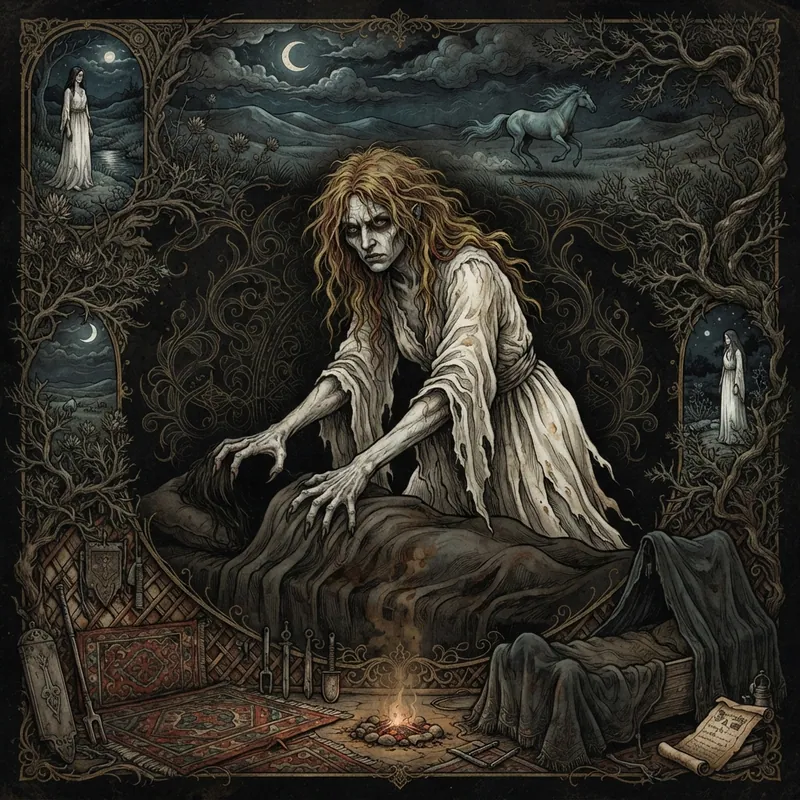
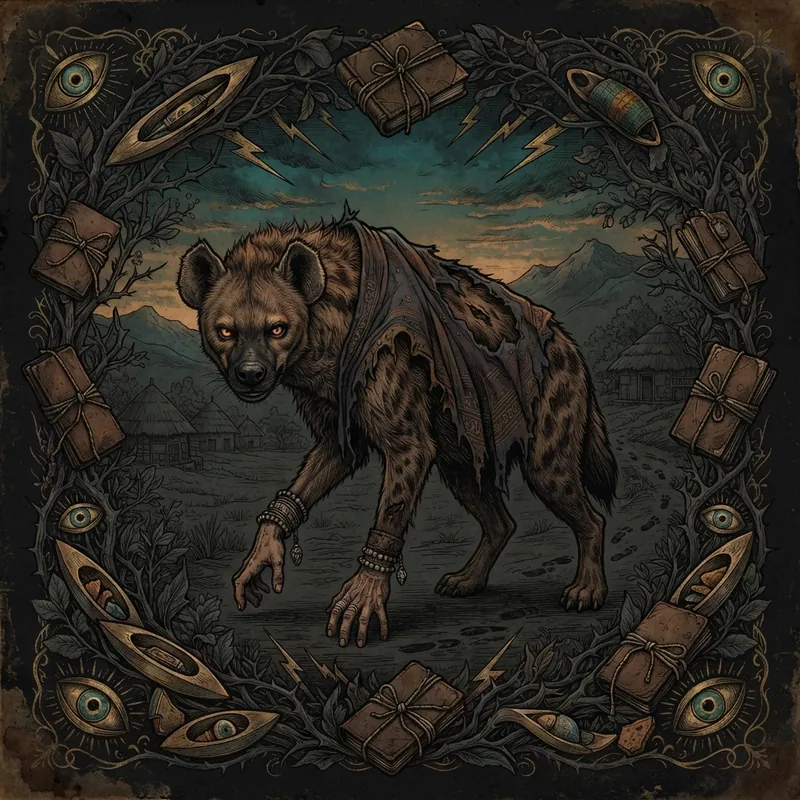
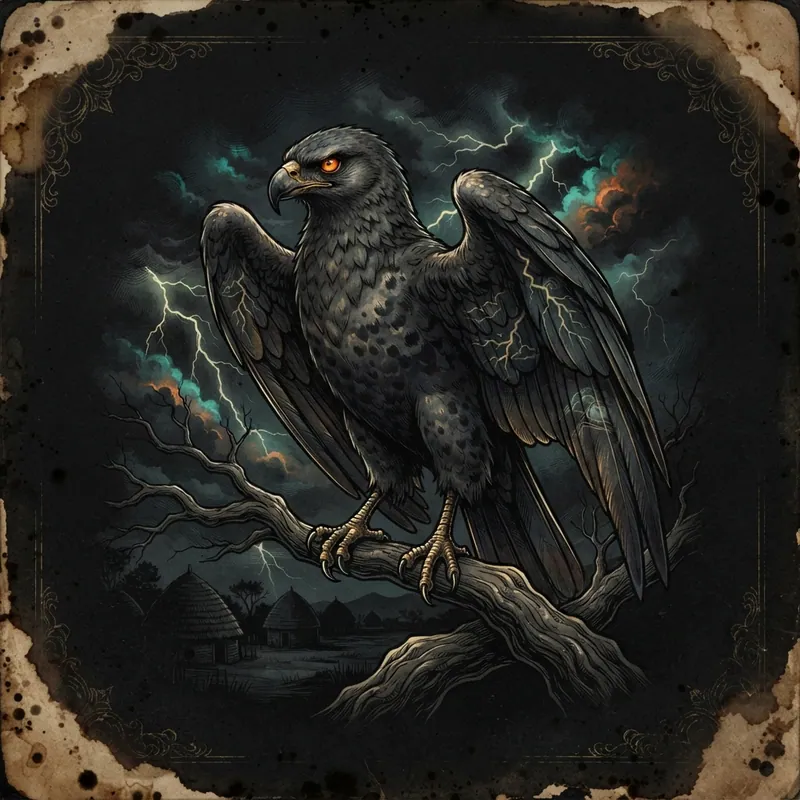
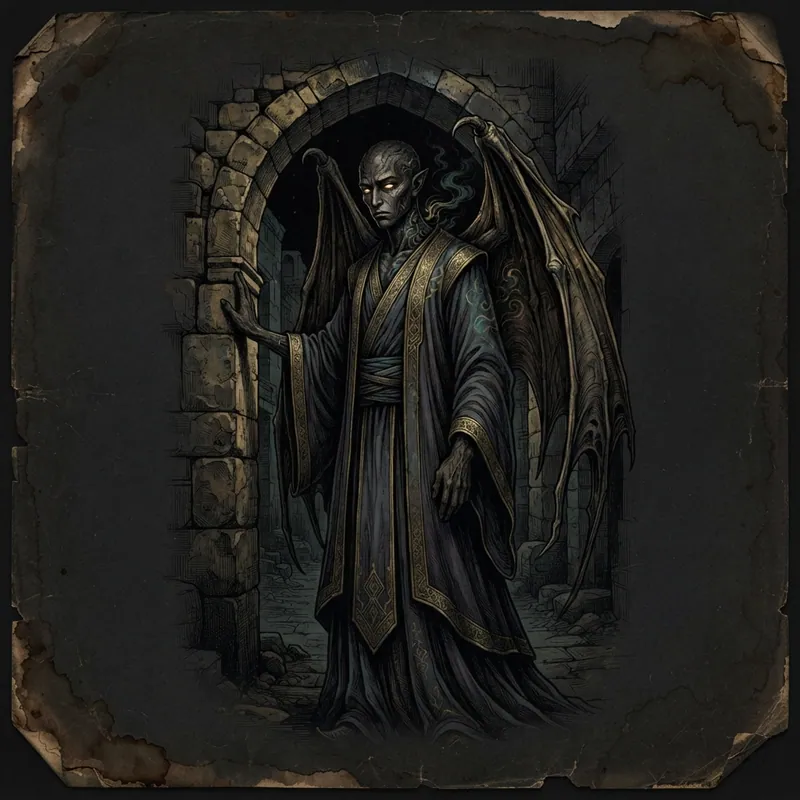
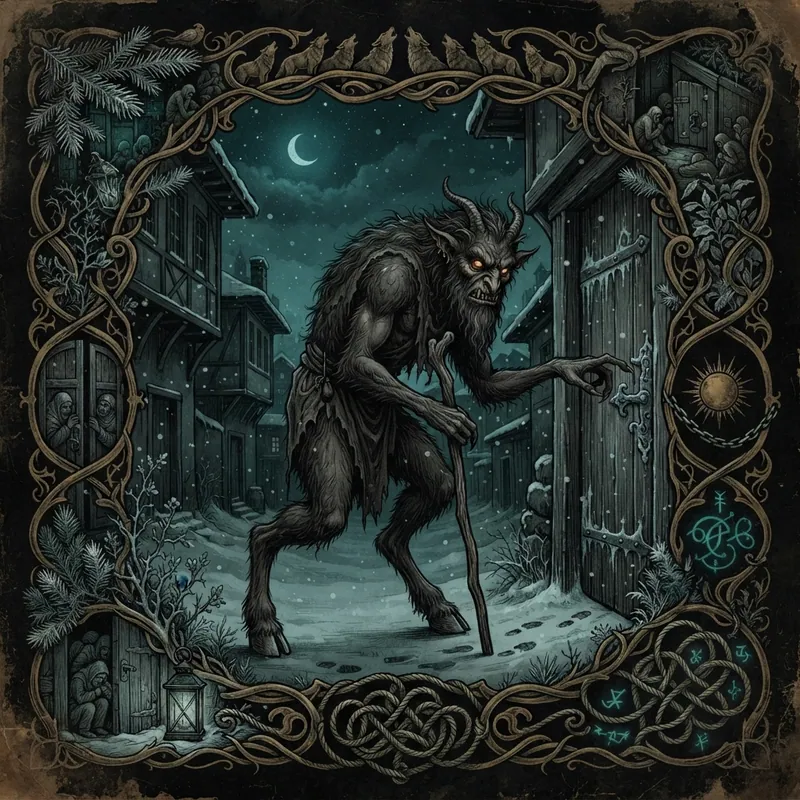
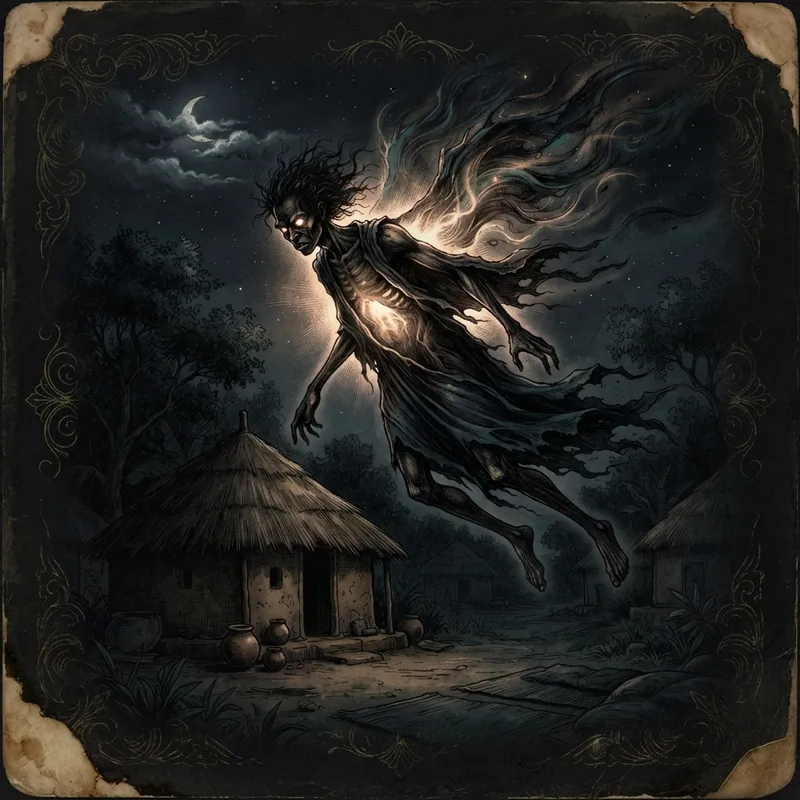
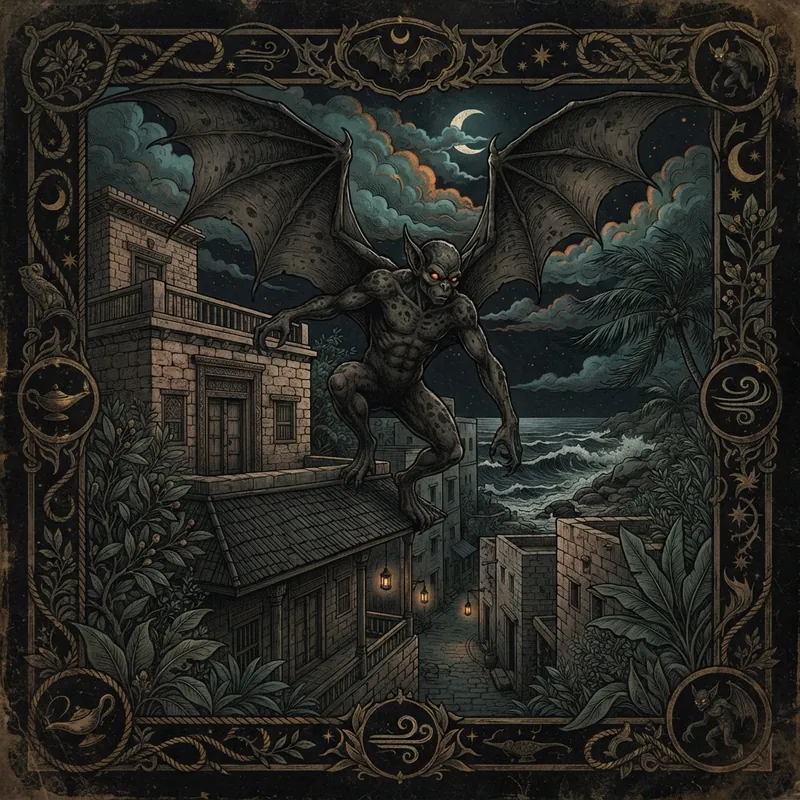
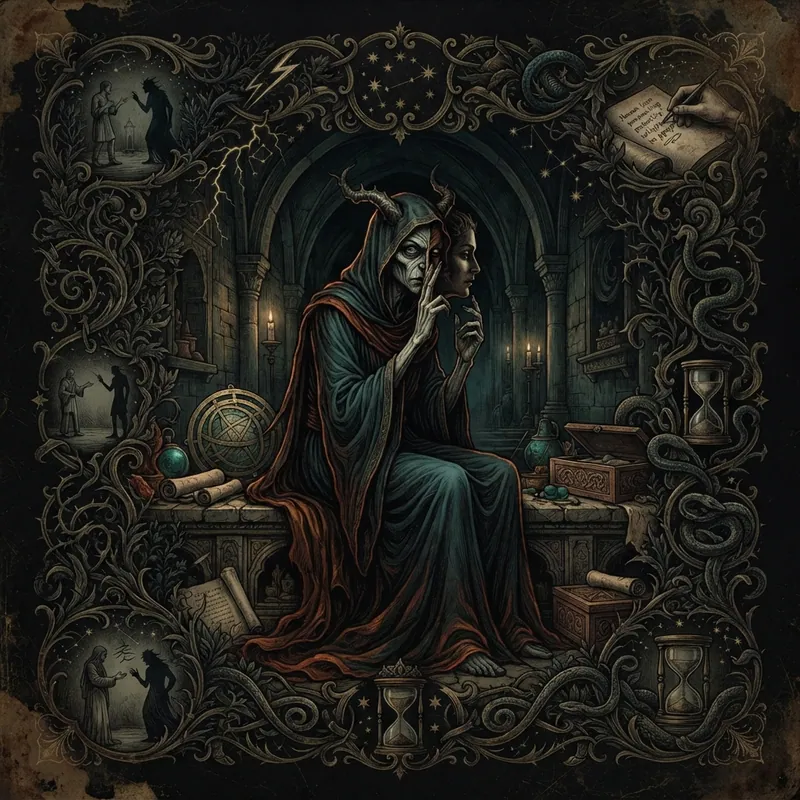
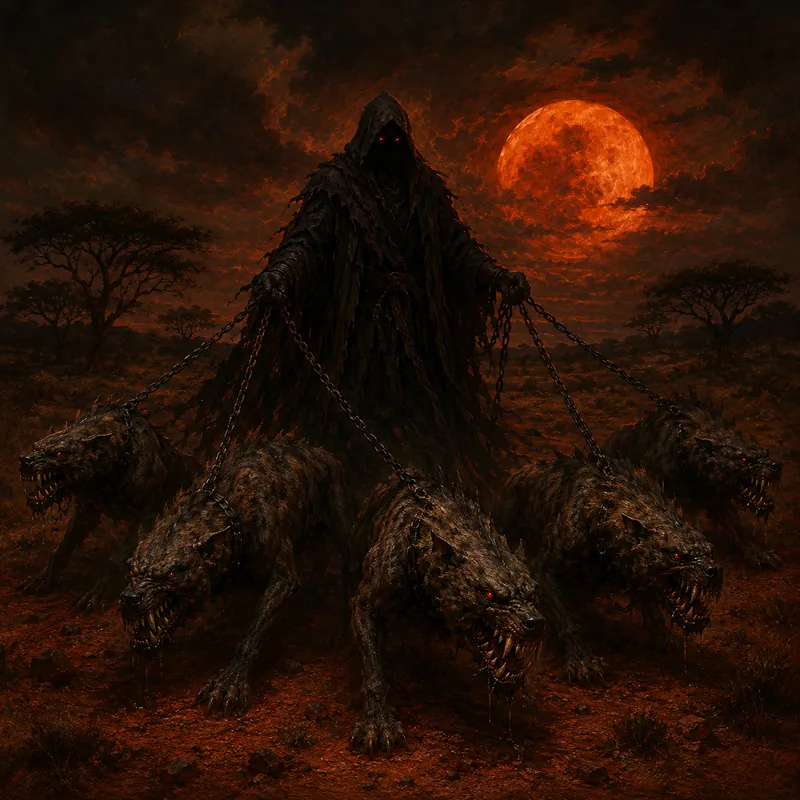
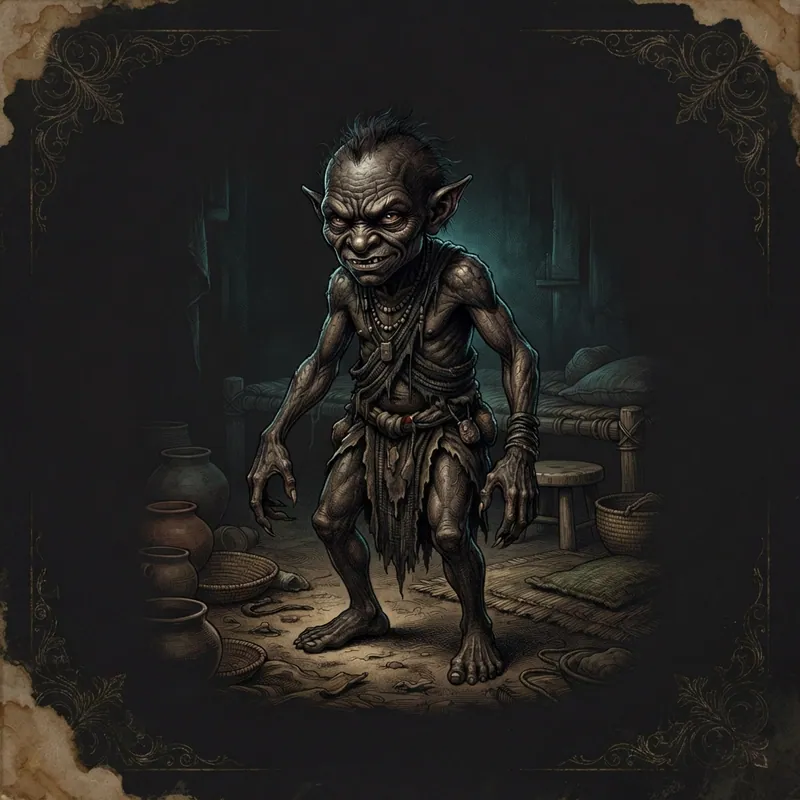
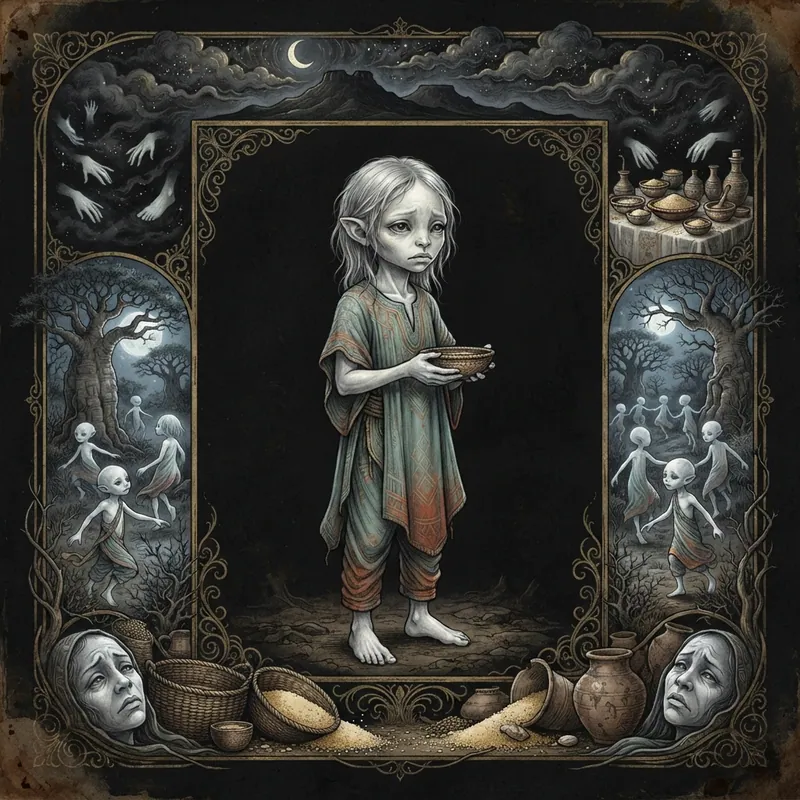
AdzeA being of Ewe folklore sometimes described as taking the form of a firefly, and in some accounts troubling a household after it has been let inside.ĀlThe āl (Armenian ալ, Persian آل) is a being of childbed across Iran, Armenia, and the Caucasus, often said to personify puerperal fever. Traditions disagree on shape; they agree that a new mother must not be left unguarded, and that iron and prayer belong at the threshold.AlbastiAlbasty (Albastı, Albasly, Albarsty and many local forms) is a female being known across Turkic Central Asia, the Volga, the Caucasus, and Anatolia. On the steppe she is foremost a childbed demon; in some regions a disease-presser or, in older layers, a guardian of birth later recast as harmful.BudaIn Ethiopian and Eritrean speech, buda names the evil eye and the power, often inherited, to harm by looking and to become a hyena. It is a living social-religious complex bound to artisanship and outsider status, not a werewolf dossier and not a licence to accuse.ImpunduluA lightning-associated bird figure in stories from parts of Southern Africa; accounts and significance vary across the cultures that tell them.JinnJinn are beings in Arabic and Islamic traditions with wide-ranging depictions, moral qualities, and religious meanings; this record avoids treating a living tradition as a generic monster catalogue.KarakoncolosKarakoncolos (Turkish kara concolos; Balkan karakondzho, karakondžula; Greek kallikantzaros) names a cluster of hairy winter spirits who walk during the coldest, liminal nights. They harass households, pose impossible questions, and vanish when the sun’s order returns.ObayifoA witchcraft being in Akan belief, sometimes described as leaving the body as a glowing light to harm others at night. Treat as part of living cosmologies of harm and protection, not a cartoon vampire.PopobawaA feared shetani of Zanzibar and the Swahili coast, named for the bat-wing shadow of its night visits rather than any single body. Accounts describe a shapeshifter that enters houses, attacks sleepers, and binds victims by forcing the story to be told.QareenA qareen (qarīn) is, in Islamic tradition, the constant companion assigned to a human—often a jinn who whispers toward evil, though some authorities also name an angelic counterpart. Folklore sometimes makes it a jealous double. Distinct from the wider class archived as Jinn.The NightwardThe guardian-spirit of the Highveld night: a hooded warder who walks the dark with five leashed, hyena-shouldered hounds. Fearsome to look upon, but his menace is turned outward — he stands between the sleeper and whatever else moves after dark, and is remembered most often as a protector of children who wake in the small hours.TokolosheA figure appearing in several Southern African stories and contemporary cultural conversations, with meanings that vary across communities, languages, and tellers.YumboesYumboes, also called Bakhna Rakhna (“Good People”), are small pearly-white beings of Wolof and Lebou lore around Gorée. The principal written account is Thomas Keightley’s, taken from a woman who heard it from a Wolof maid: they feast under the Paps, steal couscous, and lament the families they attach themselves to.
 ☾
☾ ☾
☾ ☾
☾ ◎
◎ ✧
✧ ☾
☾ ☾
☾ ☾
☾ ◎
◎ ❖
❖ ☾
☾ ☾
☾ ❋
❋Asia & the Isles · 27
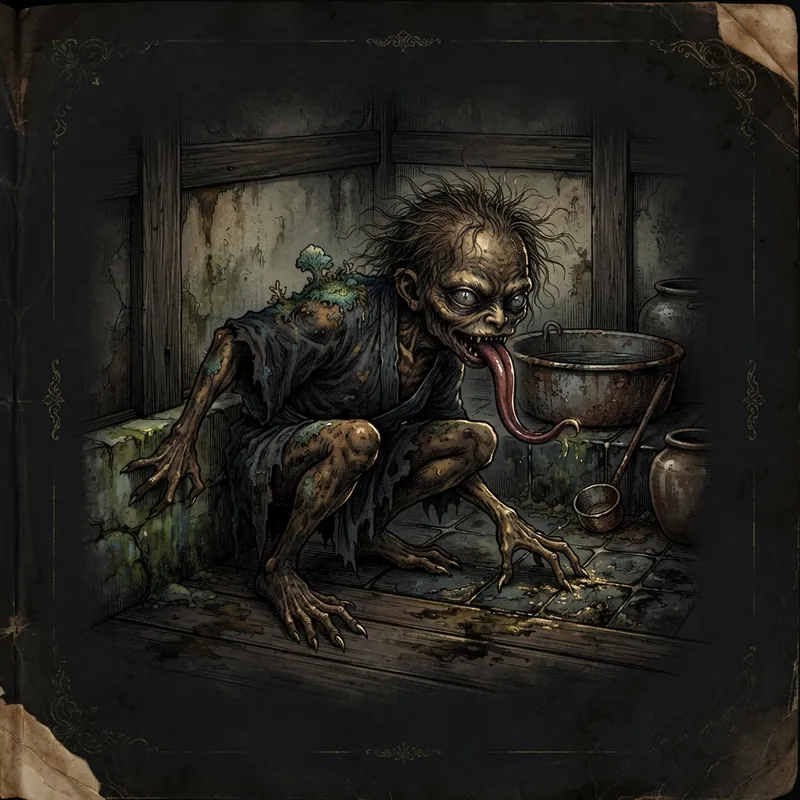
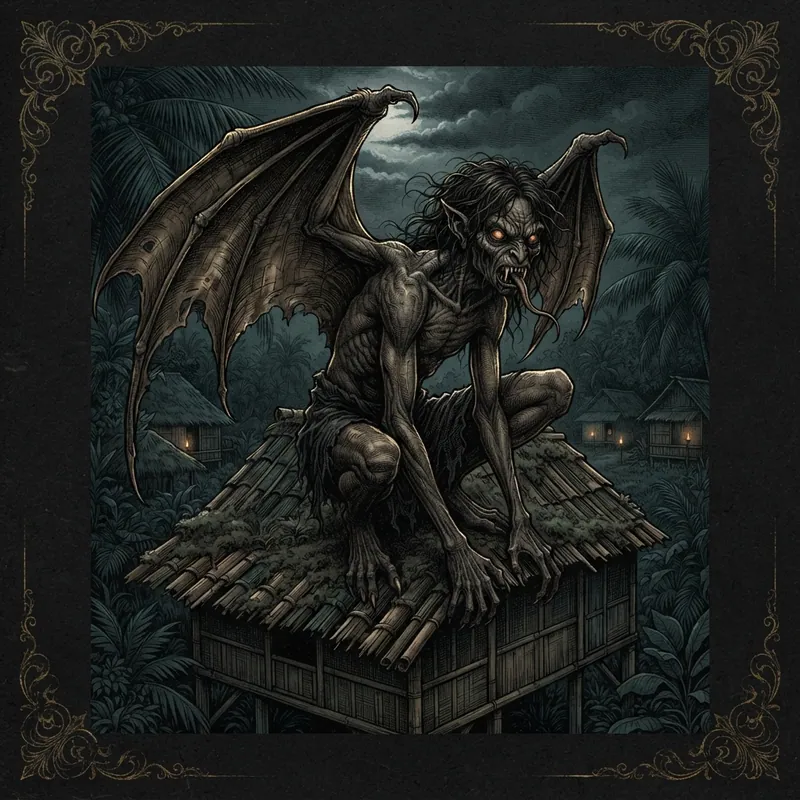
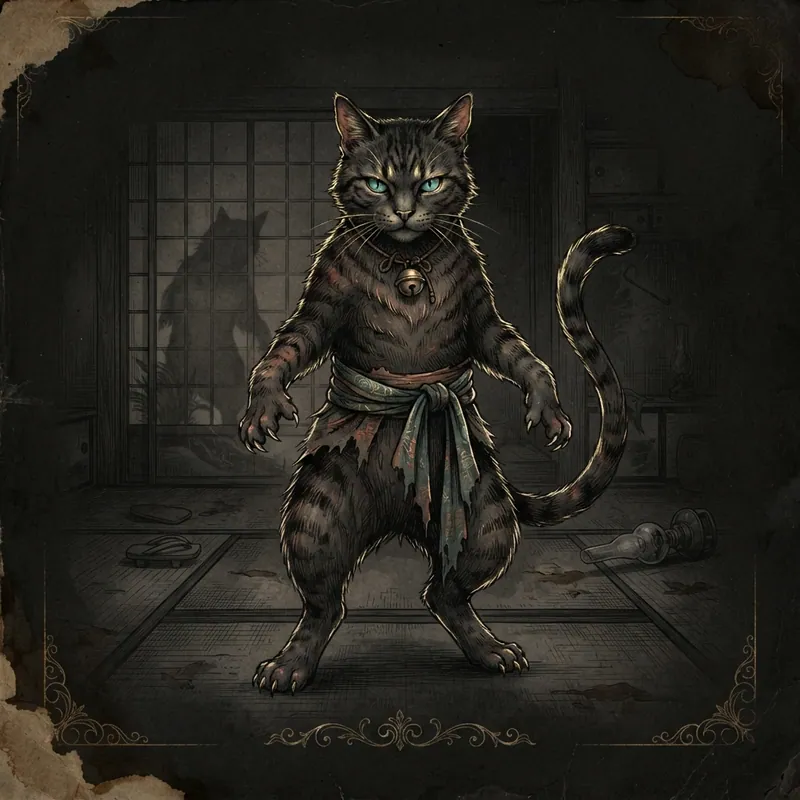
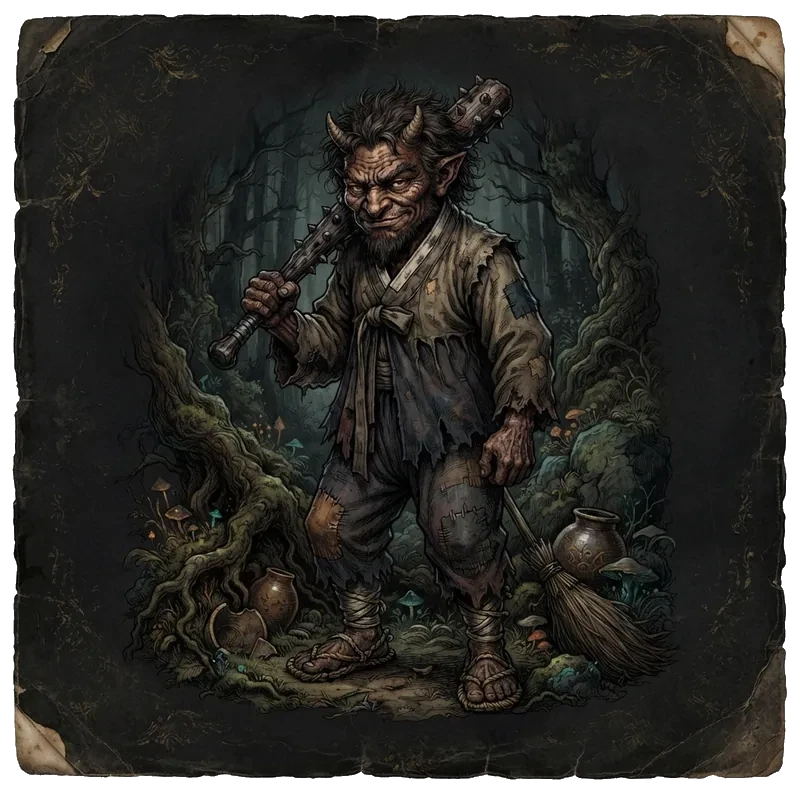
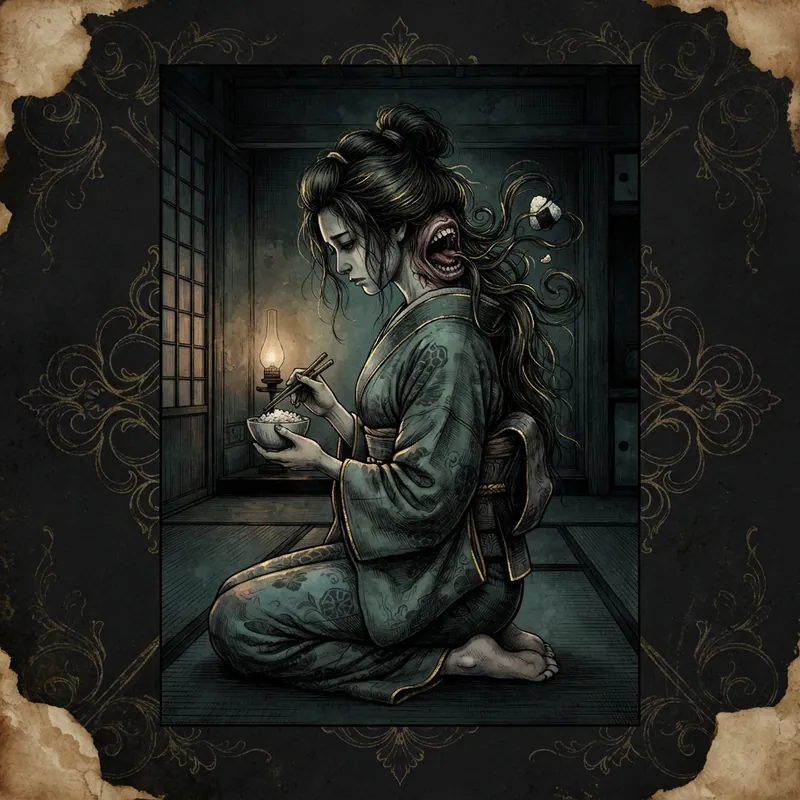
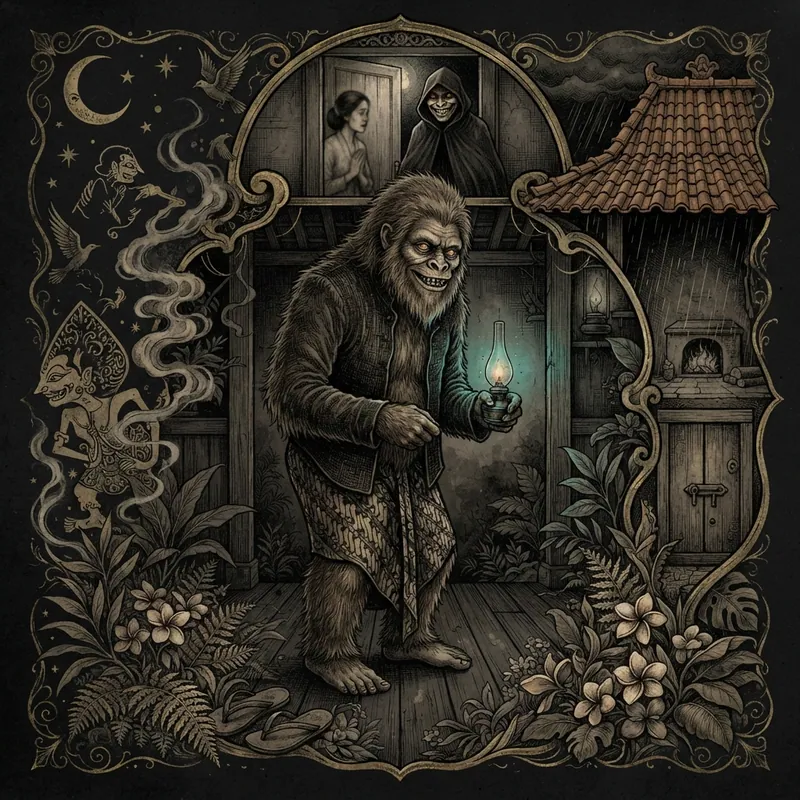
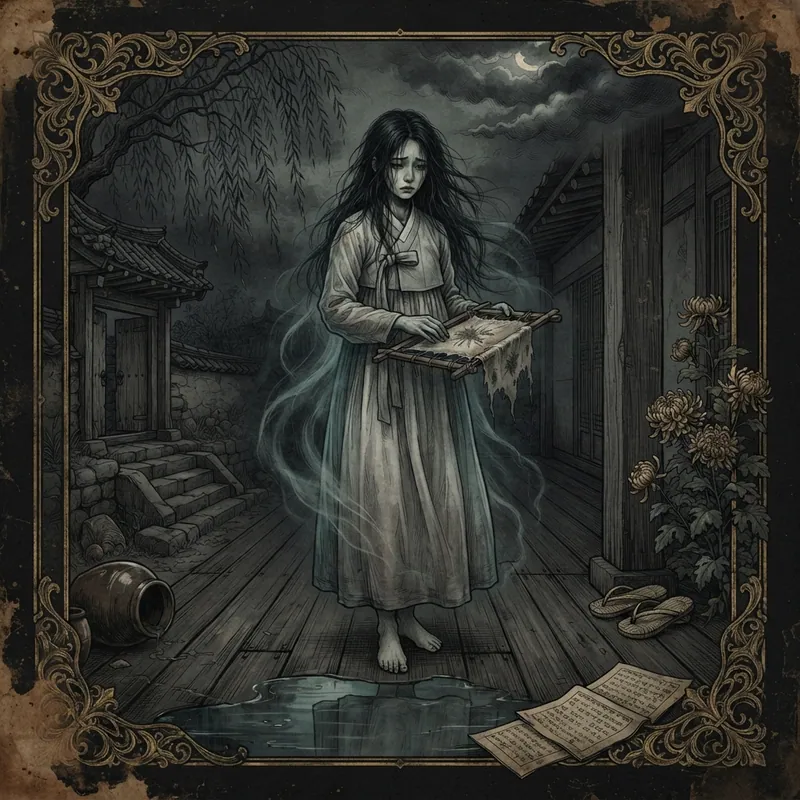
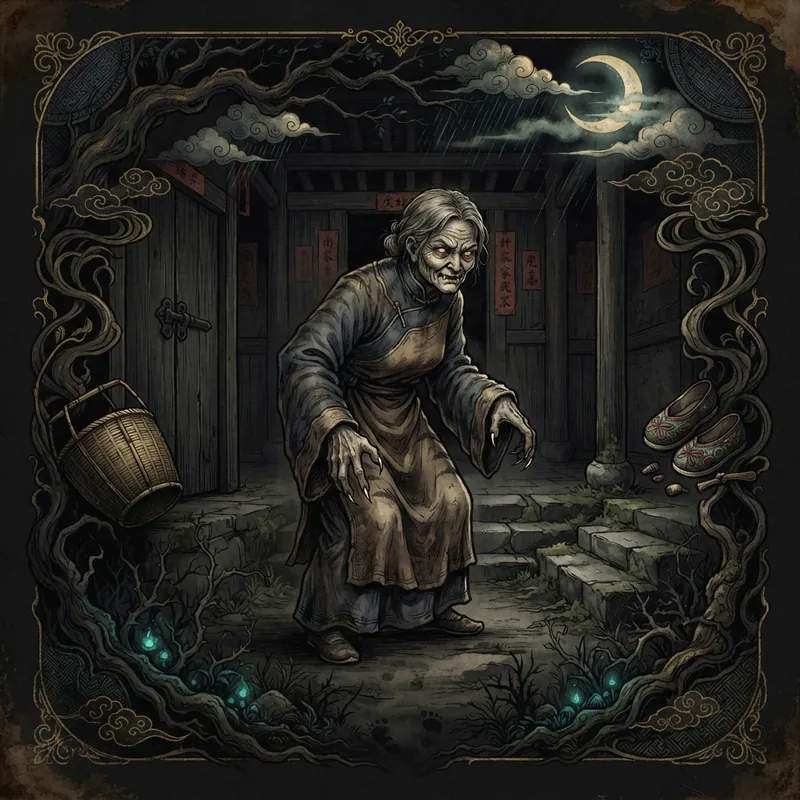
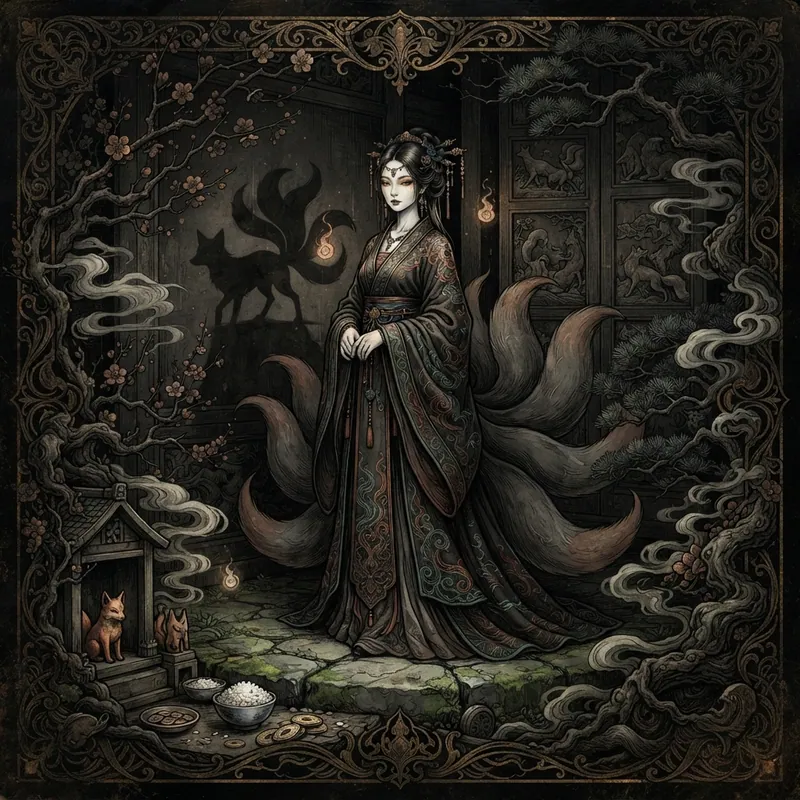
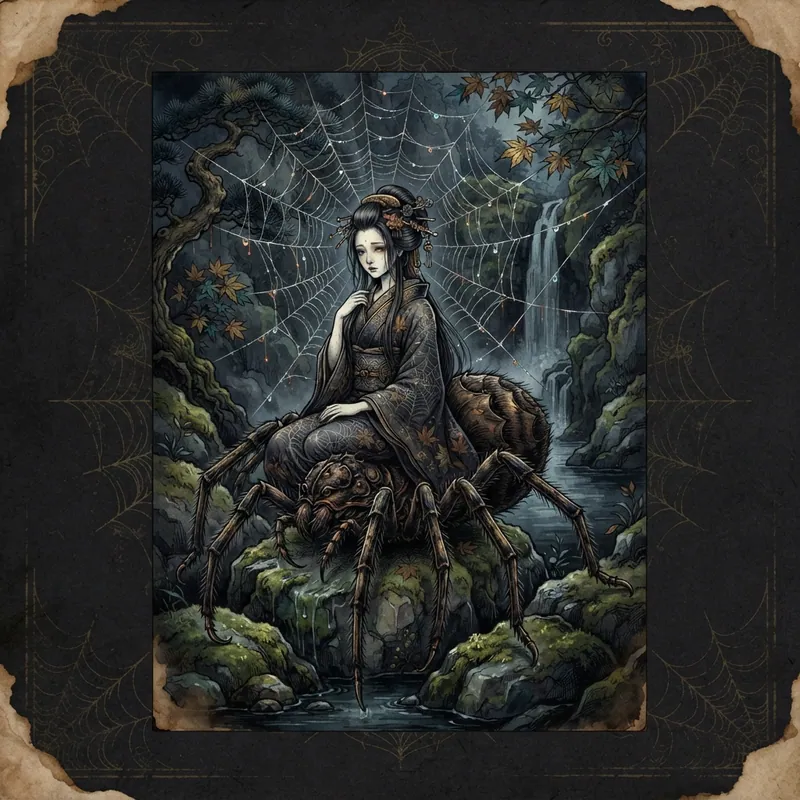
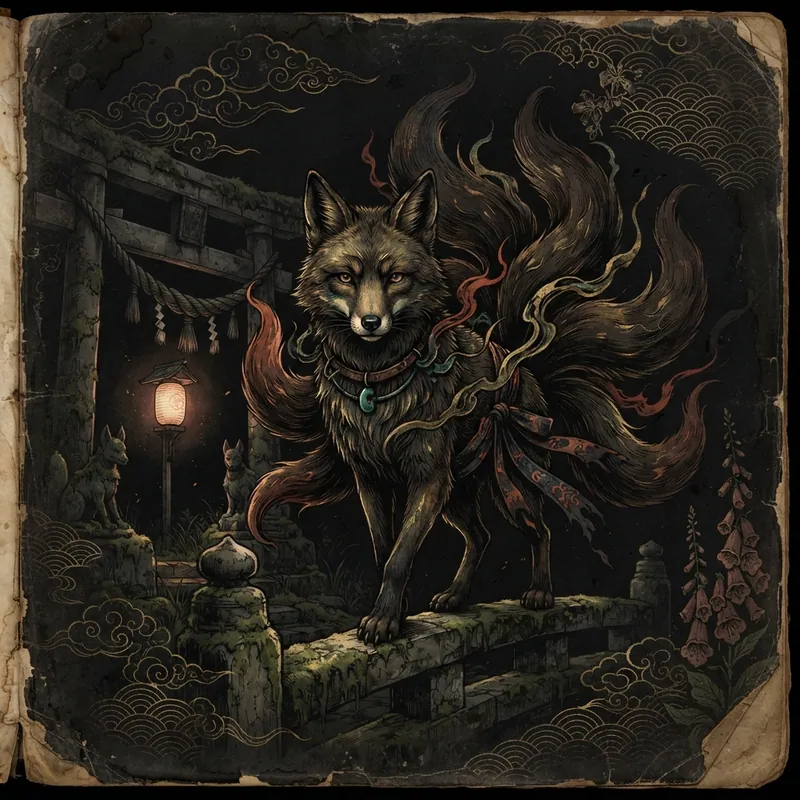
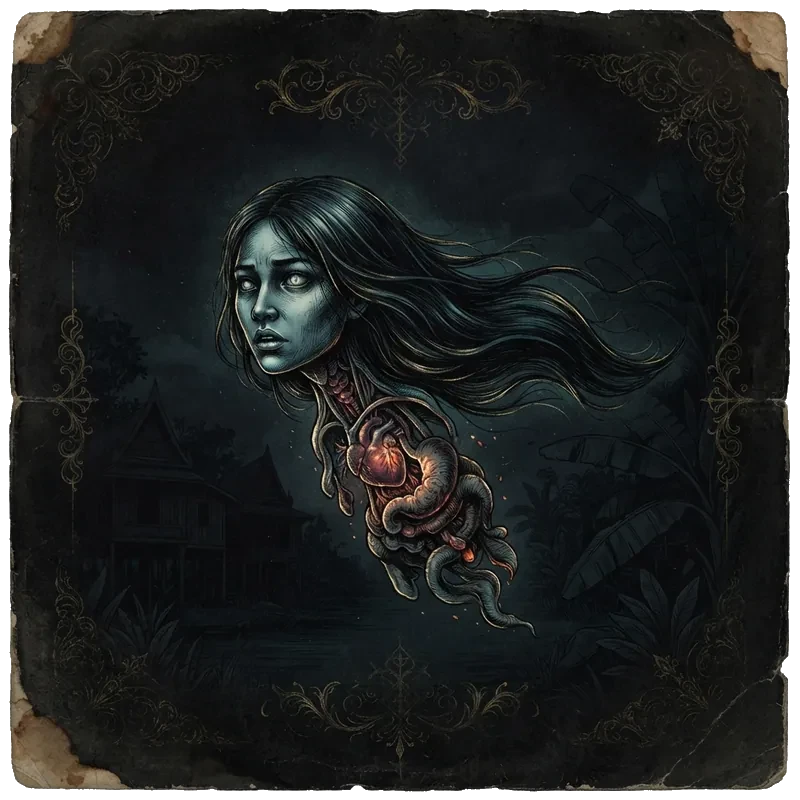
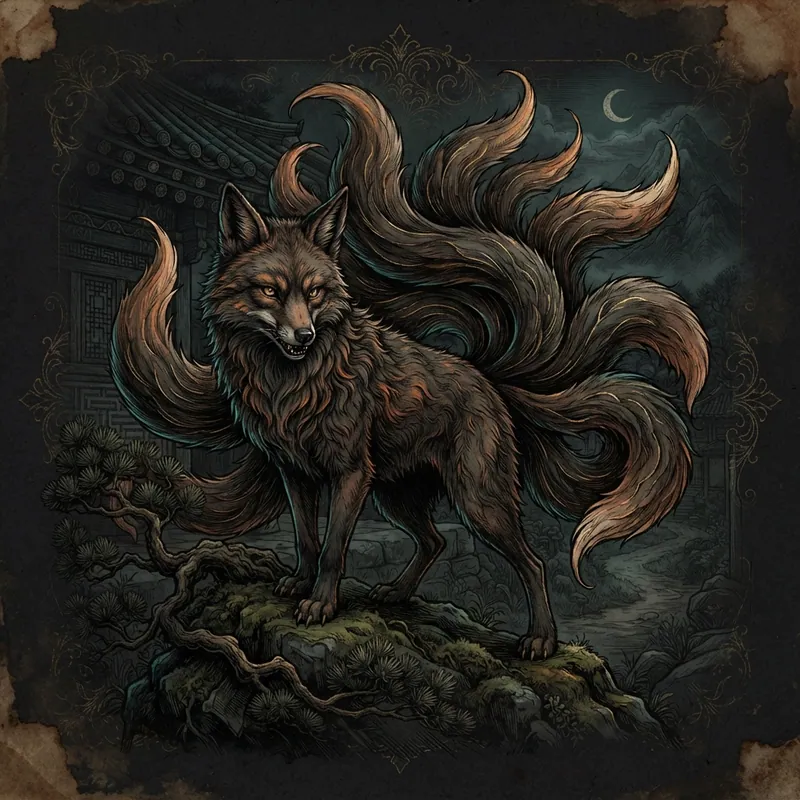
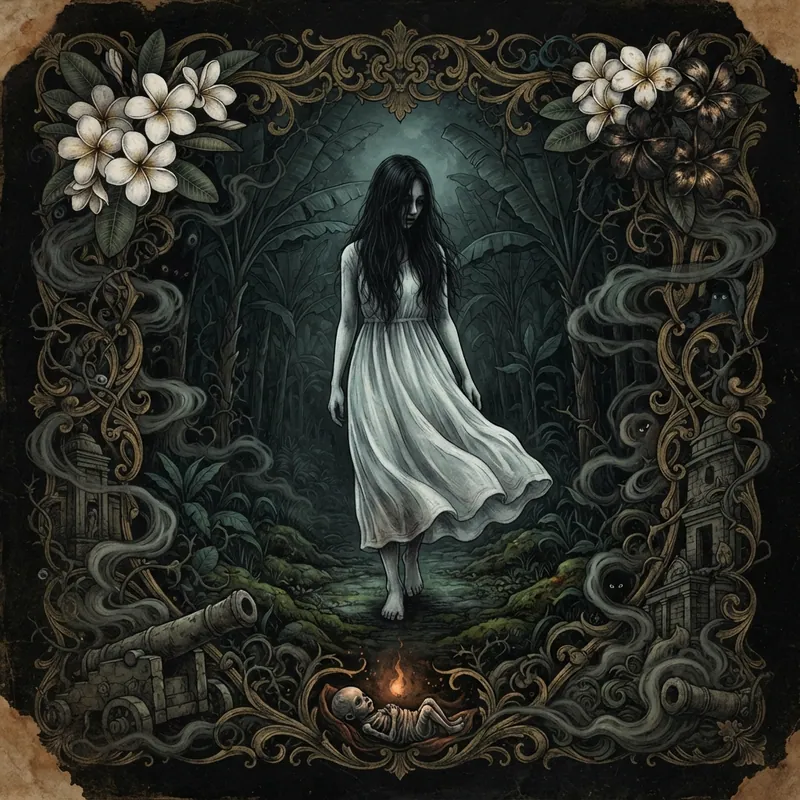
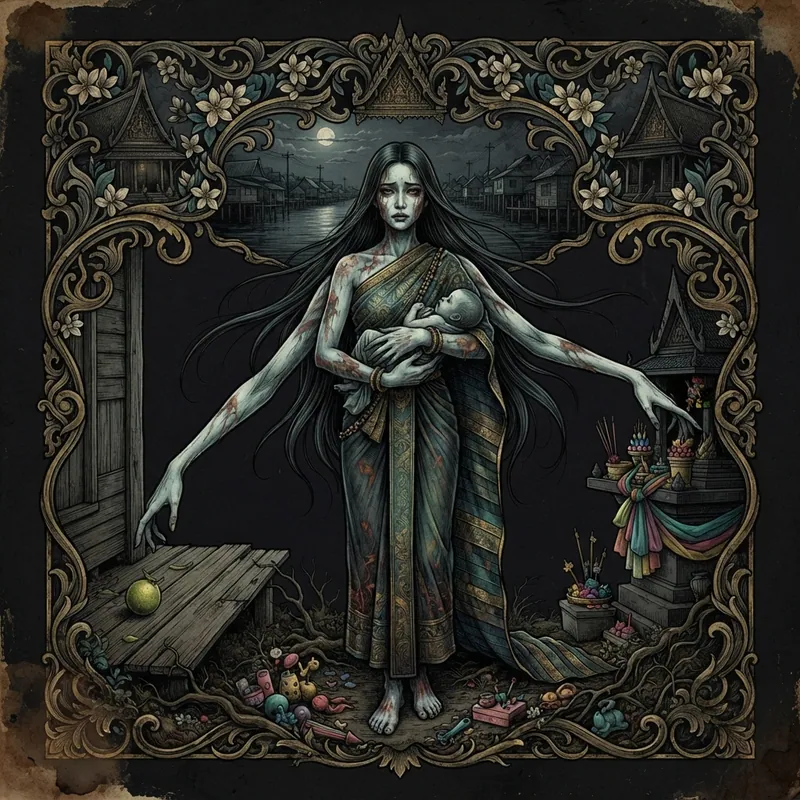
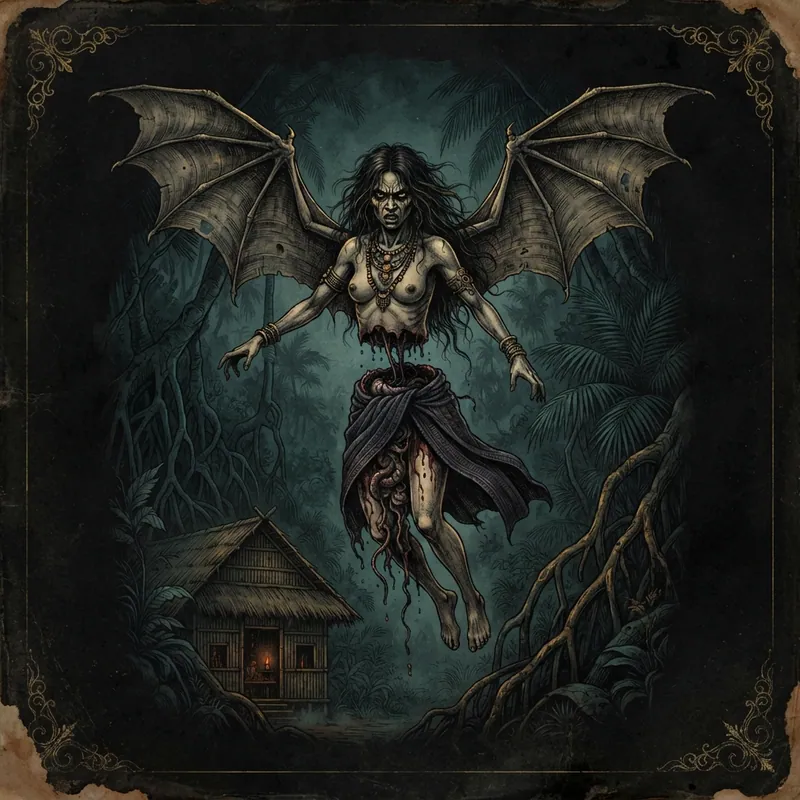
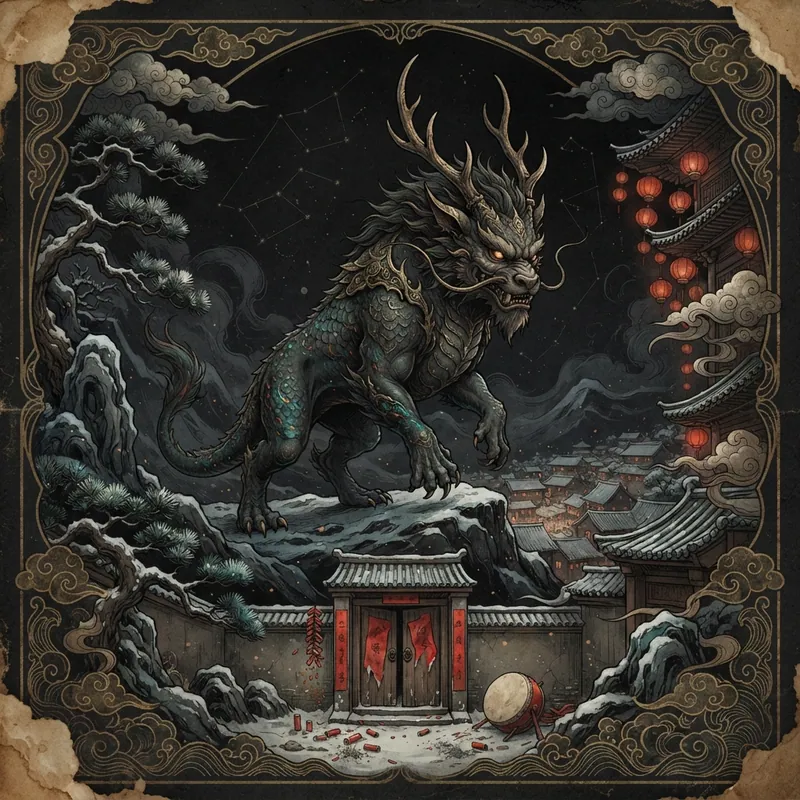
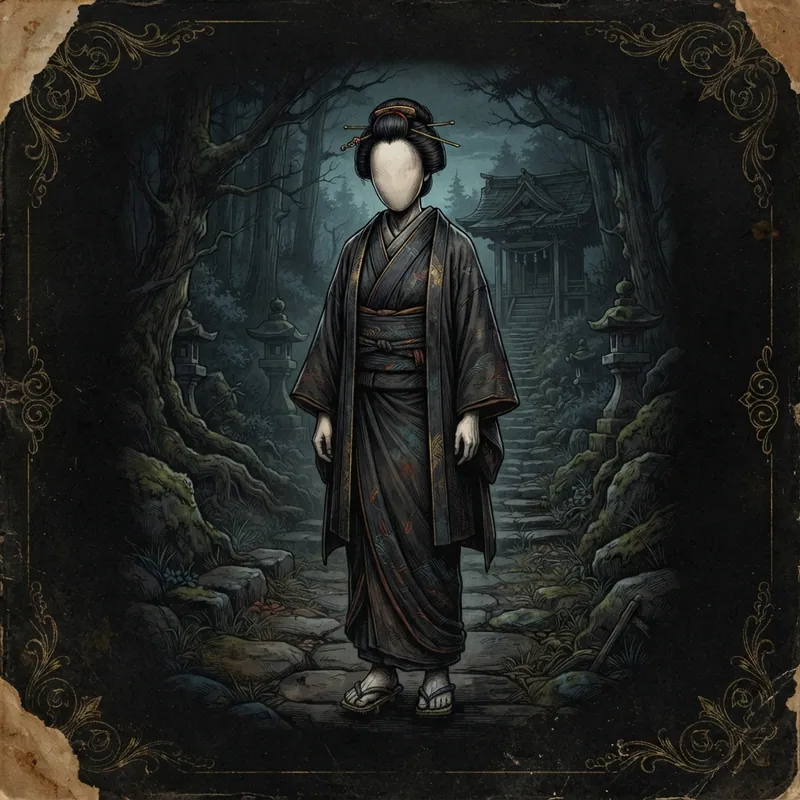
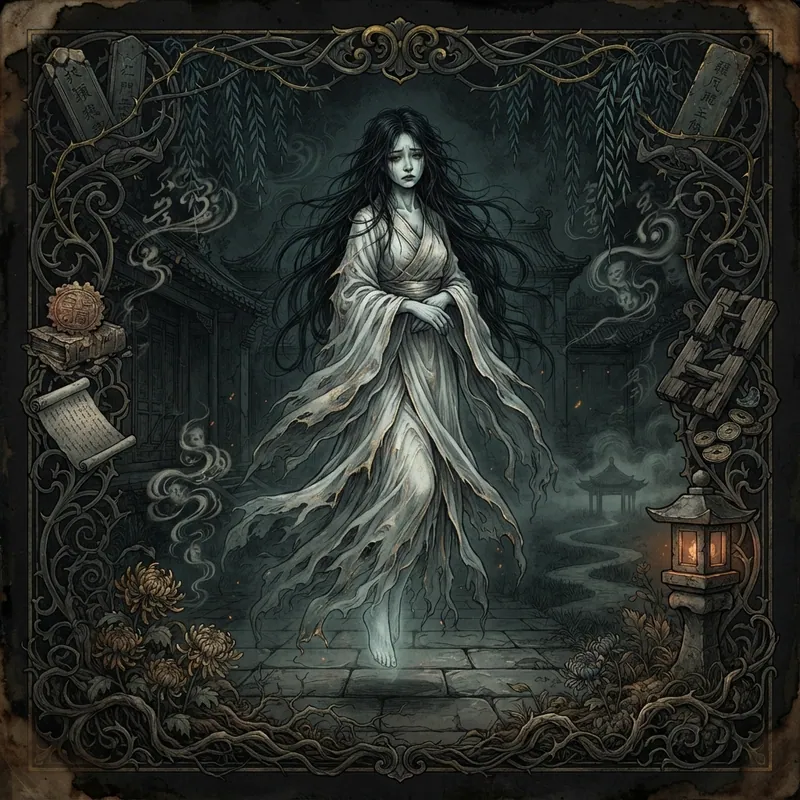
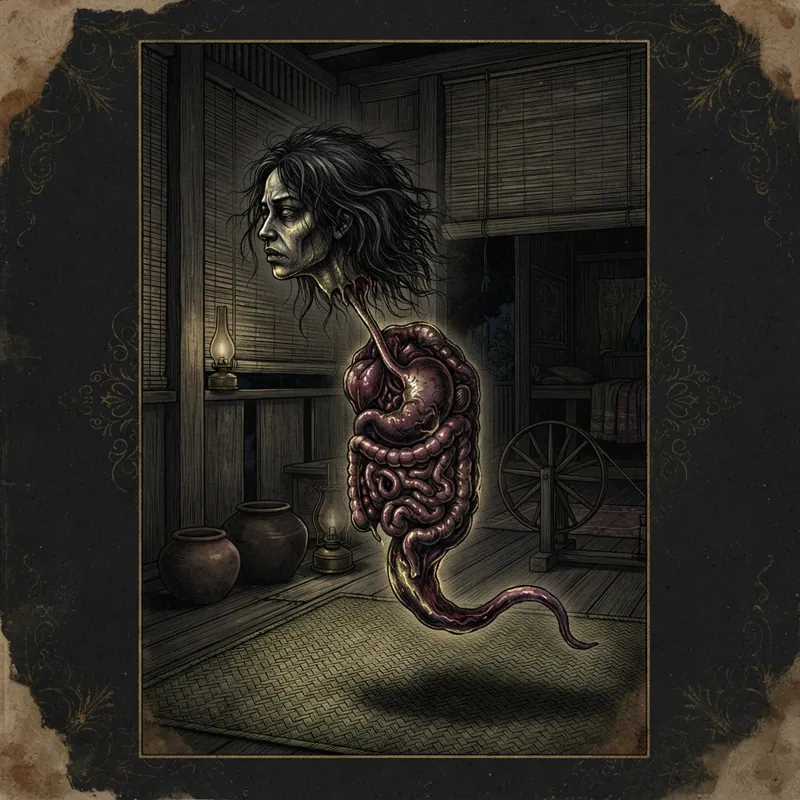
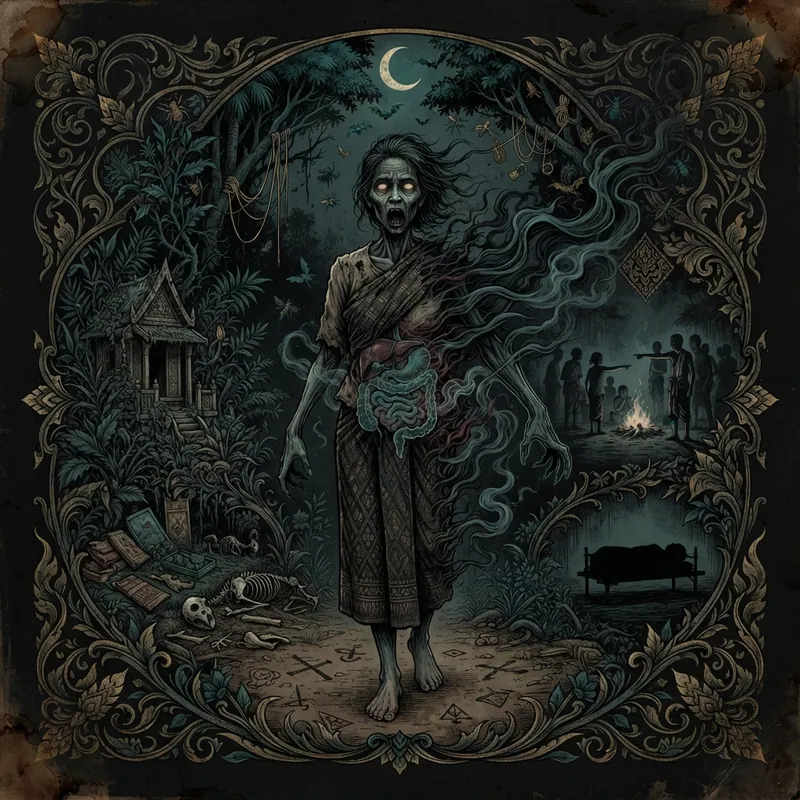
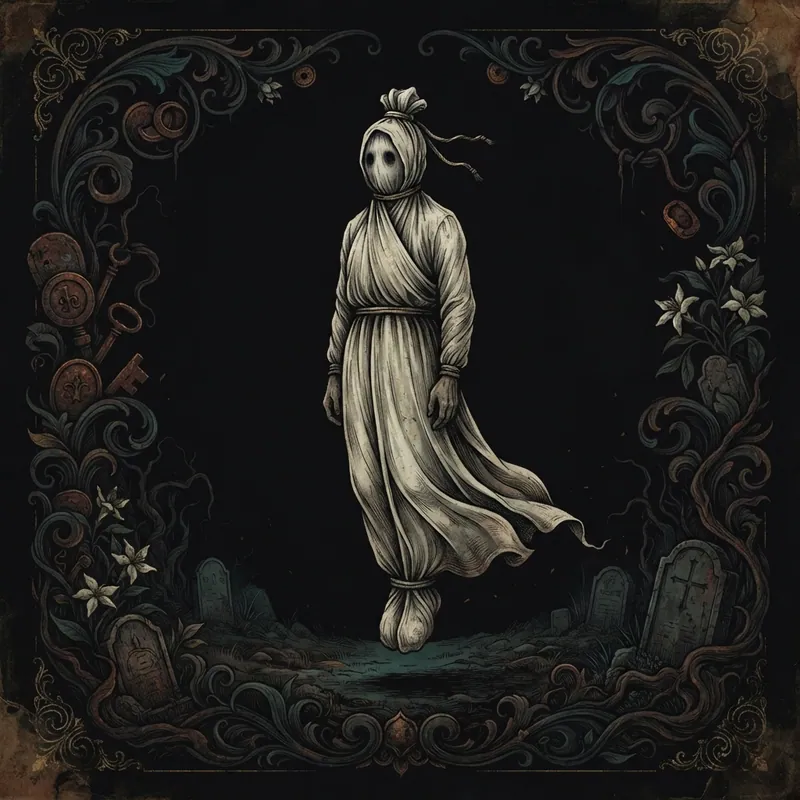
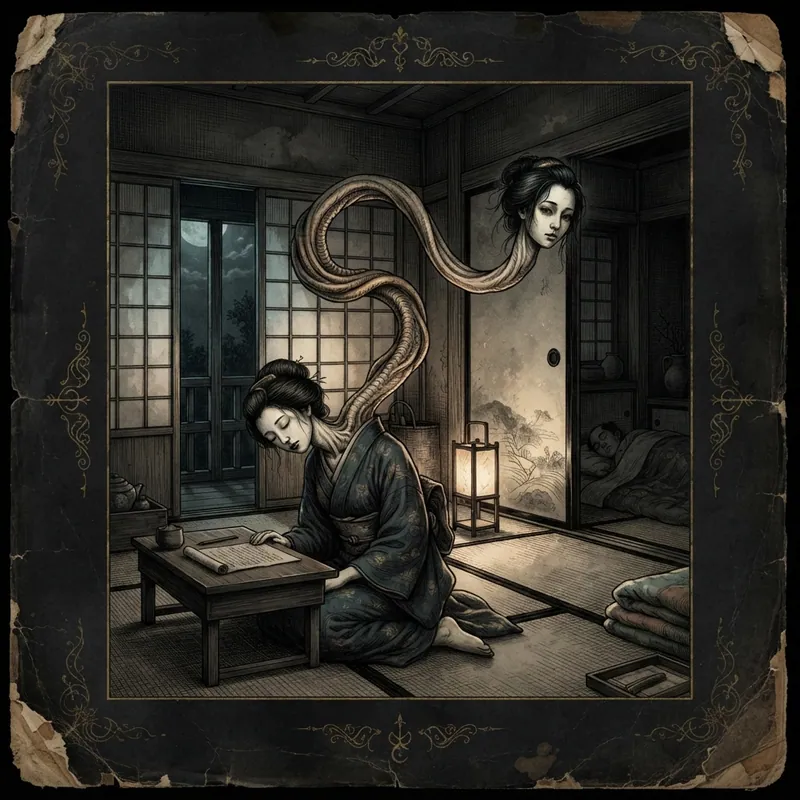
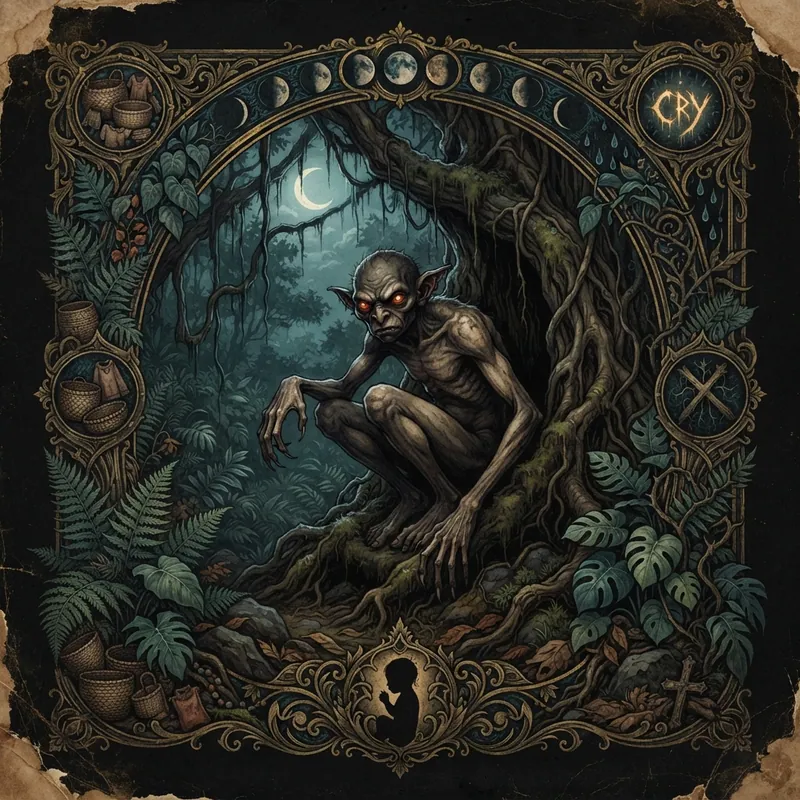
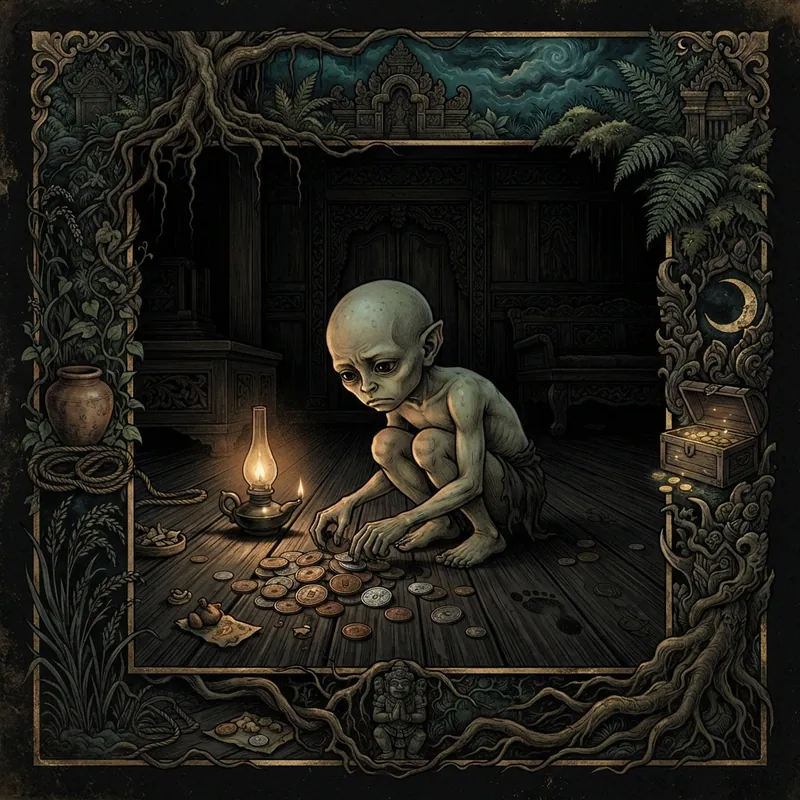
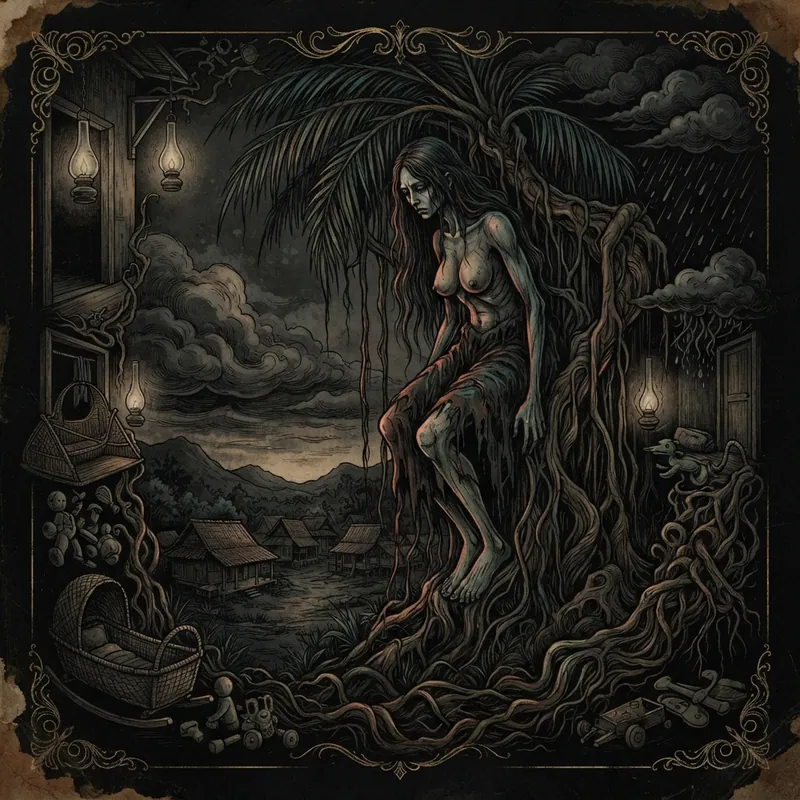
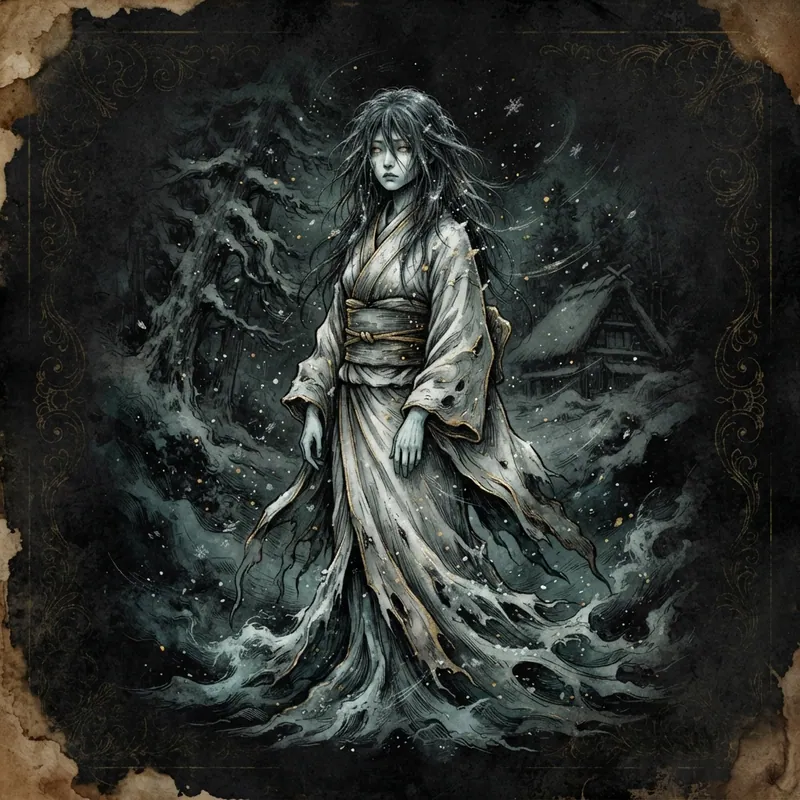
AkanameA yōkai associated with dirty bathrooms and neglected washing places, said to lick up the grime. A domestic warning dressed as a grotesque visitor.AswangAswang is a broad, regionally varied Philippine category encompassing several frightening beings and stories rather than one fixed creature.BakenekoA transformed cat of Japanese folklore, sometimes linked with age, mistreatment, or revenge. Related to, but not identical with, the split-tailed nekomata.DokkaebiNature-spirits or goblin-like beings of Korean folklore formed from old stained objects or arising in the wild—tricksters who punish greed and reward cleverness, not simple demons.Futakuchi-onnaA woman with a second mouth hidden in the back of her head, fed by writhing hair—often framed as a tale of neglected hunger, cruelty, or household injustice.GenderuwoA Javanese hairy, ape-like spirit of the memedi class. Clifford Geertz recorded it as more prankster than murderer; other tellings warn it wears a loved face to tempt.GwisinA Korean term for ghost, spirit, or divinity. Unlike the dokkaebi, gwisin in folk usage are often the human dead who remain because of unfinished ties. Distinct from the kumiho, which is a fox, not a ghost.Hú Gū PóHú Gū Pó, Grandaunt Tiger: a Hakka and Taiwanese ogress-tale of a tiger who becomes an old woman to eat children. A cautionary bedtime story, not a hunting manual.Huli JingA Chinese fox spirit that cultivates essence until it can take human form. Distinct from Japanese kitsune and Korean kumiho, though all three share an East Asian vulpine lineage.JorōgumoA spider yōkai in Japanese tradition, often imagined as able to take the form of a woman and lure travellers.KitsuneFox spirits in Japanese tradition, ranging from messengers of Inari to tricksters and lovers in disguise. Age and number of tails mark power; not every kitsune story is malevolent.KrasueA night-spirit figure in Thai and Khmer folklore, associated in many modern retellings with a glowing head travelling through the night.KumihoThe nine-tailed fox of Korean tradition, often more predatory in classical tales than some Japanese kitsune tellings, though modern media softens or romanticises the figure.KuntilanakThe Indonesian cousin of the Malay pontianak: a female revenant of pregnancy or childbirth death. Names are often used interchangeably; tellings and the city of Pontianak’s founding legend keep them entangled rather than identical.Mae NakMae Nak of Phra Khanong: a specific Thai revenant of a woman who died in childbirth and waited for her husband. Her shrine at Wat Mahabut remains a place of living offerings.ManananggalA nocturnal, flying figure in Philippine folklore, often described in regional stories as separating from its lower body to hunt at night.NianA horned New Year beast of Chinese popular legend, said to leave sea or mountain once a year to feed. Firecrackers, drums, and the colour red are remembered as the wards that drive it off.Noppera-bōThe faceless ghost of Japanese urban and roadside lore, often appearing first as an ordinary person before revealing a smooth, featureless face—a jolt more than a long chase.Nü GuiA Chinese category of female ghost, often the returning spirit of a woman who died under injustice. Not one named monster, but a recurring figure of grievance, mourning dress, and unfinished memory.PenanggalanA Malay nocturnal being, often a midwife or woman practicing dark arts, whose head and entrails detach to hunt. Related to but distinct from the Philippine manananggal.Phi PopA ravenous possessing spirit of ethnic Lao belief in Laos, Isan, and nearby regions. It uses a human host to eat internal organs. Communities may exile the accused; some Lao villages specialise in receiving them.PocongAn Indonesian ghost in the Islamic burial shroud. Folk belief holds that if the kain kafan’s ties are not undone in the grave, the dead may rise still wrapped. Hopping is a film sign; many accounts say a true pocong floats.RokurokubiA yōkai whose neck stretches enormously at night while the body sleeps or sits still. Some tellings treat the person as unaware; others as knowing and predatory.TiyanakA Philippine being that mimics an infant’s cry to lure passers-by. Related in name to Malay childbirth spirits, but here the child, not the mother, is the hunter. Origins and forms vary by ethnolinguistic group.TuyulA child-shaped spirit of Indonesian and Malay folklore, spoken of as a familiar that steals wealth for a keeper. Often imagined in connection with the unsettled dead of infancy. This entry is a warning about greed, not a recipe.Wewe GombelA Javanese female spirit who kidnaps children. Folklore also says she keeps neglected children kindly until their parents change. Fright and shelter occupy the same figure.Yuki-onnaThe snow woman of Japanese folklore, appearing in mountain storms as a beautiful, deadly figure of cold. Motives range from predation to strange mercy depending on the tale.
 ⌂
⌂ ◎
◎ ◎
◎ ☾
☾ ☾
☾ ☾
☾ ◌
◌ ◎
◎ ◎
◎ ◎
◎ ◎
◎ ☾
☾ ◎
◎ ✦
✦ ✦
✦ ◎
◎ ☾
☾ ◎
◎ ◌
◌ ☾
☾ ❖
❖ ✦
✦ ☾
☾ ☾
☾ ⌂
⌂ ☾
☾ ☾
☾Eastern Europe · 14
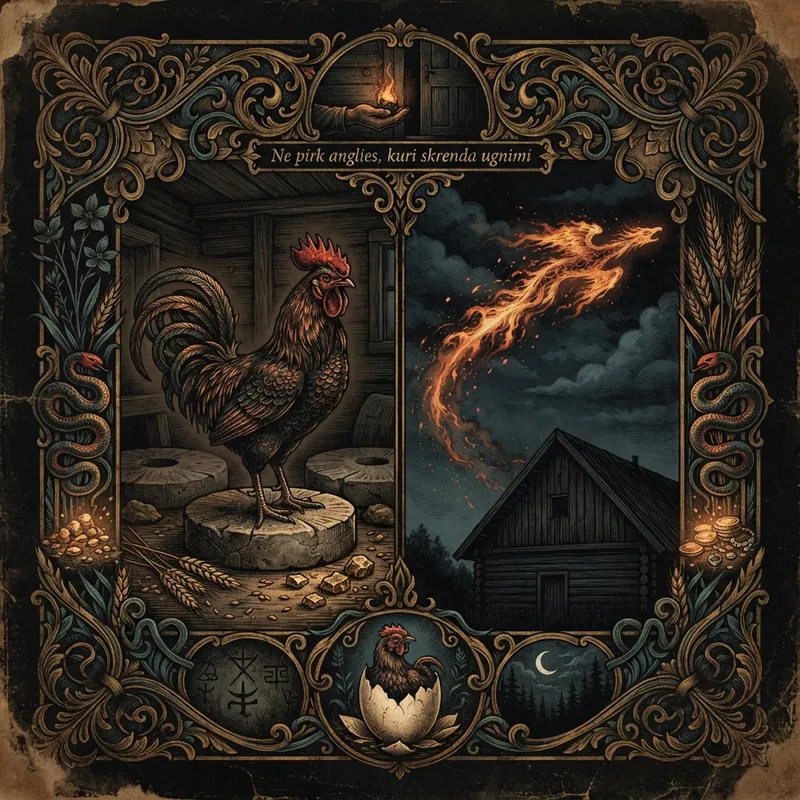
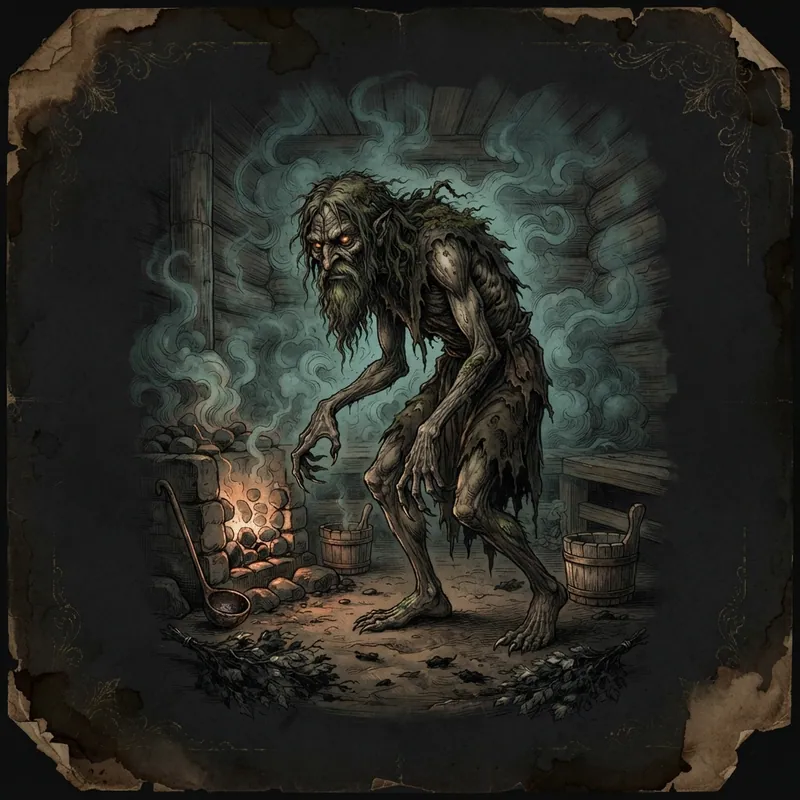
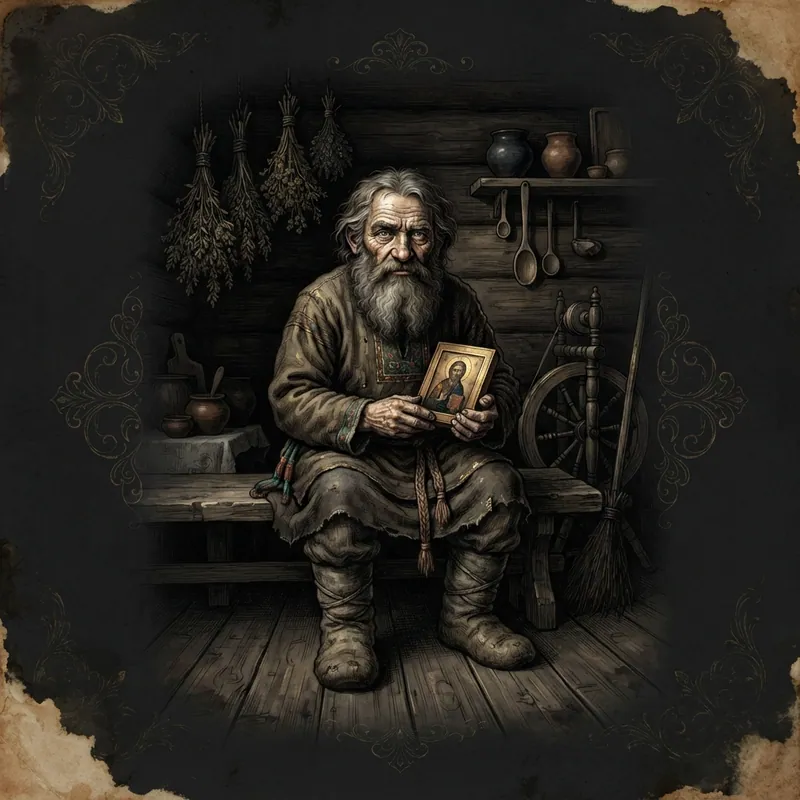
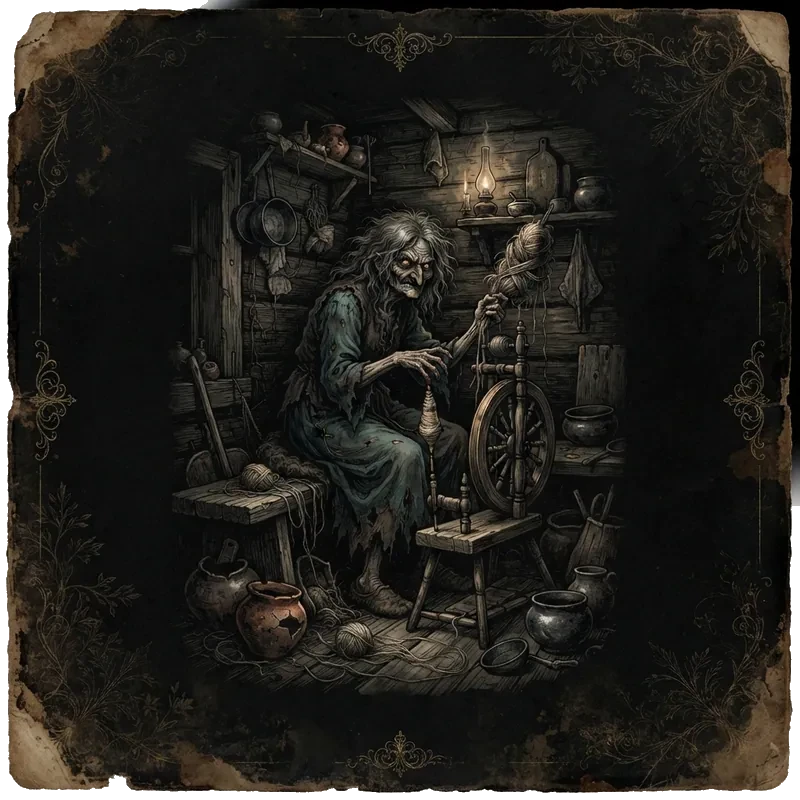
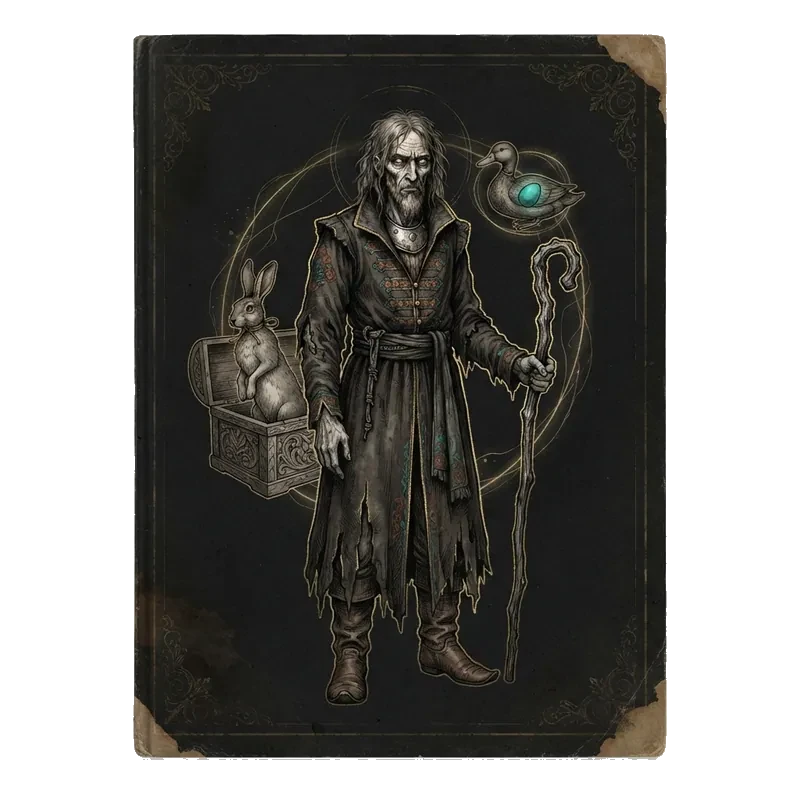
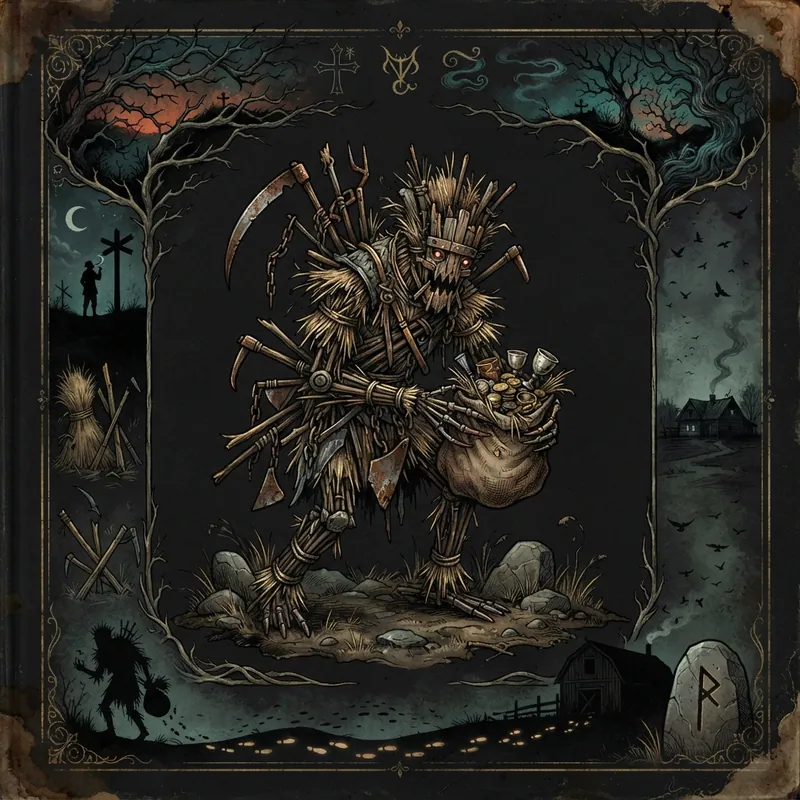
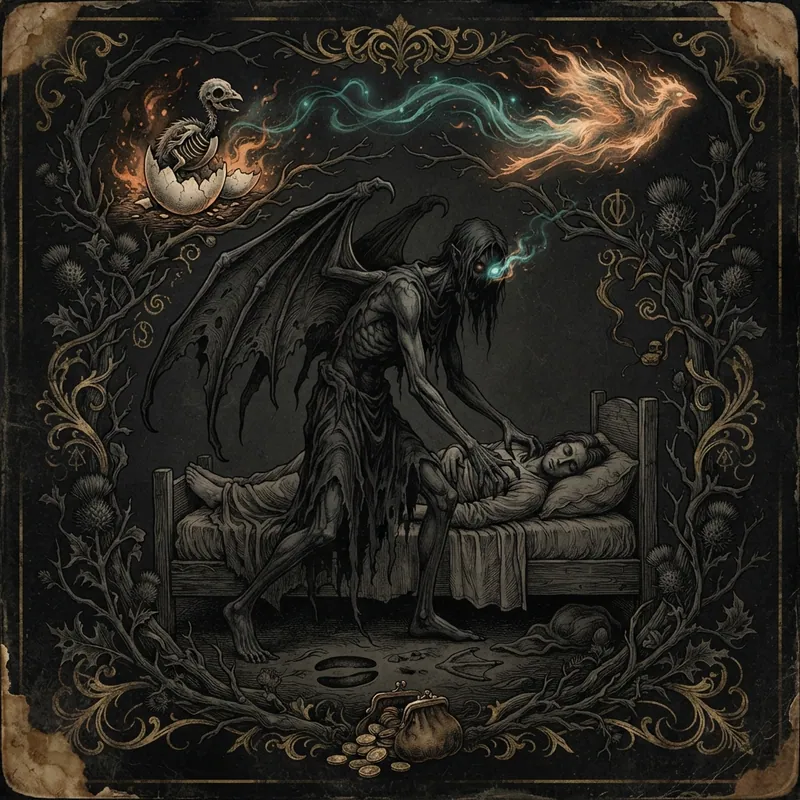
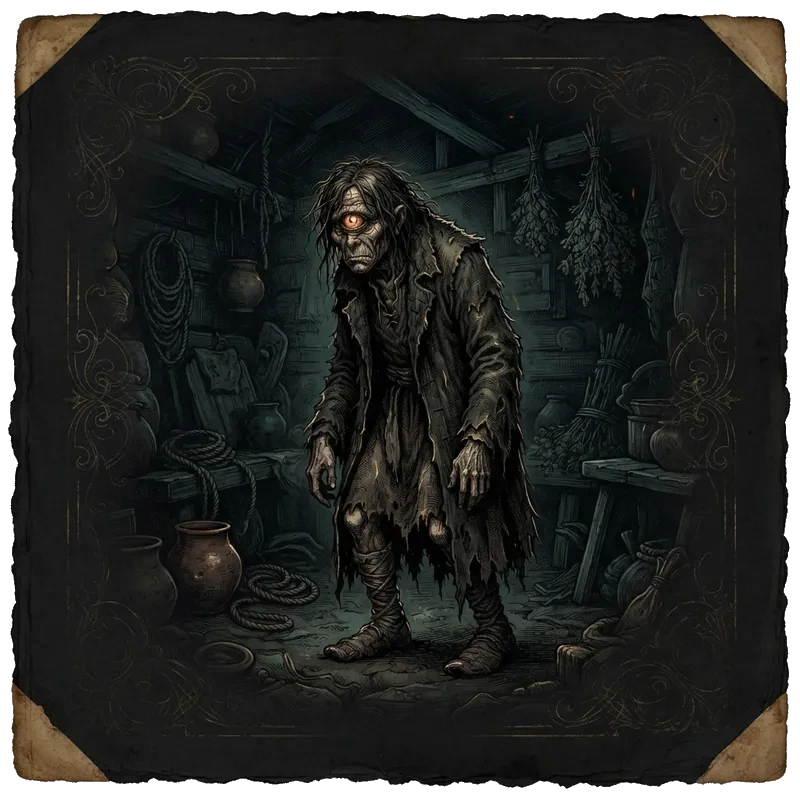
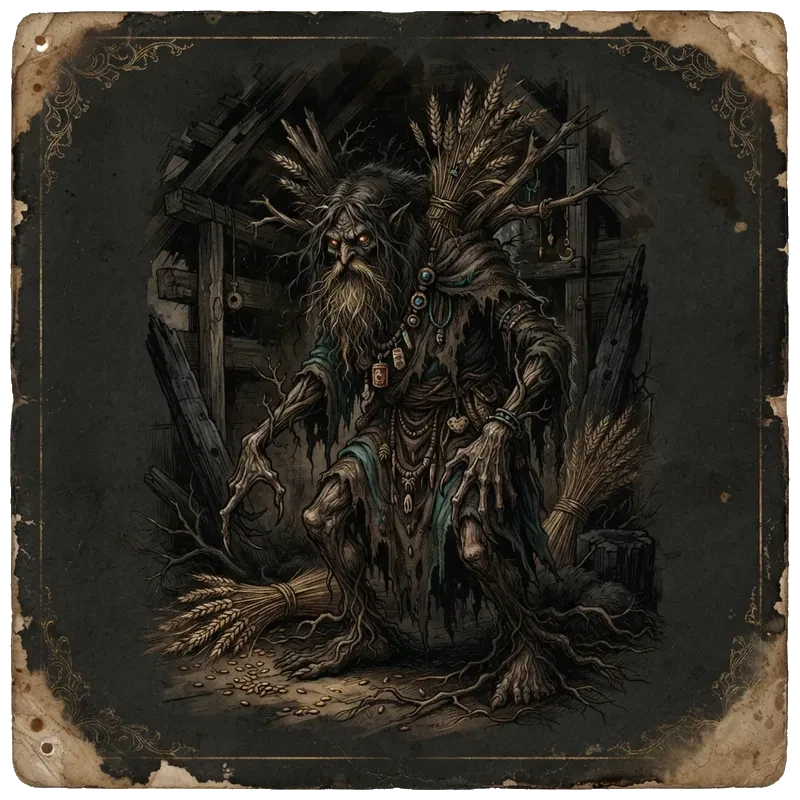
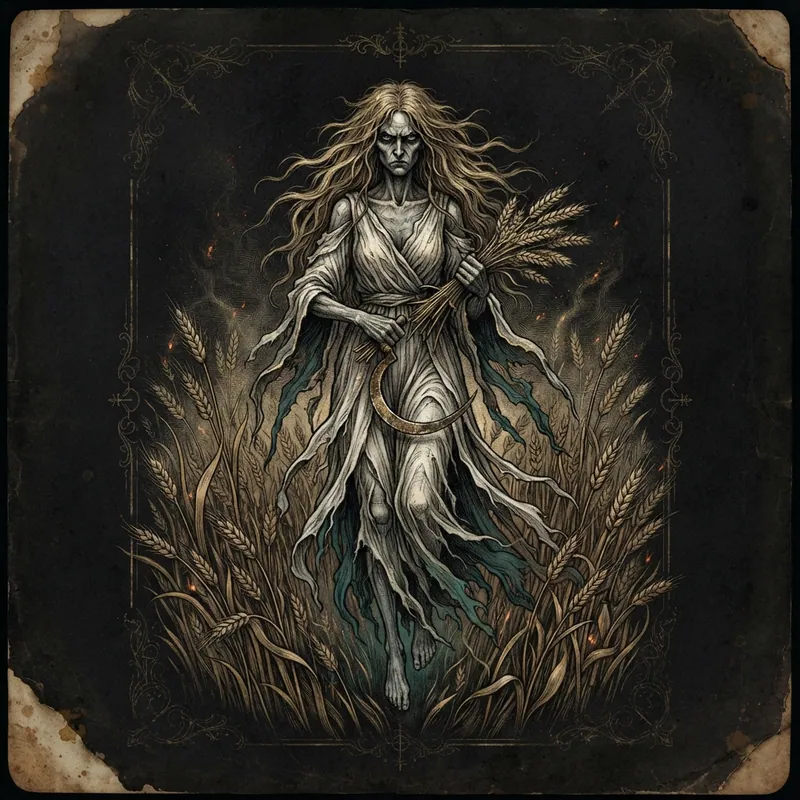
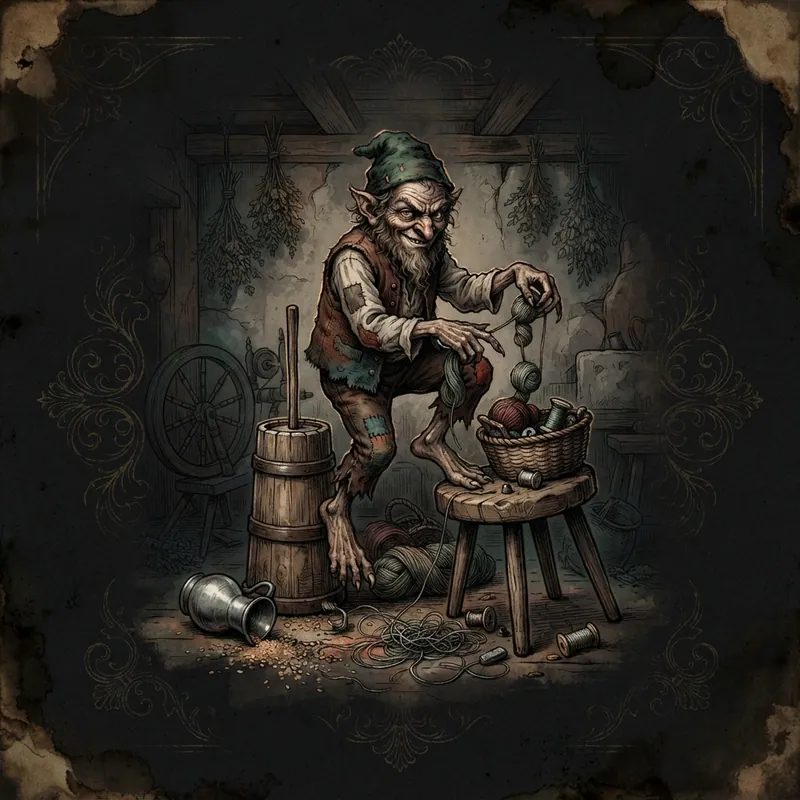
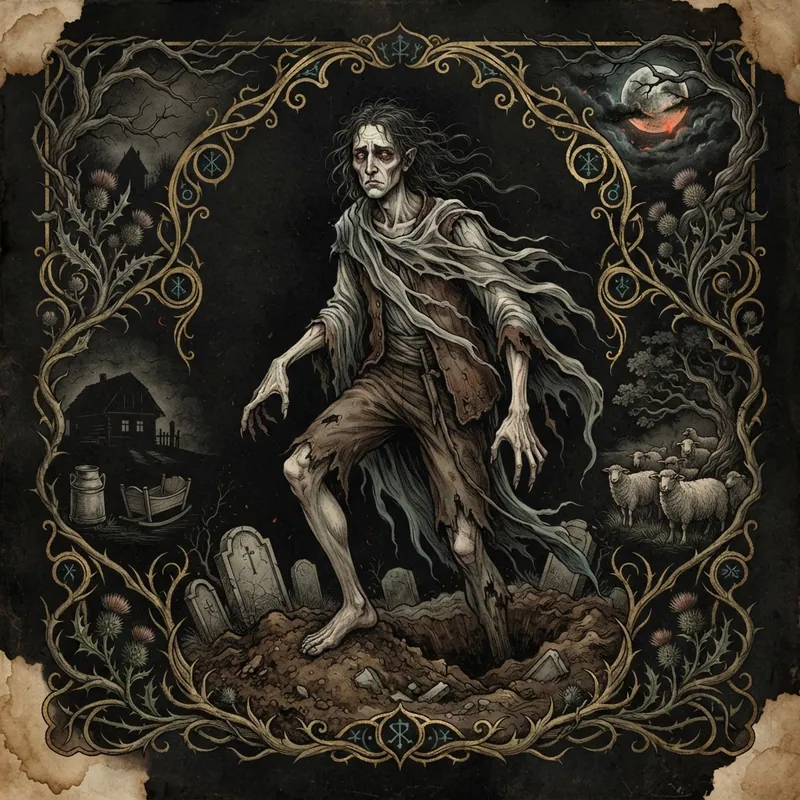
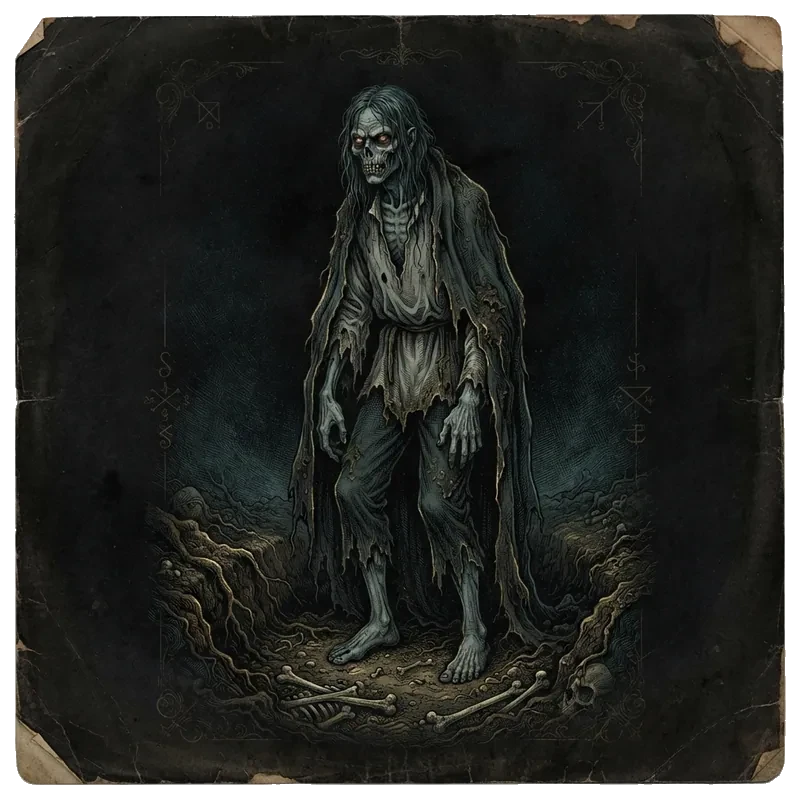
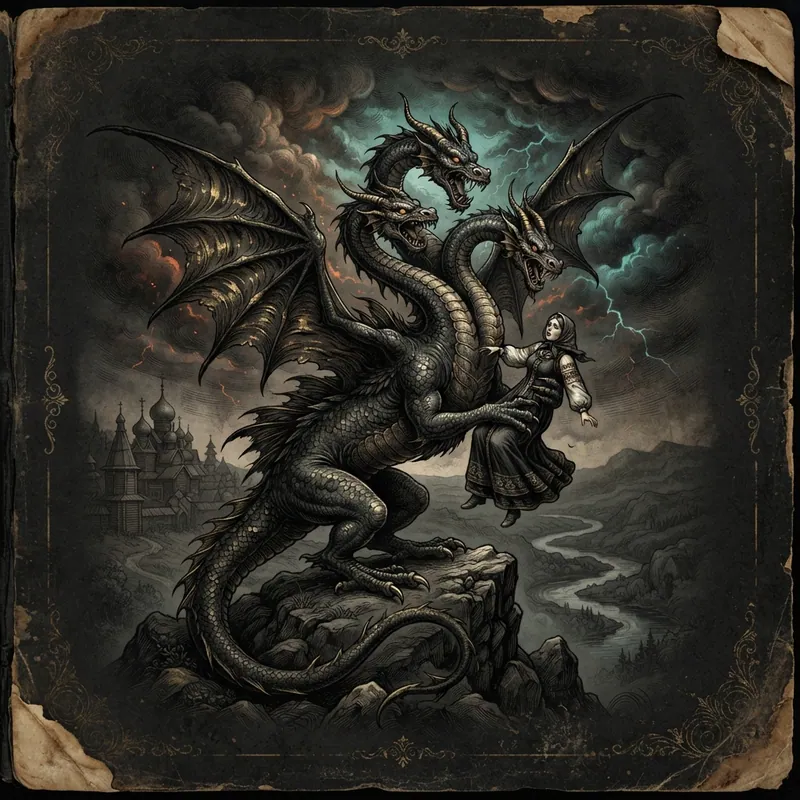
AitvarasA Lithuanian household spirit that appears as a rooster indoors and a flying fiery serpent outdoors, bringing grain and gold taken from neighbours. Kindred to the Estonian kratt, but hatched rather than built.BannikThe spirit of the bathhouse in Russian folklore. Bathhouses were liminal, dangerous places; the bannik punished those who broke bathing etiquette or lingered after the proper hour.DomovoiA household spirit in Slavic folklore, connected with the wellbeing of the home and the obligations of those who live there.KikimoraA domestic spirit in Slavic folklore, sometimes linked with unfinished household work, night noises, and unease inside the home. Tellings differ on whether she is merely mischievous or actively harmful.Koschei the DeathlessA recurring antagonist of East Slavic wonder tales whose life is hidden outside his body—often in nested objects—so he cannot be killed by ordinary means. A story figure more than a village belief.KrattAn Estonian treasure-bearer assembled from hay or old farm implements and animated by a bargain with the Devil, usually three drops of the maker's blood. It steals for the farm until it is left without work.LidércA Hungarian night visitor that may be hatched as a miracle chicken, fly as a fiery light, or press the sleeper as an incubus. Wealth and longing arrive together; the keeper seldom keeps both life and gold.LikhoPersonified misfortune in East Slavic tradition, sometimes imagined as a one-eyed being that attaches itself to a household or traveller. Related to ideas of fate and doom rather than a single fixed monster.OvinnikA spirit associated with the ovin (grain-drying barn) in East Slavic rural lore, capable of protecting the harvest or setting it ablaze if offended.PołudnicaThe noon-lady or Lady Midday of Slavic agricultural folklore, said to appear in the fields at the hottest hour and punish or bewilder those who work through the dangerous heat.PsotnikA mischievous domestic or farm spirit in Polish lore, closer to a trickster of chores and objects than a graveyard horror—still capable of spoiling work and temper.StrigoiIn Romanian folklore a strigoi may be a living person whose soul wanders at night, or a dead revenant who returns to trouble family and herd. Distinct from the Polish strzyga and from literary Dracula.UpyrA Slavic term for a dangerous returning dead figure, often associated with improper burial or an unclean death. Later vampire fiction borrows the word but should not overwrite older regional meanings.ZmeyA dragon or serpent figure across Slavic storytelling (zmey, zmaj, smok), sometimes a storm-bringer, sometimes a shapeshifting abductor of maidens, sometimes a guardian. Local names and morals diverge widely.
 ⌂
⌂ ⌂
⌂ ⌂
⌂ ⌂
⌂ ☾
☾ ⌂
⌂ ☾
☾ ✧
✧ ⌂
⌂ ✧
✧ ⌂
⌂ ☠
☠ ✦
✦ ◎
◎Europe & the North · 17
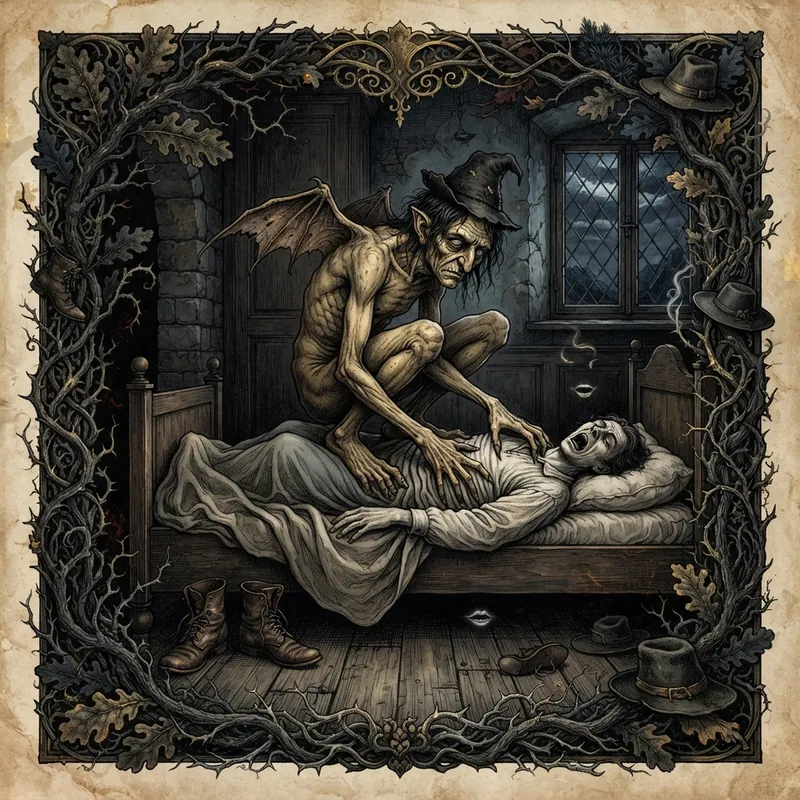
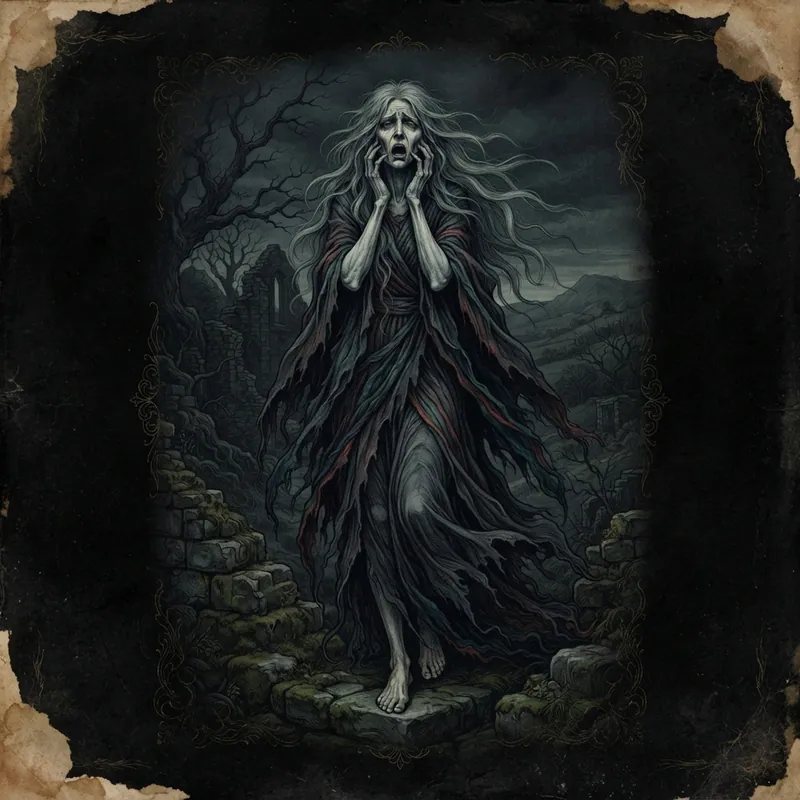
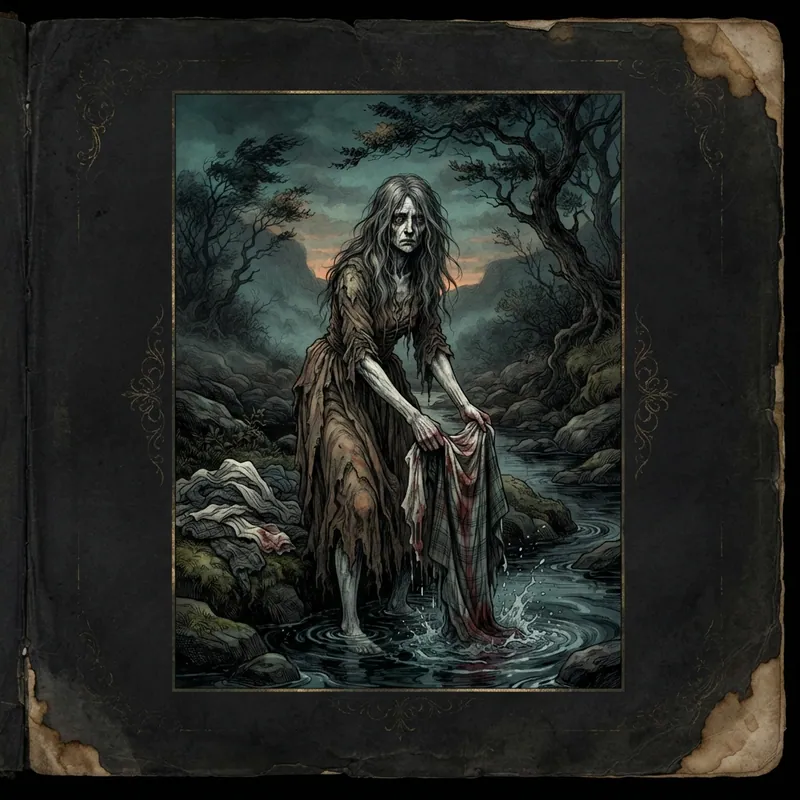
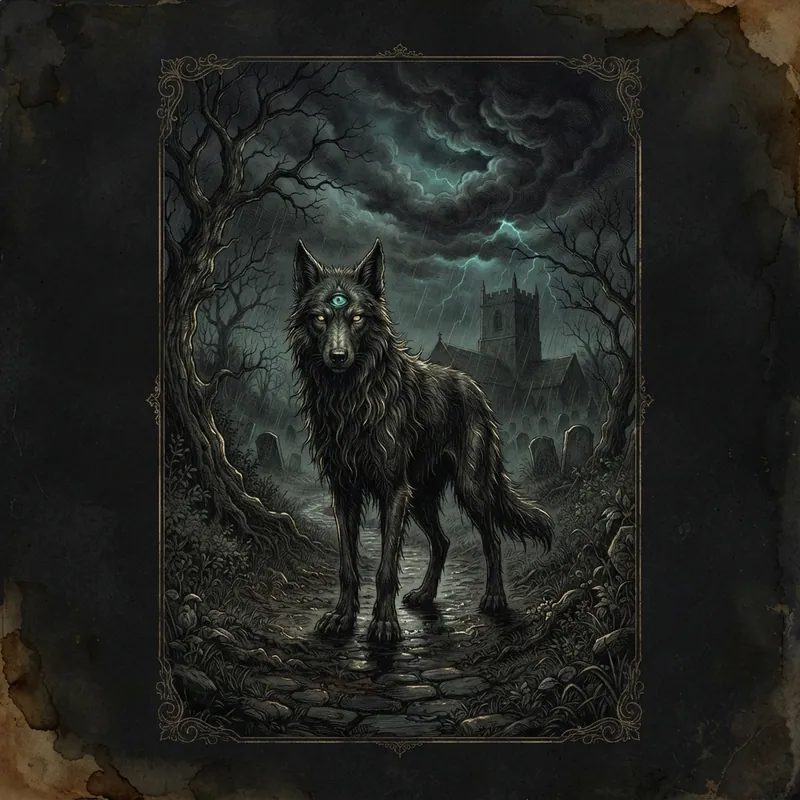
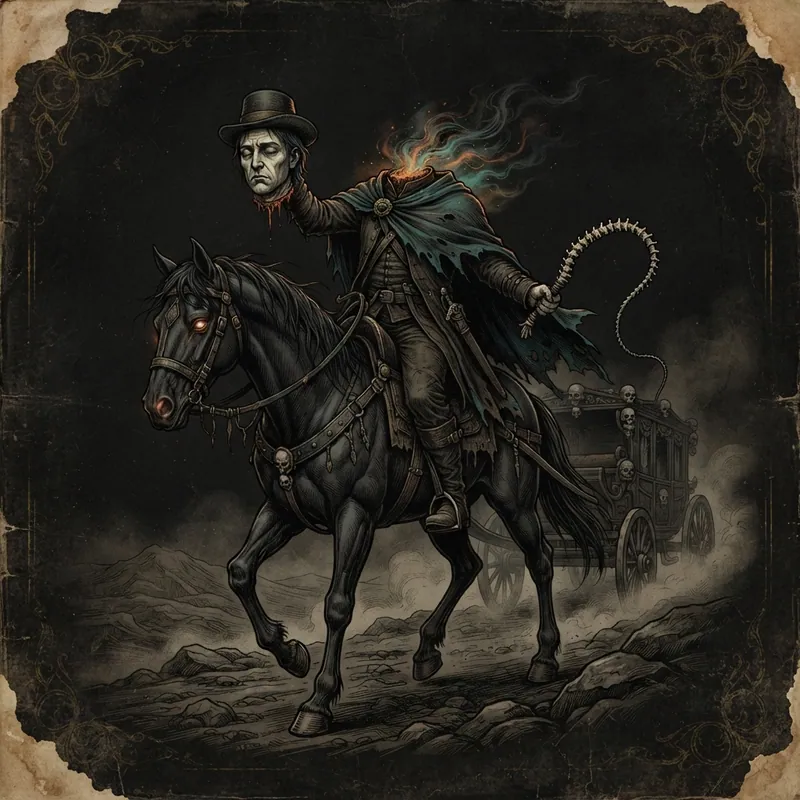
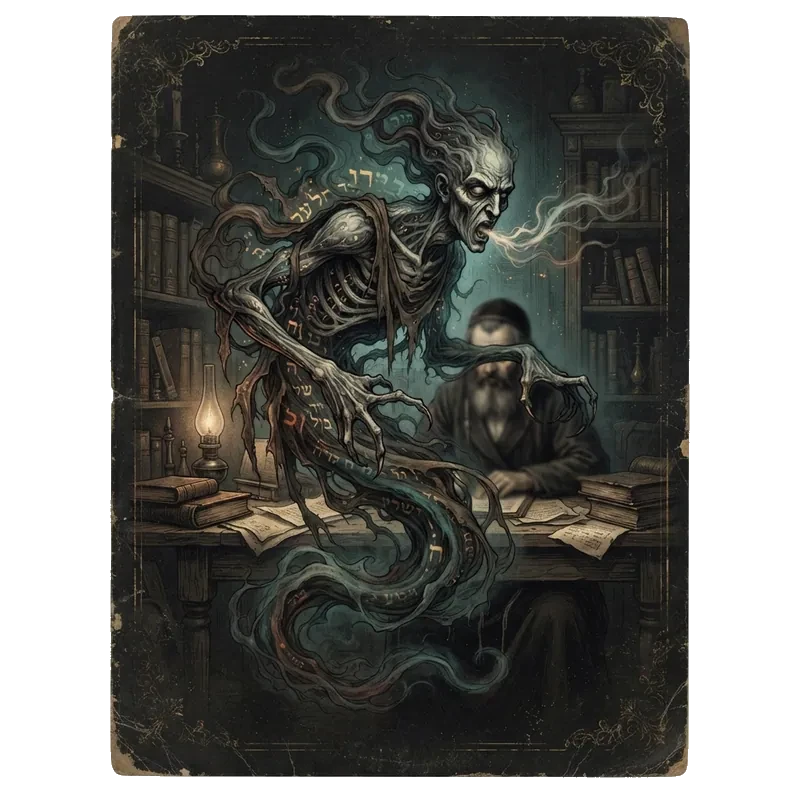
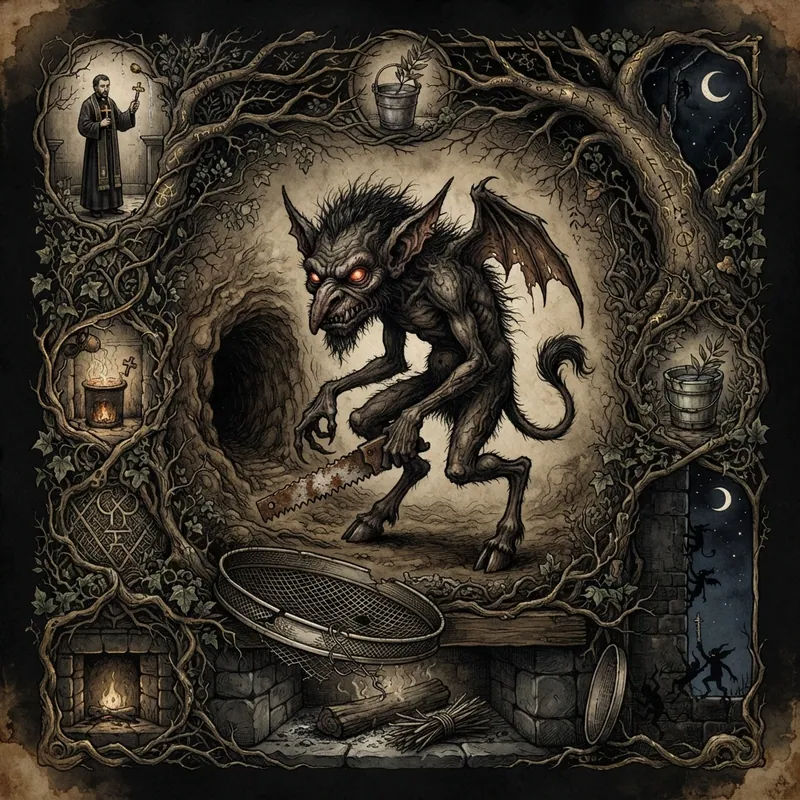
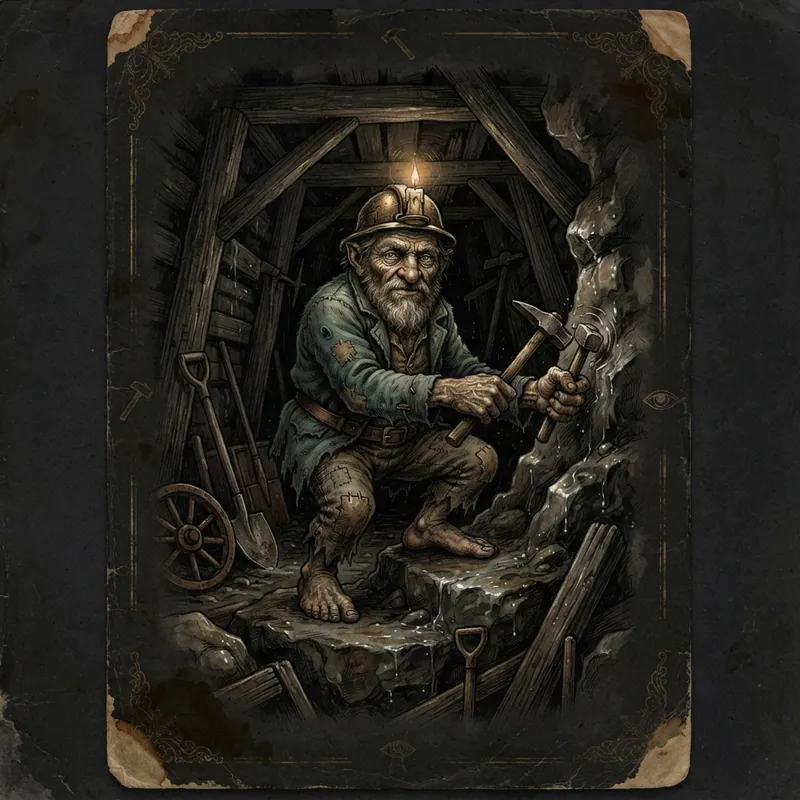
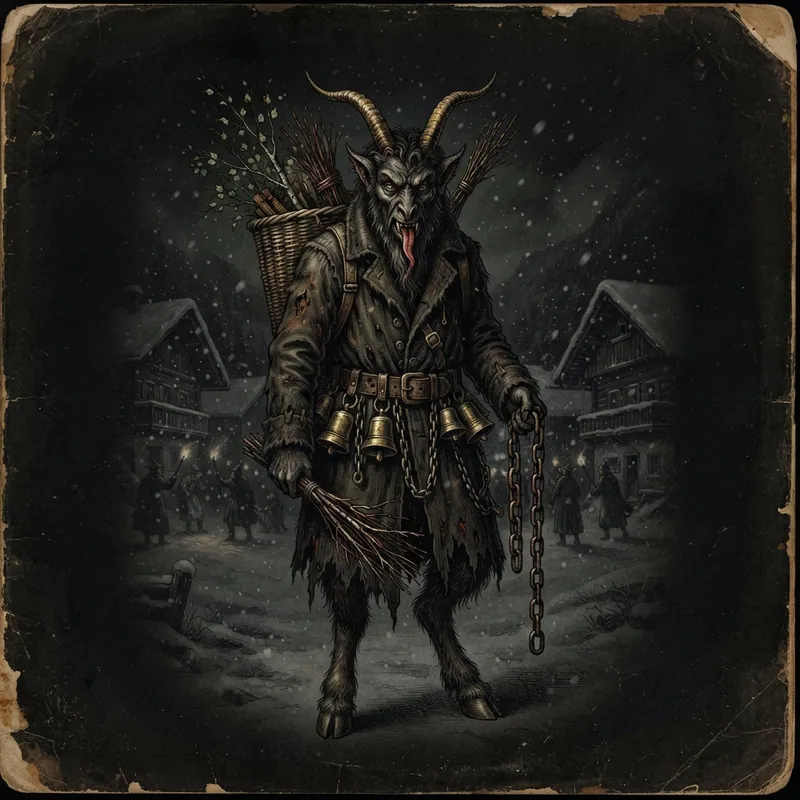
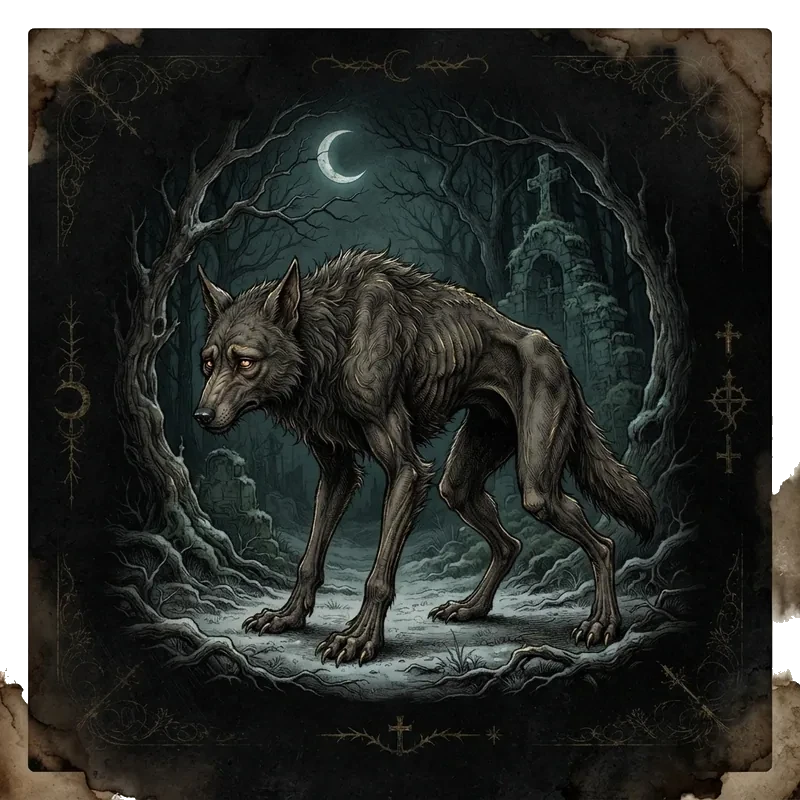
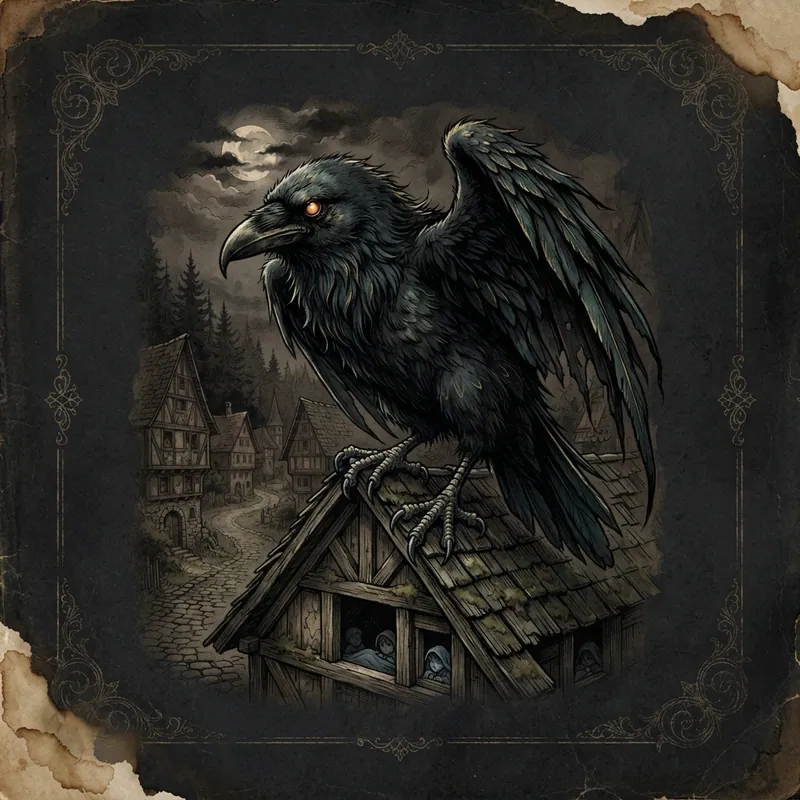
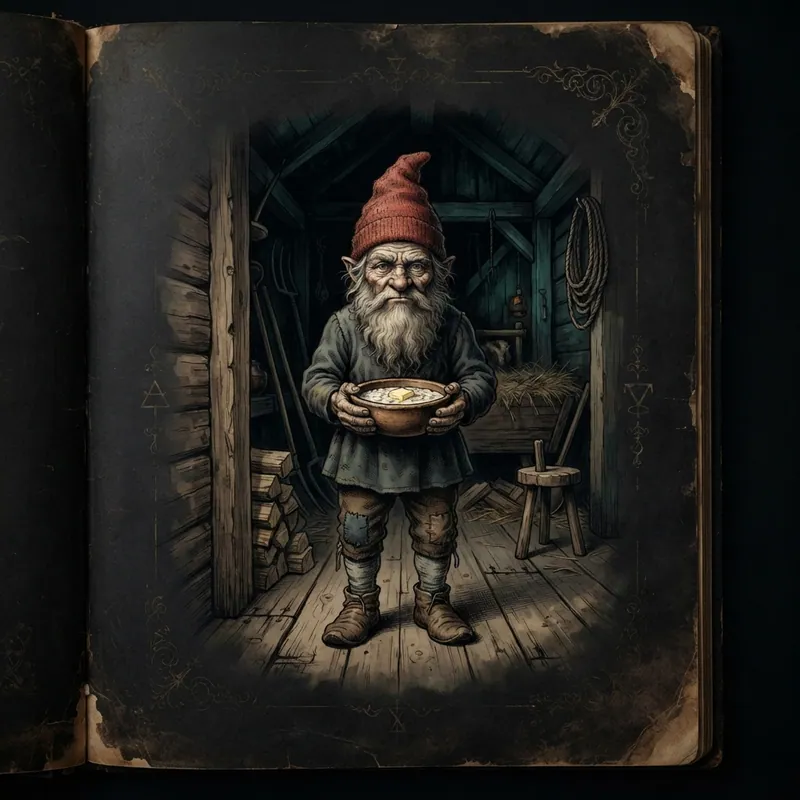
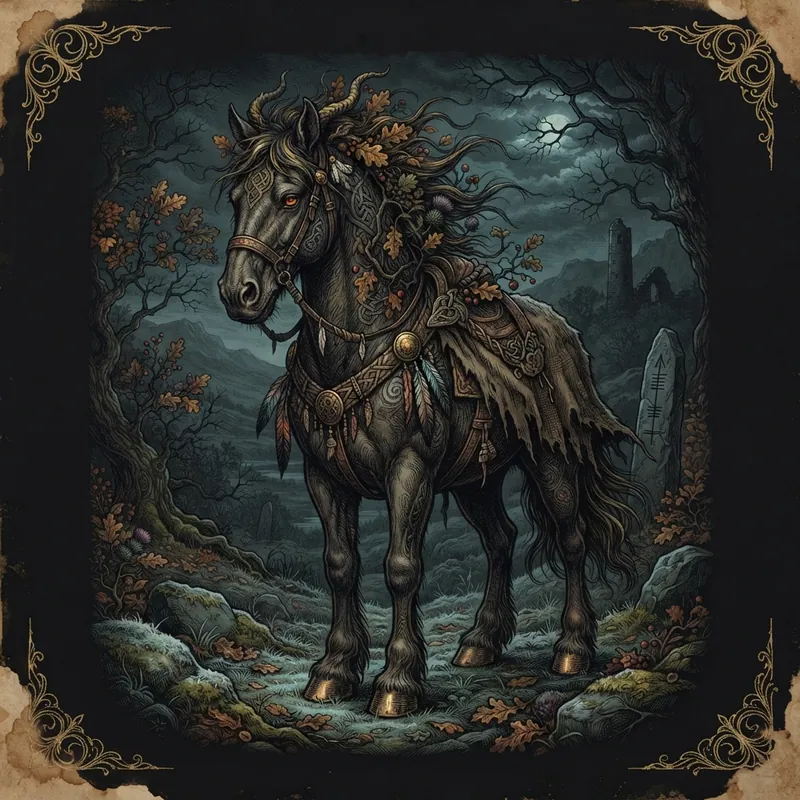
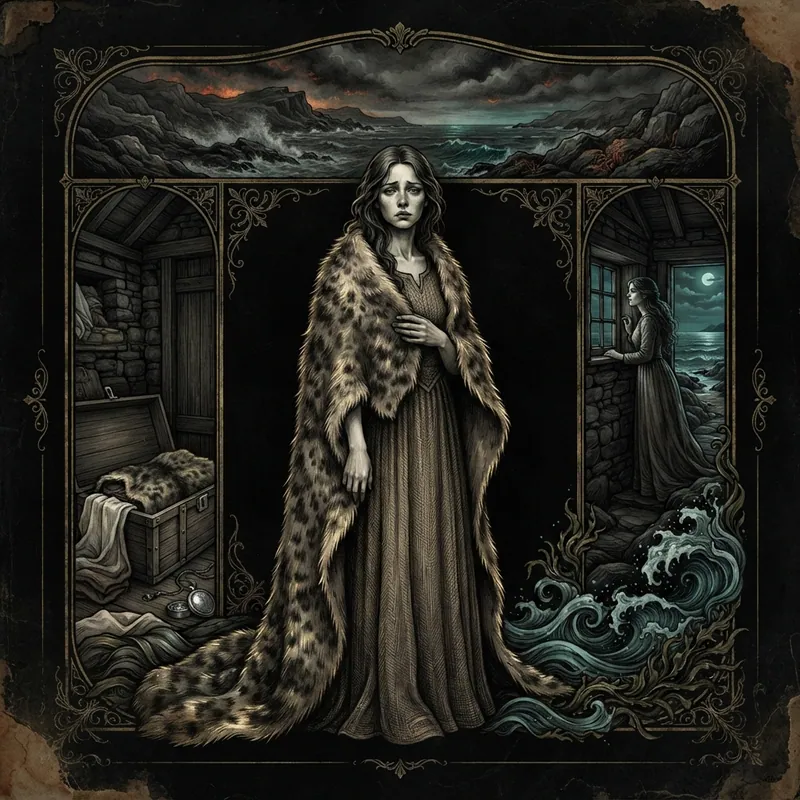
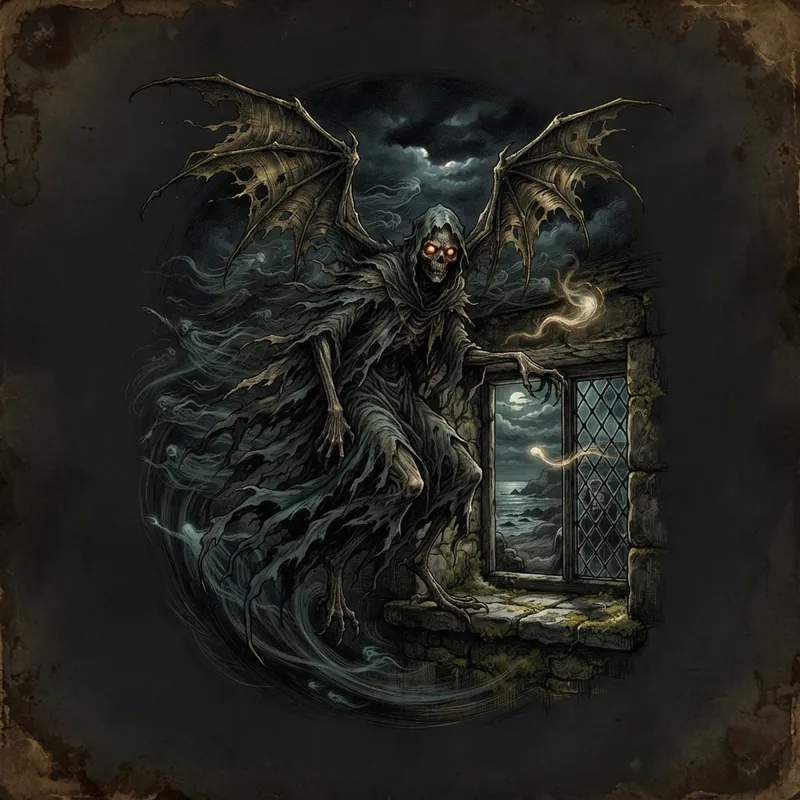
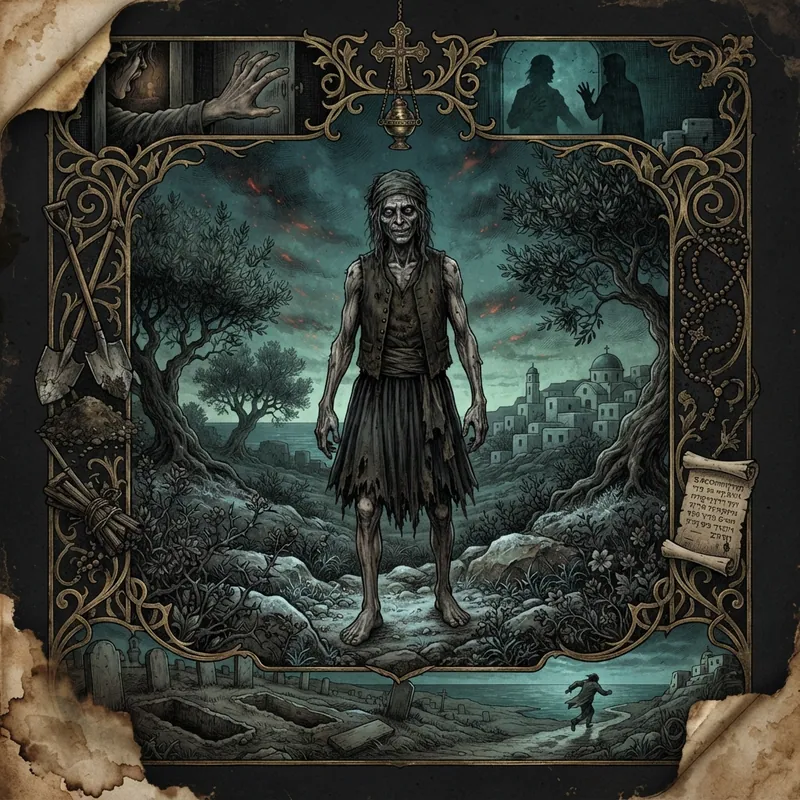
AlpIn German folklore an alp is a typically male night-presser, kin to the elf, that sits on sleepers and sends Alpdruck. Distinct from the mara, though both explain the same crushed waking.BansheeA woman of the Irish and Scottish Otherworld whose mournful cry is said to foretell a death in certain families — a herald, not a killer.Bean NigheThe washing woman of Scottish Gaelic tradition, a type of death messenger related to the banshee complex, seen laundering the clothes of those about to die.Black ShuckA spectral black dog of East Anglian folklore, often linked in stories to storms, churchyards, and ominous encounters.DullahanA headless harbinger in Irish folklore, often riding a black horse or driving a death-coach. Where he stops, a death is said to follow; gold may force him away in some tellings.DybbukA possessing spirit in Jewish folklore and literature, whose stories belong to distinct historical and religious contexts and deserve care beyond horror shorthand.FetchA spectral double in Irish tradition whose appearance can foretell death or crisis. Related to wider European doppelgänger lore but rooted in Irish naming and omen practice.KallikantzarosGreek and Anatolian Christmas goblins who spend the year sawing the world-tree underground and climb out only for the Twelve Days. Epiphany water and a kept fire send them home.KnockerMine spirits of Cornish and related mining lore whose knocks may warn of collapse or lead to ore. Carried into American mining camps as tommyknockers.KrampusA horned, frightening companion figure in Alpine seasonal customs and parades, whose modern image has travelled far beyond its local traditions.Loup-garouThe French werewolf tradition, including New World Francophone variants. Sometimes framed as punishment or unfulfilled penance rather than a bite-transmitted Hollywood curse.NachtkrappA night-raven bogey of German-language folklore used to frighten children into staying in bed. Part of a wider European family of night-bird warnings.NisseA farm guardian spirit (nisse/tomte) of Nordic tradition who protects the homestead if treated with respect—especially a bowl of porridge at Christmas—and sabotages it if insulted.PúcaA mercurial shape-changing being in Irish folklore, sometimes frightening, sometimes helpful, and rarely reducible to a single moral.SelkieSeal-folk of Orkney, Shetland, and neighbouring Scottish coasts who become human by shedding a skin. Stories of stolen skins and captive spouses are the heart of the tradition, not a monster hunt.The SluaghIn Gaelic lore, a host of restless dead said to fly in from the west and attempt to claim souls of the dying. Windows on the west side were sometimes watched with care.VrykolakasA Greek Orthodox revenant: a corpse that remains whole and walks because of sin, excommunication, or broken funeral order. The word is Slavic in origin; the being is not Dracula and not a Slavic vampire copy.
 ☾
☾ ✧
✧ ✧
✧ ✧
✧ ✧
✧ ❖
❖ ✧
✧ ☾
☾ ⌂
⌂ ☾
☾ ◎
◎ ☾
☾ ⌂
⌂ ◎
◎ ◎
◎ ☾
☾ ☠
☠Oceania & the Pacific · 2
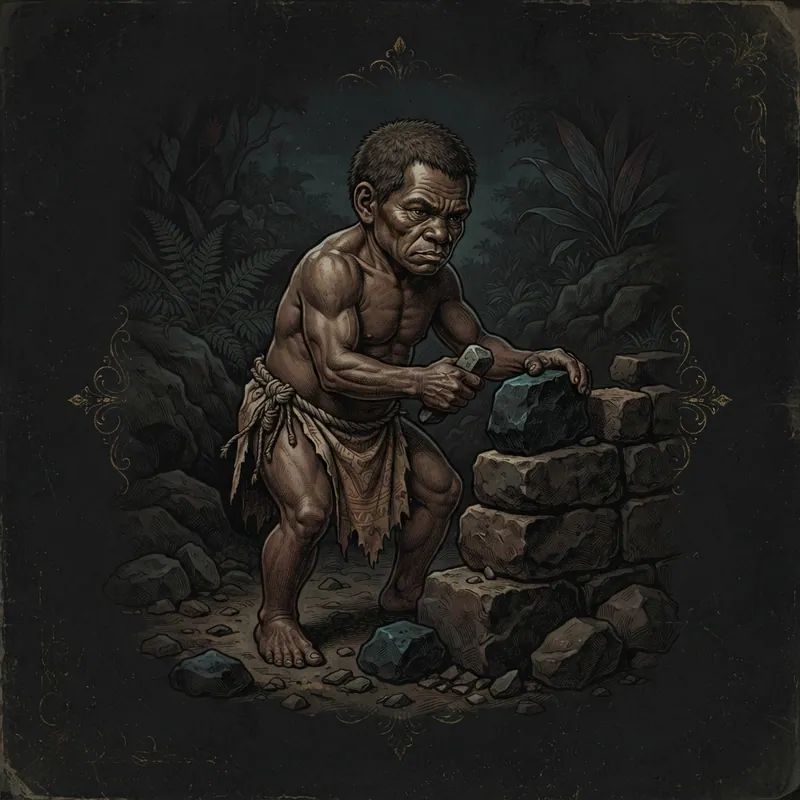
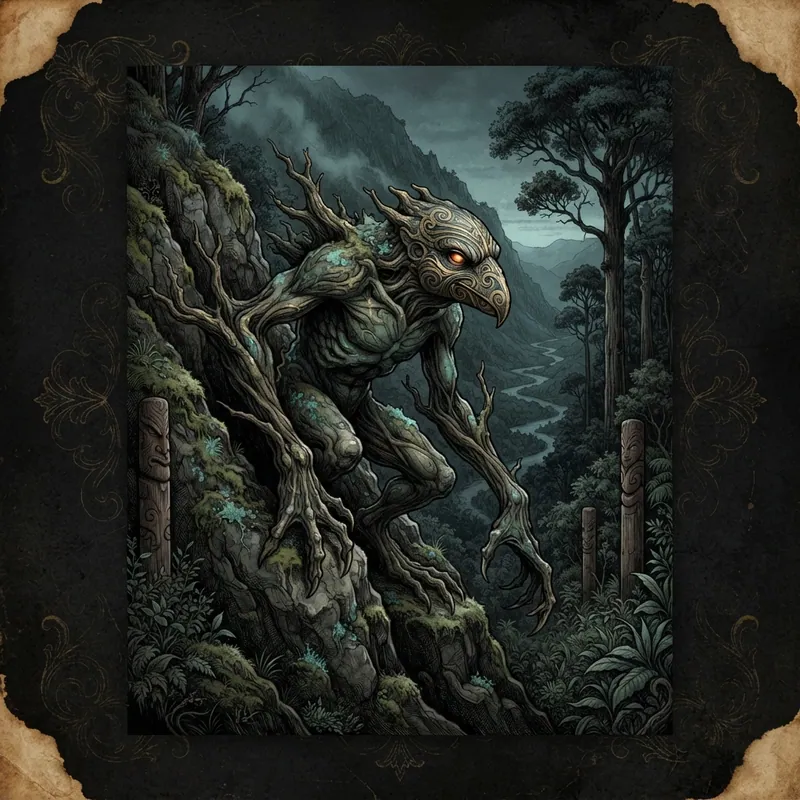
MenehuneSmall night-working people in Hawaiian storytelling credited with prodigious stone construction. Interpretations range from legendary craftspeople to encodings of earlier populations—handle with cultural care.TipuaIn Māori tradition, tipua can be supernatural beings or uncanny animated objects and places. Meanings are specific to whakapapa and locale; treat as knowledge, not a catch-all cryptid.
 ⌂
⌂ ◎
◎South Asia · 8
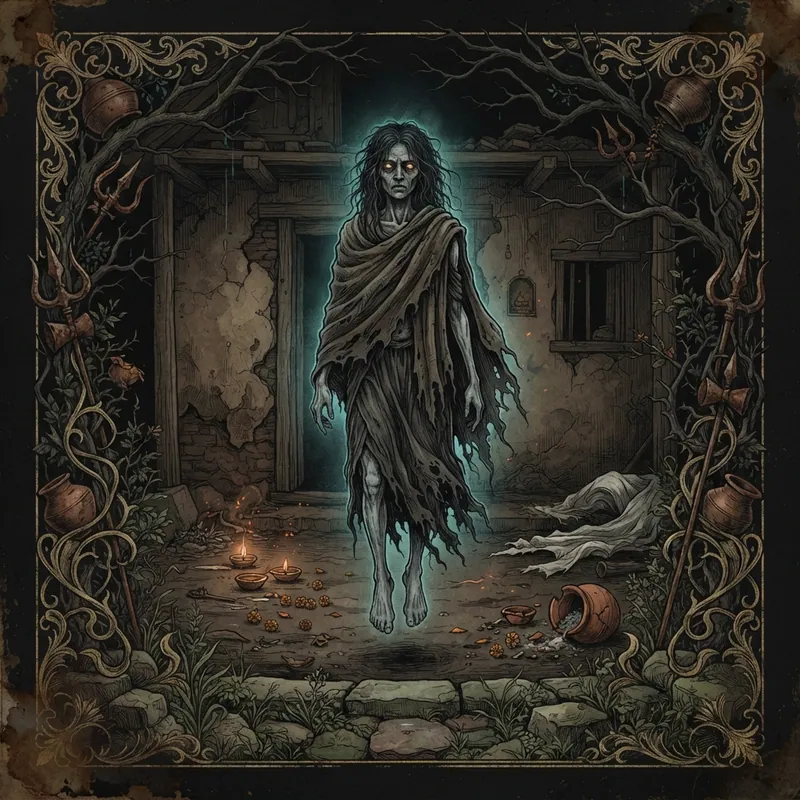
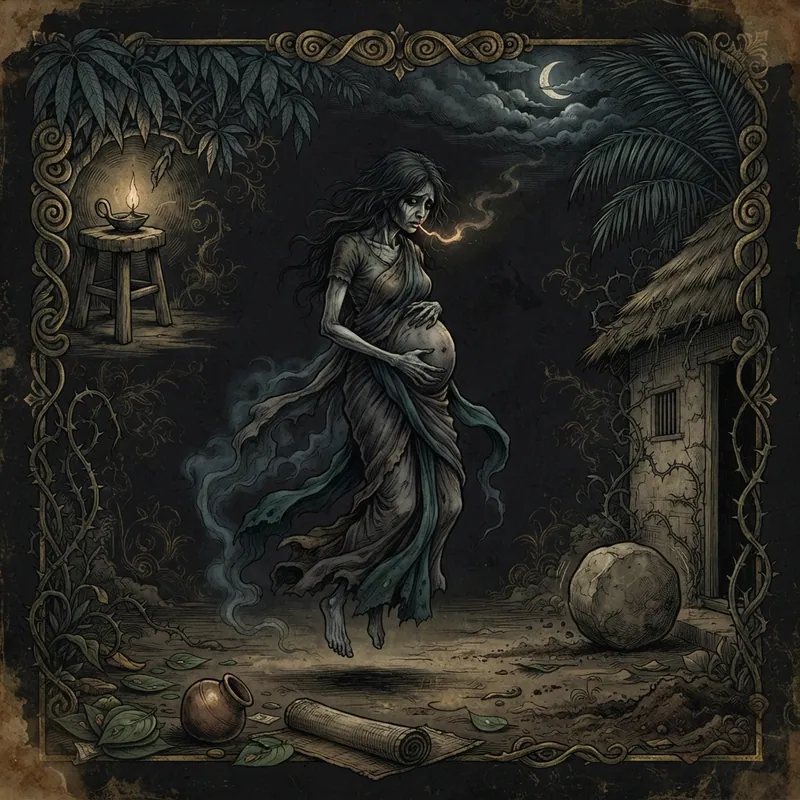
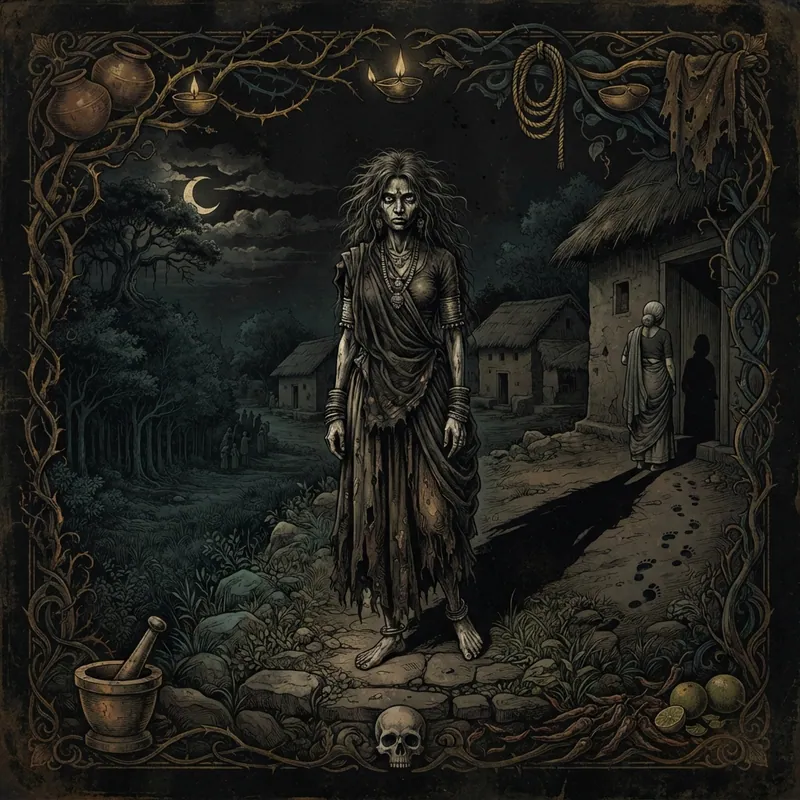
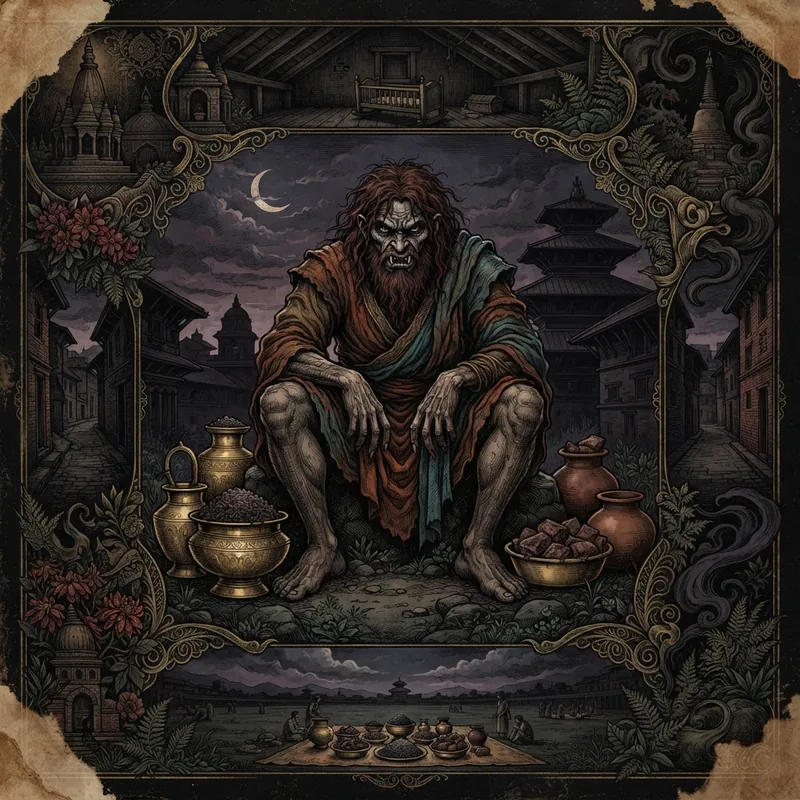
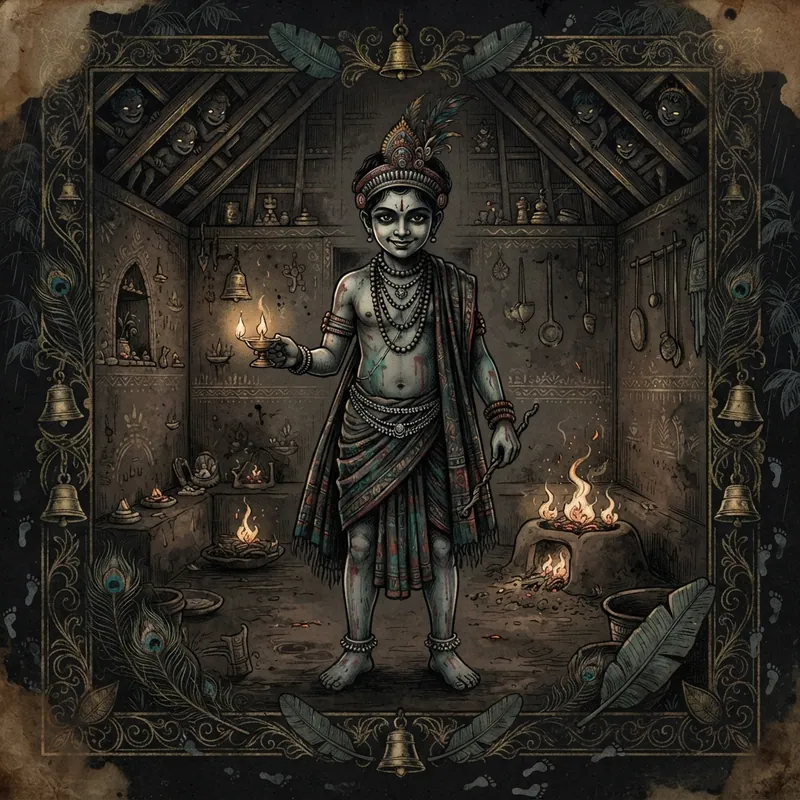
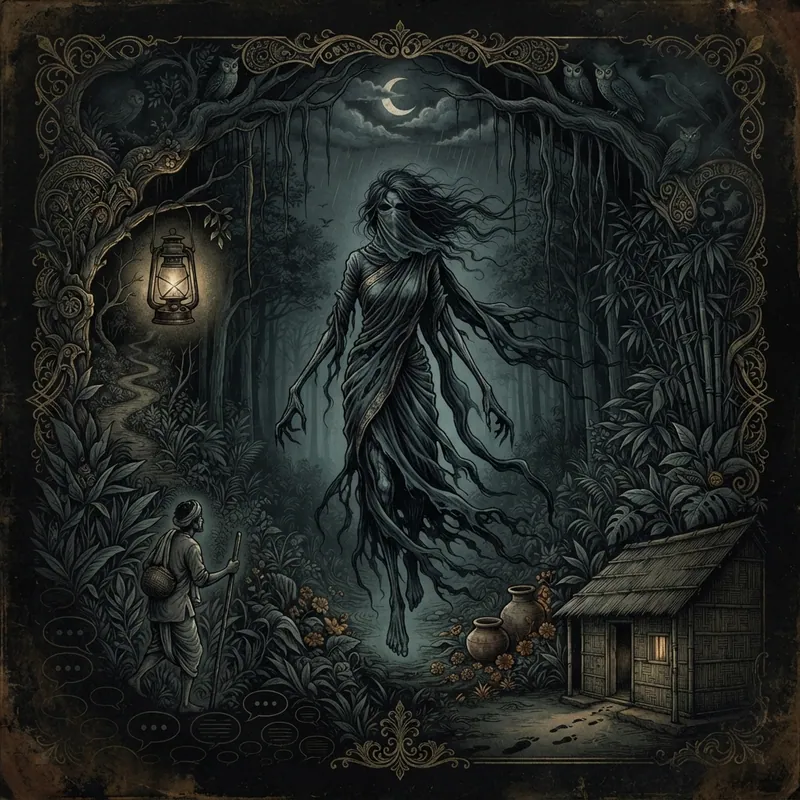
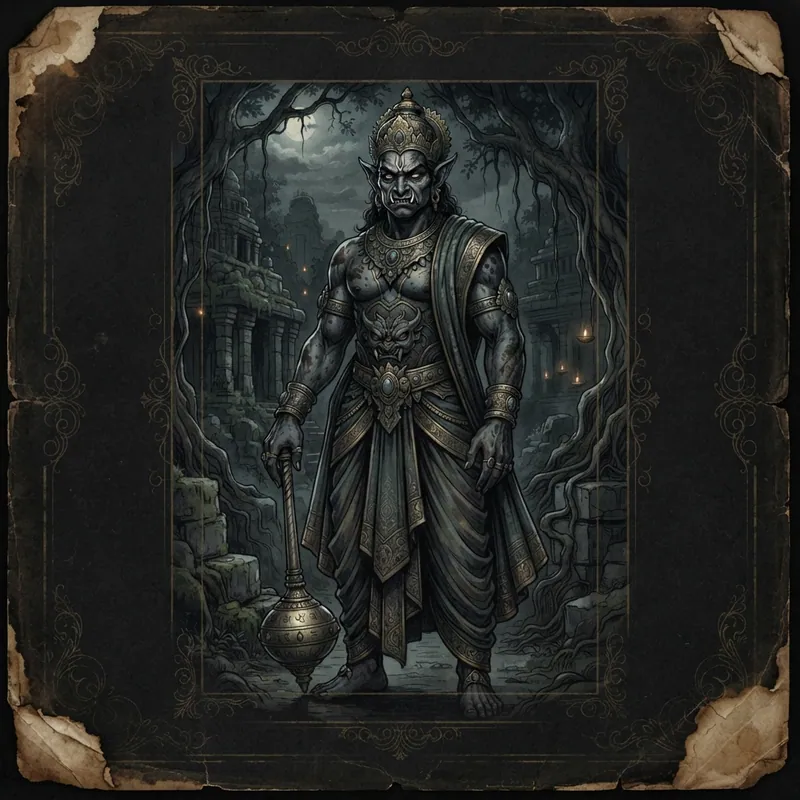
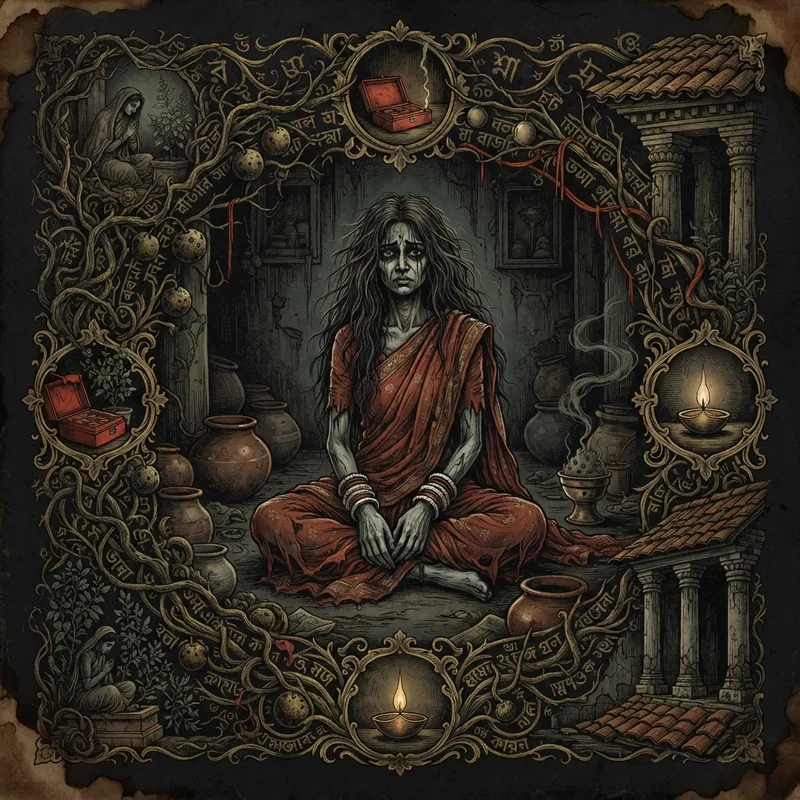
BhūtaA broad South Asian name for a disembodied spirit or restless dead, often linked to violent death or incomplete funeral rites, yet also, in some regions, to honoured local deities and household guardians.BodilimaIn Sinhalese folklore, the spirit of a woman who died in childbirth and was buried with the child still within her. A household and night wailer, related in kind to other South Asian childbirth revenants but locally named bodirima or bodilima.DaayanIn North Indian folklore, a daayan (ḍāin) is a malevolent female spirit or witch-figure, often linked to dakini traditions. The same name has been used in accusations against living women; this record holds both the tale and that social history without offering a hunt.GurumapaA man-eating giant of Newar legend associated with Itum Bahal in Kathmandu, persuaded to live on Tundikhel in return for an annual feast of rice and buffalo meat.KuttichathanA guardian trickster of Malabar Hindu folklore, often shown as a boy — Kuttichathan or Sasthappan — honoured in Theyyam and in Vishnumaya worship. Maya, mischief, and protection travel together; he is not a cartoon imp.NishiA Bengali night-calling spirit that imitates a loved one's voice to lure the isolated outdoors. Tradition holds that Nishi calls only twice; a third call is safe to answer.RakshasaPowerful beings of Hindu epic and storytelling—capable of illusion, night roaming, and both antagonism and complexity (not every rakshasa is simply ‘evil’). Read through the text tradition, not only monster lists.ShakchunniIn Bengali folklore, the spirit of a married Hindu woman who died while her husband still lived, retaining shankha bangles and a fierce attachment to household life. Related to, but not identical with, petni and churel.
 ◌
◌ ◌
◌ ✴
✴ ☾
☾ ☿
☿ ◌
◌ ◎
◎ ✦
✦The Americas · 11
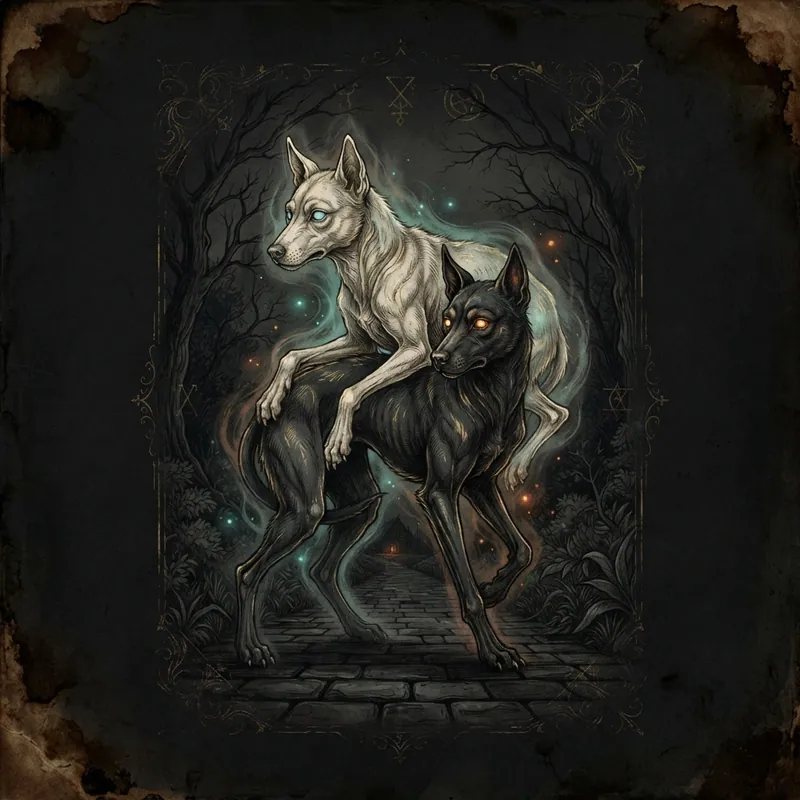
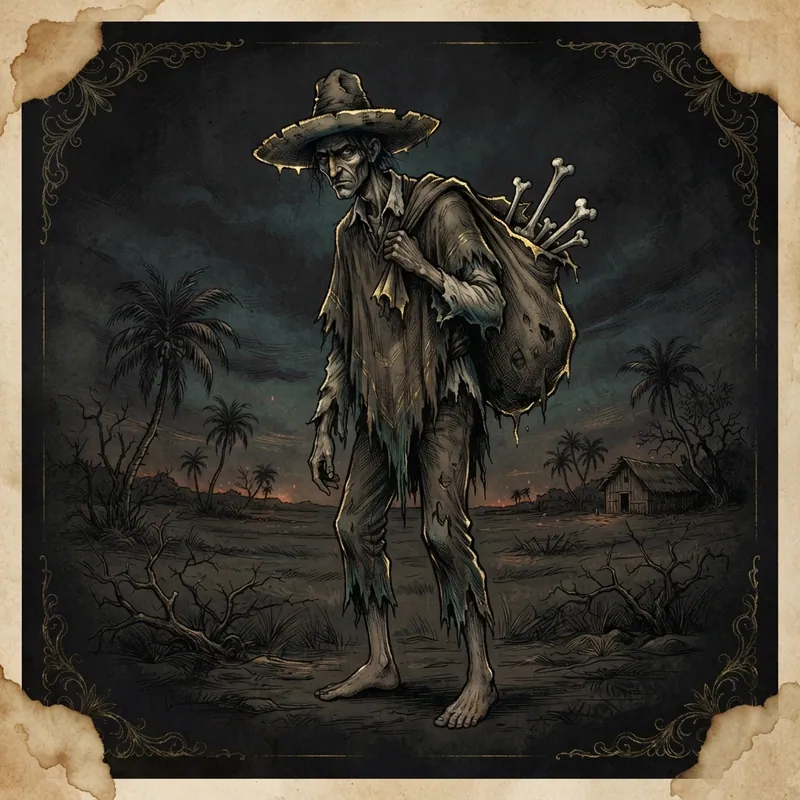
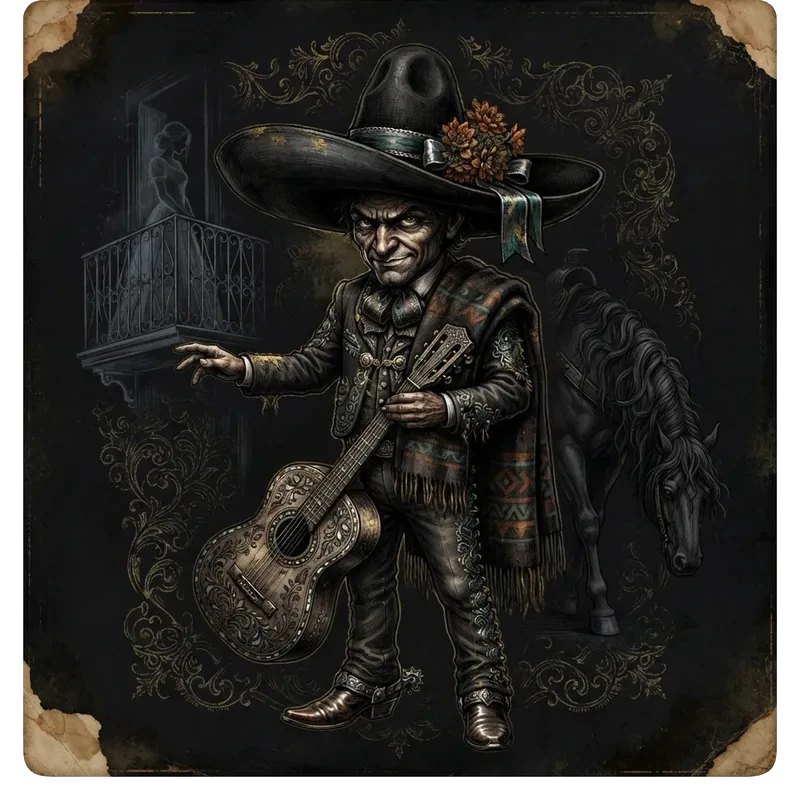
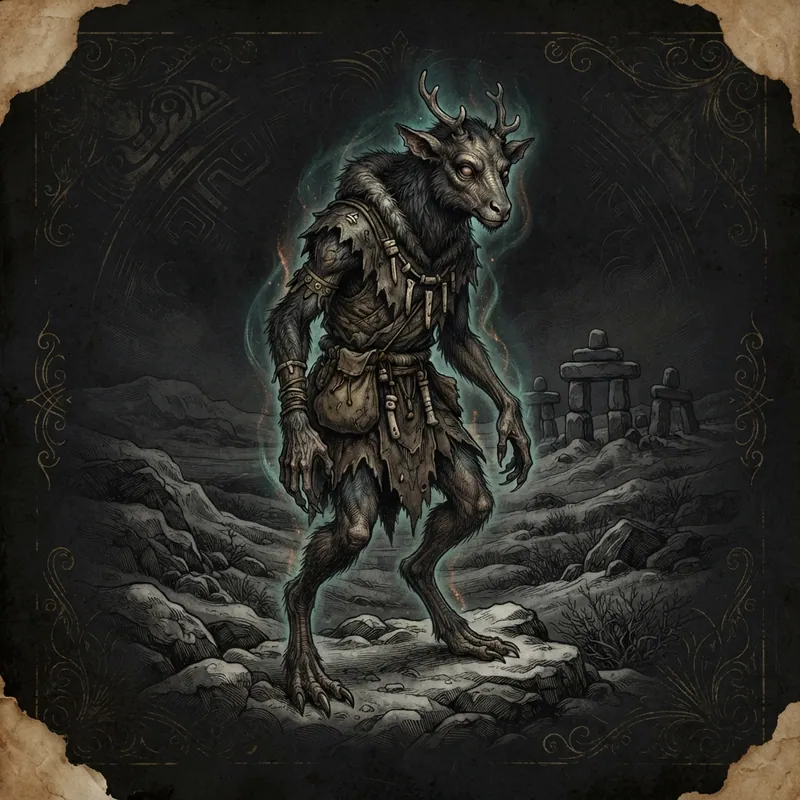
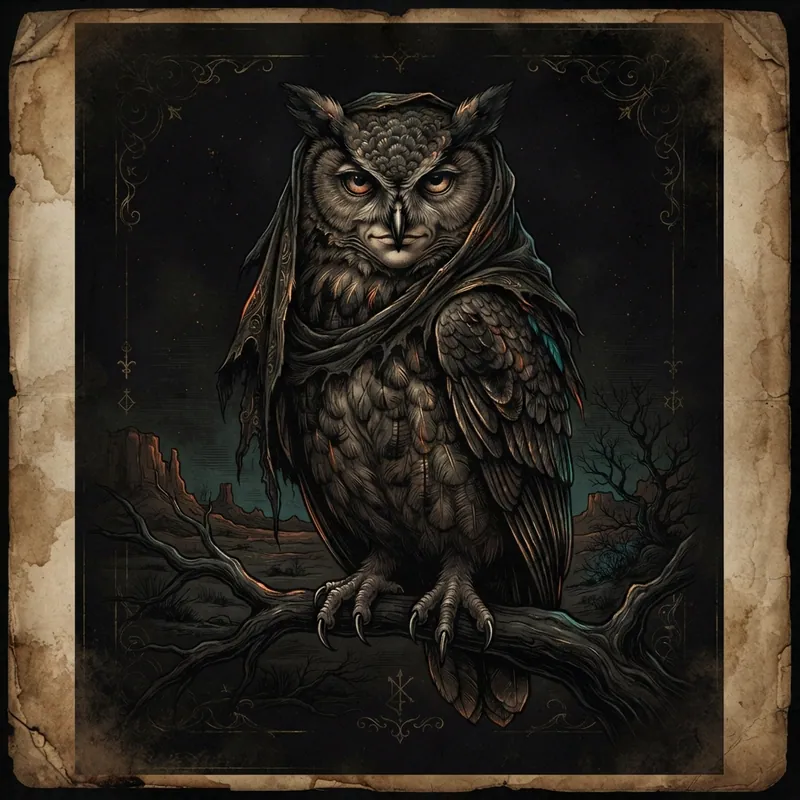
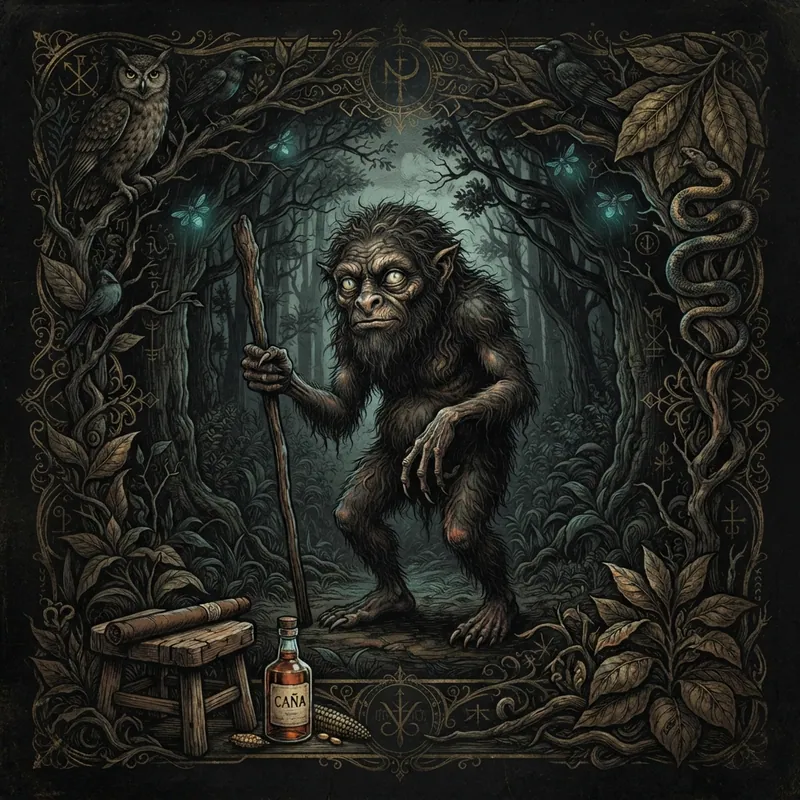
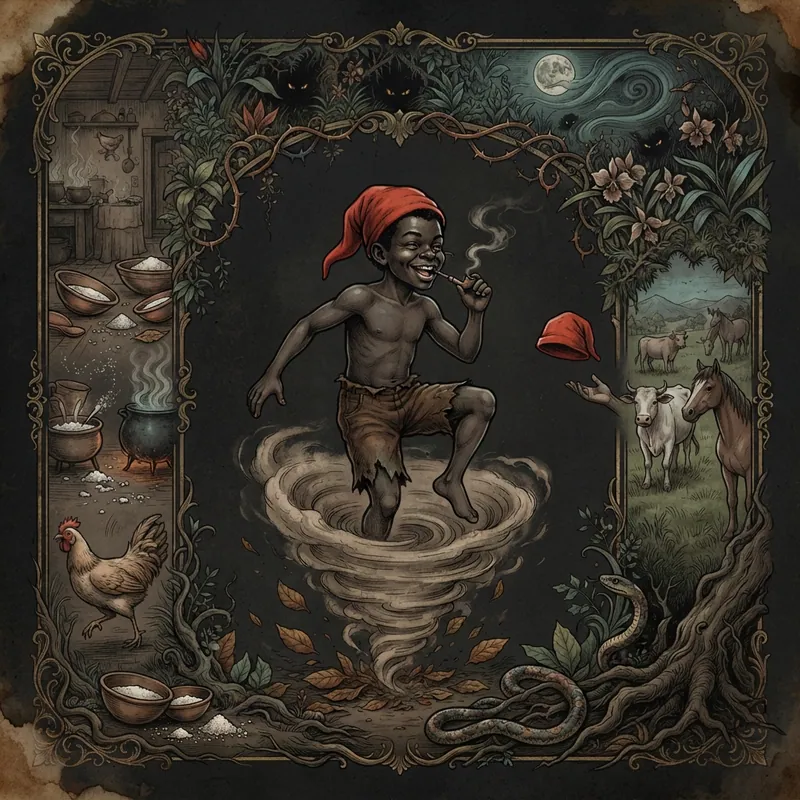
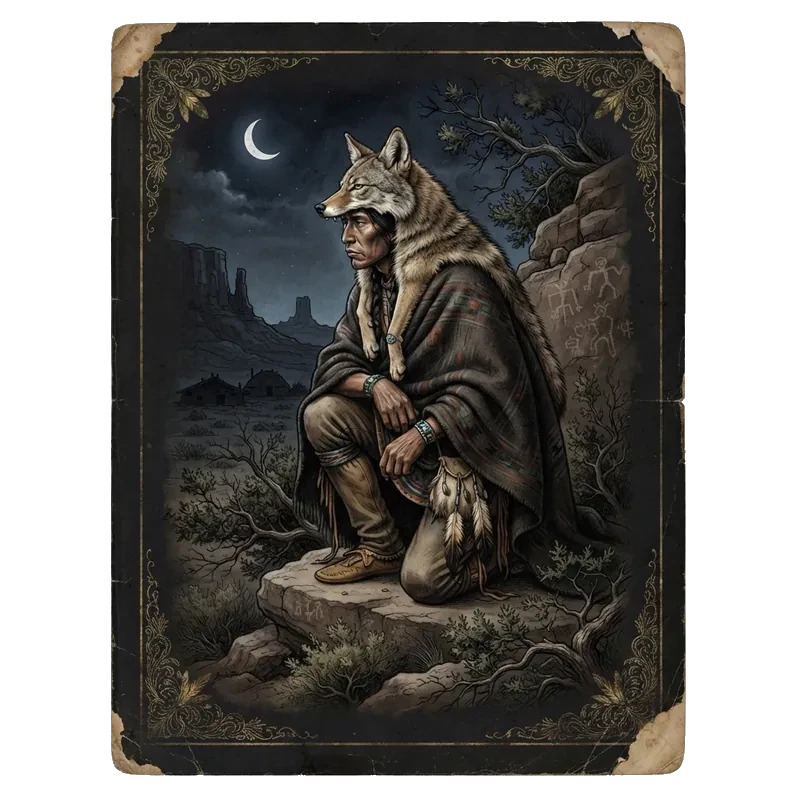
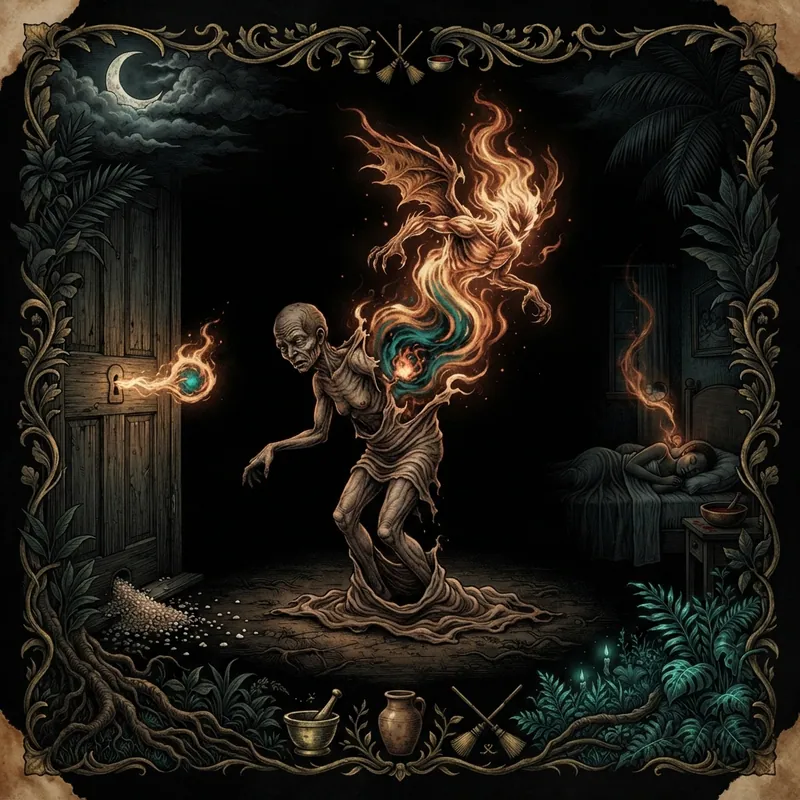
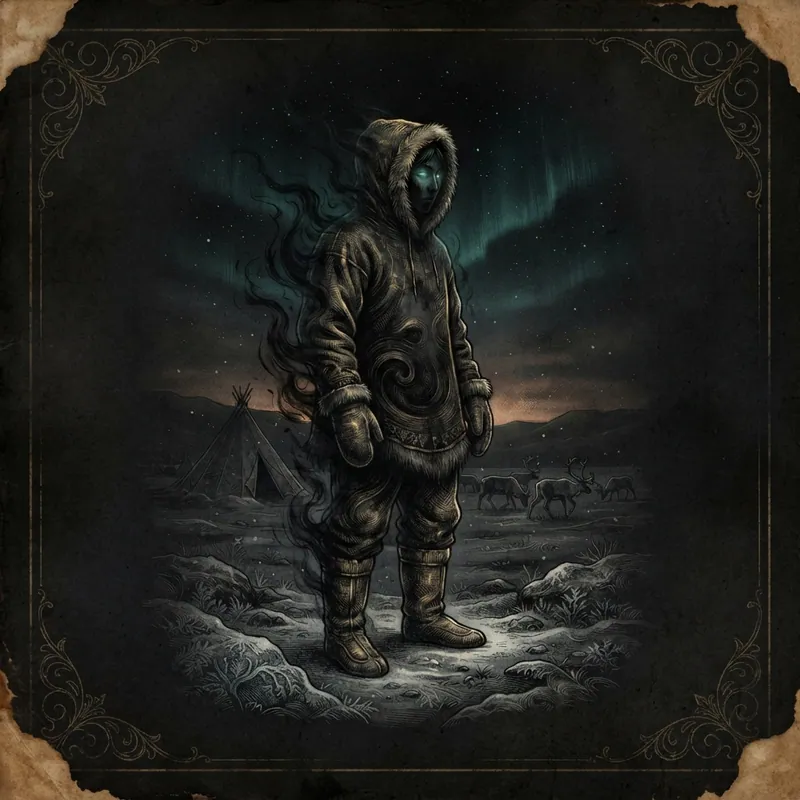
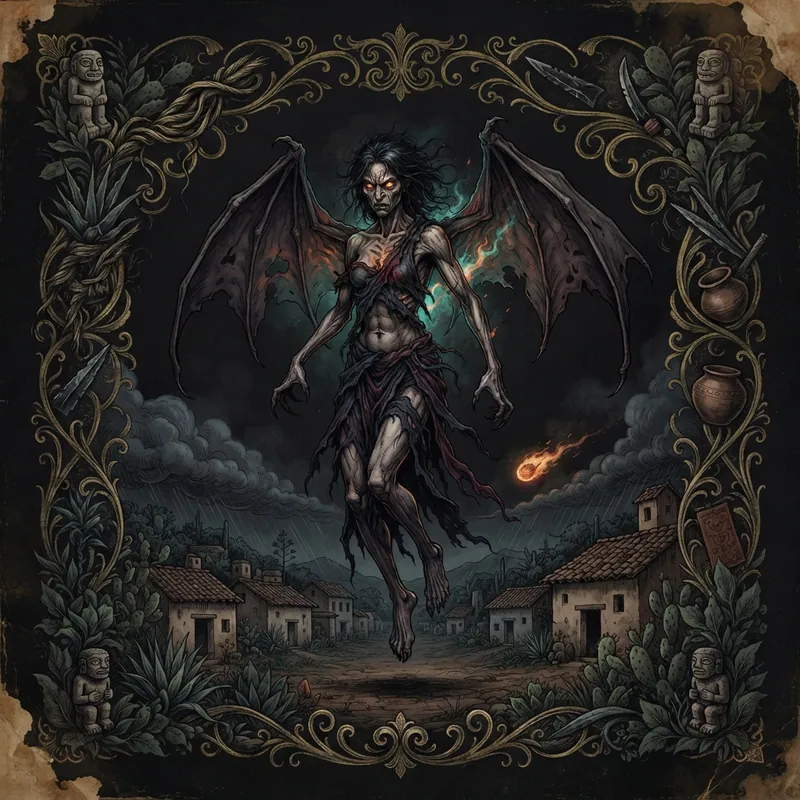
El CadejoSpectral dog spirits of Central American lore, commonly told as a white protective cadejo and a black malevolent one that follow night travellers, especially the drunk or alone.El SilbónThe Whistler is a feared figure of the Llanos, known for a melody whose apparent nearness or distance can be deceptive in different tellings.El SombrerónA courtship and mischief figure of Guatemalan lore who serenades young women and tangles horses’ manes. Charm and threat sit close together in the tellings.IjiraqShapeshifting beings in Inuit lore (especially North Baffin dialects) associated with leading travellers astray or hiding children. Inuksuit may help the lost find a way home. Treat as living cultural knowledge, not a game enemy.La LechuzaA witch-owl figure of Mexican and borderlands storytelling, often a shapeshifting woman who takes owl form to hunt or curse at night. Versions differ between family and region.PomberoA short, hairy, often invisible night being of Guaraní Paraguay and neighbouring Brazil: Karai Pyhare, lord of the night, also called Pomberito. Guardian of birds and forest, trickster of barns and paths. Keep the Guaraní names; he is not a generic Latin American duende.Saci-pererêBrazil’s one-legged trickster: a Black boy in a red cap, pipe in mouth, riding dust-devils, switching salt and sugar, freeing livestock. A syncretic Tupi, African, and Portuguese figure, not a single Indigenous demon and not a cute mascot only.Skin-walker (yee naaldlooshii)Among the Diné, stories of skin-walkers belong to a living, sensitive witchcraft complex. Outsiders’ horror media often appropriates and flattens them. This archive points to respect and community authority rather than a monster dossier.SoucouyantA Creole and African-diaspora night figure of Trinidad and the wider Caribbean: by day an ordinary neighbour, by night a skin-shedder who travels as fire and takes blood. Not a generic European vampire; salt, rice-counting, and dawn belong to this tradition’s own logic.TariaksuqShadow-people beings in some Inuit tellings, glimpsed sideways rather than confronted. Related in discussion to ijirait but not identical; elders’ knowledge should lead any serious reading.TlahuelpuchiA Tlaxcalan blood-witch complex: a person, usually a woman, born to a hunger that takes animal or fireball form at night. Living, sensitive Nahua-Mexican belief documented by Nutini and Roberts. Not a how-to, not a Halloween vampire.
 ✧
✧ ✧
✧ ☾
☾ ◎
◎ ◎
◎ ♧
♧ ☿
☿ ◎
◎ ◎
◎ ◎
◎ ◎
◎